
Till recently there was no monument to the Maratha victory or the great Maratha General Mahadji Shinde. It was a defeat, such as never suffered by the British in India.
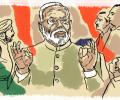
Kamal Nath argued that Modi had 'overexposed himself': By constantly pushing his own image on social media and on TV, attaching his name to multiple promises, Modi had become the face rivals could easily blame for India's chronic dysfunction.
'The macro-economic stresses -- high interest rates, rupee depreciation and capital flows -- have receded now.' 'Interest rates have come down, inflation is down and the rupee has bounced back.' 'If oil prices continue at this level, there will be no vulnerability.' 'Growth is a different story.'

When Deepak Singh first started working as a salesman in the US, he was ashamed of the fall in status this signalled, says Vikram Johri.

'He totally gets the Gandhis...' 'If anything, he pays too much attention to the Gandhis.' 'I feel that in places like UP, where the Congress doesn't matter, he often spends time blasting the Gandhis.'

Sir Mark Tully on the magic of Indian elections. A fascinating excerpt from The Great March of Democracy: Seven Decades of India's Elections.

Bestselling author Dan Brown spoke at the Penguin Annual Lecture in Mumbai on November 12. Snapshots from the evening

Intrapreneurs are more diverse in their skill sets and backgrounds, more digitally native, more networked and connected, and more ambitious to do bigger things. A fascinating excerpt from Simone Ahuja's Jugaad 3.0: Hacking The Corporation To Make It Fast, Fluid And Frugal.

'Captain Haneef-ud-din, pulling his sinewy body forward, crawled, rifle in hand, in the snow on 6 June 1999. He died on this craggy mountainside exactly two years after he had passed out of the IMA...'
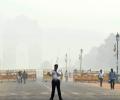
Delhi is a year-round health hazard that visitors shun like the plague, says Sunil Sethi.

Love has made me a poet, Rahul thought. He could think about her all day long. Sometimes, she entertained his dreams. He did not wish to wait until after Ganesh Visarjan to see her again.

The great pity is that Mr Siddiqui has a remarkable, even inspiring, story to tell, feels Sunil Sethi.

Shehla doesn't and has never shied away from talking the tough talk and walking the tough walk, says Gurmehar Kaur.

'I have grown up in an environment where the dominant narrative of Indian sporting achievement was -- We can't.' 'These achievers have fought hard, built on each other's body of work and knowledge, and have today changed the script to -- We can,' notes Rahul Dravid,cricketing legend.

"A true nationalist must have a "sense of shame" for the crimes his government commits and accept that his country is not perfect," said the eminent historian.

Several titbits related to the Arushi-Hemraj murder mystery that shook the nation find mention in a new book 'Aarushi' by Avirook Sen.
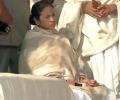
With her various overtures and right noises at the right time, Mamata is once again trying to reshape her image from being a regional leader to one with national appeal and acceptability. After all, the charge of building a Federal Front may also bring to the fore Mamata's chances to become prime minister in 2019.
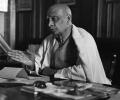
Generations of Indians don't quite grasp that there would barely be an India had it not been for the Sardar whose steadfastness and guile stitched together that which had been united only in philosophy and spirituality and sometimes not even then -- for thousands of years. A fascinating excerpt from Hindol Sengupta's The Man Who Saved India, Sardar Patel and His Idea of India.
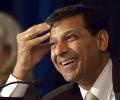
Former RBI Governor Subbarao blamed Chidambaram for undermining the autonomy of RBI and putting pressure on him to cut interest rates.

Mallya understood, astutely, that the Dhingras were very keen to acquire Berger Paints. He upped his asking price. The figure Vijay asked for was found to be much more than what Kuldip and Gurbachan had anticipated. A fascinating excerpt from Sonu Bhasin's Unstoppable: Kuldip Singh Dhingra And The Rise Of Berger Paints.

'Galbraith had a powerful ally in Washington -- not as blunt and direct as the ambassador -- but committed to see Krishna Menon go.' 'This was President Kennedy himself.'

As Raazi hit theatres, Harinder Sikka -- author of Calling Sehmat, the book on which the film is based -- reveals the thrilling real life story of an Indian spy named Sehmat.

The Indian economy was on an impressive growth path through the first decade of this century till it was brought to an abrupt halt by the policy inertia during UPA2 and the Modi government's inability to restore economic and financial momentum. Fascinating glimpses of what went wrong from Puja Mehra's must-read book The Lost Decade: How India's Growth Story Devolved Into Growth Without A Story.

Indira Kannan picks Made in Bangladesh, Greed, Moothon.

In Yogi Adityanath's Uttar Pradesh wayward Romeos would all be in the lock-up, says Sunil Sethi.

One cricketer made all the difference when the first All India cricket team toured England in 1911. Baloo Palwankar startled the English with his guile and genius.

'It was the Mughals who first established standard units of measurement and maintained offices of meticulous record keepers and auditors, departing from the more haphazard methods of earlier regimes.' 'By the end of the 16th century, their revenue and judicial administrations exhibited an obsessive preoccupation with order, the efficient management of time, and a spirit of rational self-control -- all of them characteristics of early modernity,' point out Sheldon Pollock and Benjamin Ellman.

'There is hardly any boy who thinks he can jump from a high rise building and bash up 50 people. I really wanted people to believe it. That was the starting of my ****up.'

'Ambedkar's ideas have their own teeth -- if you don't have an appetite for them, you can't swallow them.'

'I can snap my fingers and get 1,000 people overnight, but I can't guarantee that they will develop because there has been zero change in education in the country in the last nine years.'

At the age of 28 he's perhaps the only one in the country who's making cartoons on natural history.

Junaid was my son. He was son and brother also to the people on the train compartment of his last journey. He was son or brother also of those at the railway station where he breathed his last breath. This moving excerpt from Harsh Mander's Partitions Of The Heart: Unmaking The Idea Of India reveals why we must immediately end the hatred surging across north India before it consumes us all.
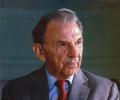
'Nehru once told JRD, "I hate the mention of the very word profit".' '"Jawaharlal, I am talking about the need of the public sector making a profit!" JRD replied.' 'Nehru reiterated, "Never talk to me about the word profit, it is a dirty word".' A fascinating excerpt from Shashank Shah's The Tata Group: From Torchbearers To Trailblazers.

'Will it lead to a full-scale war? I doubt it.' 'But I do think there will be some kind of limited conflict.'
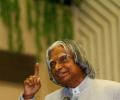
For former President A P J Abdul Kalam, the greatest regret in life was not being able to provide facilities like 24-hour electricity to his parents during their lifetime.

'Everything they read on social media, they believe, is the truth.' 'One of the biggest challenges in the country today is how to counter fake news and propaganda.'

A brief class by his teacher on the Rameswaram seashore on how birds fly and the locomotive force behind their flight gave former President A P J Abdul Kalam his aim in life and helped him in understanding physics better.

Mayura Janwalkar travels to Kedambe, a tiny village in Maharashtra's Satara district, now better known as 26/11 hero Tukaram Omble's home. An excerpt from 26/11 Stories Of Strength by The Indian Express.
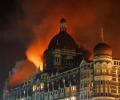
India would have responded differently to "Pakistan-sponsored" Mumbai terror attacks had there been a different "mix of people" at the helm, according to former foreign secretary and national security advisor Shivshankar Menon.

The Indian Institute of Science topped the HRD ministry's 2017 national rankings. In 2016, the IISc was ranked among the world's top 15 universities in the Times Higher Education University Rankings. In his book The Creation of Wealth: The Tatas from the 19th to the 21st Century, R M Lala recounted how Jamsetji Tata's grand vision and immense personal contribution laid the edifice of arguably India's finest educational institution.
