
The Parliamentarians of Indian-origin claim the way India has put the nuclear deal on hold has increased respect for India.

India needs to shed its policy of lethargy and inhibitions to engage the Taliban with an intent to maintain its influence in Afghanistan. This would not just put a spanner in Pakistani designs, but also incentivise the Taliban not to be the puppets of GHQ, Rawalpindi, asserts Colonel Nikhil Apte (retd), who served on the Af-Pak desk at the Military Operations Directorate.

Nooyi also indicated that PepsiCo will double its workforce in China over the next five years, which the company sees as a major growth market.

On July 1, 2021, Britain's Princess Diana would have turned 60 and two decades after her tragic death in a car accident near the end of summer 1997, she still holds an exalted place on the altar of the most admired people in the world, her status secure as a style icon -- as is her legacy of having forever changed the British monarchy.
'The killings are a worrisome escalation of tensions, but little is known about the immediate causes or results of the fight in Galwan and it is not possible, at this point, to assign blame'

It was a many splendoured political career, which ended at the presidential palace. But the prime minister's post eluded him, even though it was a position he openly aspired for.

'KRN's journey from a humble cottage in Uzhavoor to Rashtrapati Bhavan in New Delhi was no less spectacular than that of Abraham Lincoln from the log cabin to the White House'.

'Are we too close as well-off Indians, all with servants and drivers and tuition teachers ourselves, to be able to understand why it is all so awful?', asks Aakar Patel.

'Is Xi's China stable?'
'No one can say whether the regime will fall all at once or if its leaders are devising a new solid and competitive -- anything but democratic -- model.' A fascinating excerpt from Francois Bougon's Inside The Mind of Xi Jinping.
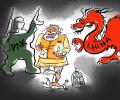
'China need not worry about a truly 'resurgent India'.' 'It's not going to happen.'

While the Indian Government was aware of it, it tried to play it down and instead referred to it as genocide against the Bengali community in Bangladesh so as to avoid an outcry from the leaders of the then Jan Sangh, the predecessor of the today's main opposition Bharatiya Janata Party, says Gary J Bass, author of the book The Blood Telegram: Nixon Kissinger and a Forgotten Genocide, which recently hit the book stores.

This is the time when the US would need the conceptual strategic thinking of a Henry Kissinger, able to ally diplomatic skills with a well-conceived worldview of what the emergence of a new balance of forces will mean for a US whose ability to shape global events has definitely declined but still exists, says Claude Smadja.

It is most unlikely that the US would take kindly to Indian claims of having shot down an F-16. There is too much commercial interest involved, says Col Anil Athale (retd).

Akhtaruzzaman Elias's The Raincoat describes the effect of the 1971 war on a college and on one of its teachers in particular.
'We are telling them we have isolated them and their religion as not only unwanted,' says Aakar Patel.
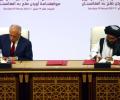
'Pakistan's trump card is that it is the only credible guarantor on the horizon who can reasonably assure the Western world that Afghanistan will not again become the revolving door for international terrorism.' 'Trust Pakistan to play this card optimally,' explains Ambassador M K Bhadrakumar.
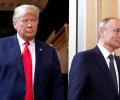
The stagnation in US-Russia relations does not augur well for New Delhi's strategic interests, says Harsh V Pant and Raj Kumar Sharma.

Why, centuries after the French Revolution promised an end to feudalism, do political dynasties persist -- even in democracies, asks Ajit Balakrishnan.

With a decelerating economy that weakens India's hands on geopolitical issues, it will be interesting to know which way this trip will go.
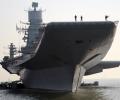
The navy wants to spend Rs 40,000 crore on INS Vishal, a choice the army and air force oppose. This is as much about turf as about funding. explains Ajai Shukla.
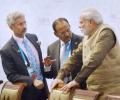
'Both Doval and Jaishankar are savvy enough to know what is good for them and won't want to meet the fate of Icarus in Greek mythology,' argues Ambassador M K Bhadrakumar.

Does Abhijit Banerjee's Nobel Prize help India reduce extreme poverty, asks Rajeev Srinivasan.
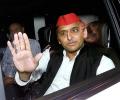
'Perhaps it isn't protocol at all, but power before which we abase ourselves,' says Sunanda K Datta-Ray.
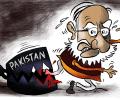
For the first time in our political history, Pakistan has become centre stage of the incumbent's campaign, points out Shekhar Gupta.

Trump's transition team spokesman Sean Spicer listed Haley as one of the candidates.

On Friday, German Chancellor was caught enjoying some down time in a pub in Brisbane, where she has come to attend the G20 summit. Over the past years, world leaders have often been snapped enjoying some time on their own at a pub, downing a drink or two. So, sit back, enjoy a glass of wine and a few of those moments.

China's obsession with exports and electronics assembly can also be attributed to having learned from the Singaporean textbook.

India's majoritarian regime is now making a dangerously fast-paced move towards theocracy, like its western counterpart did a few decades ago, warns Mohammad Sajjad.

'It was India's good fortune to have a Vajpayee lead the government at this crucial moment in history.' 'By taking the N-decision he saved future generations of Indians from being 'Kosovoed' or 'Iraqed',' says Colonel Anil A Athale (retd).

'The coming two months could unfold unpredictable results or unpredictable consequences or both at the same time,' says Rajaram Panda.

With India's political wheel turning full circle this year, National Security Advisor Ajit Doval will negotiate from an expanding diplomatic space, writes Ajai Shukla

A lowdown on what's happening in the world of Hollywood, right here.

Tens of thousands of people on Sunday braved heavy rains to bid a teary adieu to Singapore's founding leader Lee Kuan Yew in a grand funeral attended by many world leaders, including Prime Minister Narendra Modi
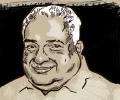
Mr T V R Shenoy, who contributed columns to Rediff.com from its birth, passed into the ages on Tuesday evening. As we grieve and mourning his passing, Ambassador M K Bhadrakumar bids adieu to an unusual human being, a sage for our times.

'The real problem of joblessness and democratic politics is happening here in India. And it is happening now, right before us.'

The external affairs ministry's files, as distinct from those of the ministry of defence or the agencies, at least from before 1974 should be declassified. And if select files that are more than 40 years old are not to be declassified, the ministry should follow explicit guidelines to justify taking such a view, says Jaimini Bhagwat.

We mourn the passing of Admiral J G Nadkarni, who passed into the ages on Monday. The admiral -- one of the finest officers to head the Indian Navy and a most remarkable human being -- was one of Rediff.com's earliest columnists. His assessment of why India won the 1971 War is a classic and we republish the column today to celebrate his brilliant mind and salute an office and gentleman, the likes of who we will not see again.
 © 2026 Rediff.com - Advertise with us - Disclaimer - Privacy Policy - Sitemap - Feedback - About us - Terms of use - Grievances