
Analysts predict that the ongoing US-Iran conflict, fluctuations in crude oil prices, and foreign institutional investor (FII) flows will be the primary factors influencing Dalal Street this week, with inflation concerns adding to investor anxiety.

Amid ongoing tensions with the US, Iran's IRGC Navy has issued new directives restricting maritime movement through the Strait of Hormuz, allowing only civilian vessels on Iranian-designated routes and barring all military ships.

Iran's representative in India, Abdul Majeed Hakeem Ilahi, describes the ongoing tensions between Iran and the US-Israel alliance as a state of 'no war, no peace,' calling for an immediate halt to the conflict and questioning the lack of pressure on the US and Israel to cease aggression.

Gold prices in the national capital fell by Rs 600 to Rs 1.64 lakh per 10 grams, influenced by tentative progress in US-Iran negotiations, which reduced demand for precious metals. However, unresolved tensions surrounding the Strait of Hormuz continue to keep traders cautious.

Despite disagreements over nuclear ambitions, recent US-Iran peace talks led by Vice President JD Vance have fostered crucial goodwill and a deeper understanding between the two nations, potentially paving the way for future negotiations.

Foreign portfolio investors (FPIs) have injected Rs 30,919 crore into Indian equities in August, marking their second consecutive month of net buying. This follows a Rs 20,200 crore investment in July, indicating a potential reversal after four months of significant outflows, driven by improving corporate earnings, resilient economic activity, and a stable rupee.

Representative of Iran's Supreme Leader in India, Abdul Majid Hakeem Ilahi, expressed doubts about the United States' intentions regarding negotiations, citing conflicting actions and a desire to force Iran into accepting US demands.

Iranian Foreign Minister Abbas Araghchi said his trip to Islamabad was "very productive" and involved "good consultations" with Pakistan's top leadership amid uncertainty over the second round of peace talks to resolve the war in West Asia.

Ebrahim Azizi, head of Iran's National Security Committee, stated that diplomatic talks with the US are governed by national interest and security, viewing negotiations as an extension of military efforts.

Foreign portfolio investors (FPIs) turned net sellers in the first week of September, withdrawing Rs 7,443 crore from Indian equities, driven by rising crude oil prices, increasing US bond yields, and a strong dollar.

United States Central Command (CENTCOM) forces have conducted a 'heavy wave of strikes' against numerous Islamic Revolutionary Guard Corps (IRGC) targets in Iran. This action was a direct response to attempted Iranian missile strikes on US forces in West Asia, which were successfully intercepted. The strikes targeted IRGC military command centres, missile and drone facilities, coastal surveillance, and maritime capabilities, aiming to reduce threats posed by Iran and its proxies. US President Donald Trump also issued strong warnings to Tehran, linking the escalation to a recent drone strike on an LNG vessel in Egypt's Damietta Port.
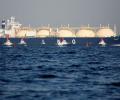
A Liquefied Natural Gas (LNG) carrier, chartered by an Indian firm, safely transited through the Strait of Hormuz -- the first Indian LNG tanker to cross the war-hit narrow shipping lane since the war in West Asia broke out more than three and a half months back.

Donald Trump has expressed confidence that Tehran will engage in diplomatic talks, warning that the country will 'see problems' should it refuse to cooperate.

Former US President Donald Trump claimed that Iran has agreed to return its "nuclear dust" to the United States as part of broader assurances not to pursue nuclear weapons. He expressed optimism about ongoing negotiations and a potential deal.

US President Donald Trump has indefinitely extended the ceasefire with Iran at the request of Pakistan, aiming to allow Tehran's leadership time to form a unified proposal to end the seven-week war.

South African President Cyril Ramaphosa on Friday described BRICS as an important global forum, highlighting the grouping's growing demographic and economic weight and noting that its members account for around half of the world's population and 40 percent of global GDP.

The United States has redirected 48 vessels in the Persian Gulf, particularly in the Strait of Hormuz, over the past 20 days amid ongoing enforcement actions related to restrictions on Iranian maritime assets by the US Navy.

Prime Minister Narendra Modi, addressing the SCO summit in Bishkek, called for a united front against terrorism and its financing, rejecting double standards. He emphasised resolving conflicts through dialogue and diplomacy, not battlefields. Modi also highlighted that connectivity projects must respect national sovereignty and territorial integrity, a veiled reference to China's Belt and Road Initiative. India's vision for SCO rests on security, connectivity, and opportunity.

US President Donald Trump received a red carpet welcome in Beijing for talks with Chinese President Xi Jinping on trade, the Iran war, and other key issues. The visit underscores the importance both nations place on their relationship amid ongoing tensions.

The US Central Command announced a new wave of strikes against Iranian military infrastructure, aiming to degrade Tehran's ability to threaten civilian mariners and commercial vessels. This comes as US President Donald Trump described the situation as a 'skirmish' and suggested Iran wants to 'make a deal,' while Iran's Foreign Minister warned of a 'decisive response' to any aggression.

Indian benchmark indices, Sensex and Nifty, rallied significantly following a sharp decline in crude oil prices. This decline was triggered by US President Donald Trump's announcement of progress in negotiations with Iran towards a peace agreement, which led to renewed optimism in global markets.

Iran's Supreme Leader Ayatollah Ali Khamenei claims a new chapter is emerging in the Persian Gulf due to the 'shameful failure' of the United States in the region, citing shifting regional dynamics and weakening foreign influence.

Uncertainty surrounds the planned second round of peace talks between the US and Iran in Islamabad, as both sides engage in brinkmanship. Despite Pakistan's security preparations, Iran has yet to confirm its attendance, citing a lack of seriousness from the US in pursuing diplomacy and violations of the ceasefire.
Iran has announced the Strait of Hormuz is open to commercial vessels, coinciding with a ceasefire between Lebanon and Israel.

Iranian Foreign Minister Seyed Abbas Araghchi spoke with Indian counterpart S Jaishankar to discuss the West Asia crisis, following discussions with Russian President Vladimir Putin.

The question is whether the clocks allow enough time for two deeply mistrustful sides to get there, and whether the surface calm holds long enough for the paddling to produce something before the ceasefire ends on April 22, notes Prem Panicker in his must read blog on the Iran War.

Indian stock markets, including the Sensex and Nifty, experienced their third consecutive day of declines, driven by a global selloff, escalating tensions in West Asia, and a subsequent rise in crude oil prices.

Iran is fighting a different war: Older, slower, and in some ways more dangerous. Iran doesn't need to shoot down an F/A-18. It only needs to make the Strait of Hormuz feel dangerous long enough for insurance markets, shipping companies, and oil futures traders to do the rest. Prem Panicker continues his must-read daily blog on the war in the Middle East.

Pakistan has intensified its efforts to bring the US and Iran back to the negotiating table to end the war in West Asia, following President Trump's extension of the ceasefire. Pakistani officials have engaged with Iranian, Turkish, and British counterparts to promote dialogue and diplomacy for a peaceful resolution.

US Vice President J D Vance stated that while progress was made during peace talks in Islamabad, it is now up to Iran to further the discussions and address US concerns regarding its nuclear ambitions.

India and China are in what experts call 'a cooperation-versus-competition situation'.

US President Donald Trump has shared an article suggesting that the option of enforcing a naval blockade was available in the context of Iran, as peace talks ended in a stalemate in Islamabad after differences of opinion arose between the two parties on the Strait of Hormuz and Iran's nuclear capacities.

Trump added that the United States would assist in managing the traffic buildup in the Strait of Hormuz.

Russian President Vladimir Putin has offered his support to help bring peace to West Asia, praising the Iranian people for their resilience. This comes as Iran seeks to resolve the conflict with the US, following discussions with Pakistani and Omani leadership.

Lapid said the Israeli military carried out everything that was asked of it, but Netanyahu failed politically and strategically.

Indian benchmark equity indices Sensex and Nifty surged in early trade, driven by a sharp correction in crude oil prices below USD 100 per barrel and a rally in global markets, fuelled by improving sentiment surrounding US-Iran negotiations.

Iranian Foreign Minister Seyed Abbas Araghchi has warned the United States that Iran is ready to confront American troops if the US launches a ground invasion, calling such a move a potential 'big disaster' for Washington.

India has advised its citizens residing in Iran to leave the country due to the evolving security situation, including protests and fears of potential US military action.

The purge in Washington does not pause the war. Strikes continue, Hormuz remains closed, and Brent crude is still dancing around $109 a barrel. For India, the command chaos in the Pentagon is another layer of uncertainty piled on five weeks of conflict that was already straining every buffer Delhi has.

US President Donald Trump threatened to bomb Iran if a deal is not reached before the ceasefire ends, while Pakistan urged both sides to extend the truce and pursue diplomacy.
