
National Security Advisor Ajit Doval has travelled to Russia to hold crucial talks on bilateral energy and defence ties and to prepare ground for Russian President Vladimir Putin's visit to India later this year.

Prime Minister Narendra Modi on Saturday met United States Ambassador-designate to India Sergio Gor and said he was confident that India-US ties will further strengthen during his tenure.
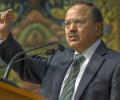
The government on Thursday reappointed former IPS officer Ajit Doval as the National Security Adviser (NSA), according to an official order.
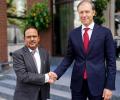
National Security Advisor Ajit Doval met with Russian First Deputy Prime Minister Denis Manturov to discuss bilateral military-technical ties and implementation of joint projects in strategic sectors. The meeting comes amid growing US pressure and tariffs on Indian goods.

The ulema have a leading role in educating the people on the original tolerant and moderate principles of Islam and countering extremism with progressive ideas and thought, National Security Advisor Ajit Doval said Tuesday.
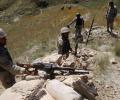
India and Central Asian nations agree to collaborate with Afghanistan on security challenges amid escalating tensions with Pakistan. The discussions took place at the third India-Central Asia meeting of top security officials in Bishkek.

NSA Ajit Doval has indicated that dates for Russian President Vladimir Putin's visit to India are being worked out during his meetings in Moscow. Discussions also covered bilateral energy and defence cooperation, amidst ongoing concerns over India's procurement of Russian crude oil.

National security advisor Ajit Doval on Thursday said the new areas of warfare have shifted from territorial frontiers to civil societies, adding that factors like people's health, their sense of well-being and security, and their perception of government impact the will of a nation.

Afghan Foreign Minister Amir Khan Muttaqi arrived in New Delhi for a six-day visit, marking the first high-level trip from Kabul since the Taliban's takeover. He is scheduled to meet with Indian officials to discuss bilateral relations and regional issues.

Doval said India's sovereignty goes as far as the last police station's jurisdiction from the coastal areas to the border areas.
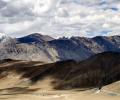
The Indian and Chinese militaries held a fresh round of high-level military talks focusing on maintaining peace and security along the Line of Actual Control (LAC) in eastern Ladakh.
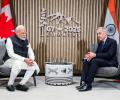
India and Canada have agreed to enhance security cooperation, including combating terrorism and transnational crimes, following Canada's decision to list the Lawrence Bishnoi gang as a terrorist entity.

Doval said India hit nine terror targets crisscrossing Pakistan with precision and missed none of them
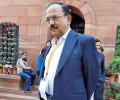
He was stopped by the security personnel and is now being interrogated by the Special Cell of the Delhi Police.

Modi has been chairing regular meetings with the top government functionaries involved in the country's military and diplomatic response to the Pahalgam terror attack of April 22.

The Galwan clashes indicate to the limitations in relations if they do not address border stability, points out Srikanth Kondapalli.
The Galwan clashes indicate to the limitations in relations if they do not address border stability, points out Srikanth Kondapalli.

Doval briefed his counterparts in the United States, United Kingdom, Saudi Arabia and Japan about India's missile strikes against terror infrastructure in Pakistan and Pakistan-occupied Jammu and Kashmir. He also established contact with Russia and France, officials said.

National Security Advisor Ajit Doval stated that India-China relations have shown an "upward trend" in the past nine months, with peace prevailing along the Line of Actual Control (LAC). This statement was made during talks with Chinese Foreign Minister Wang Yi on the boundary issue, ahead of Prime Minister Modi's visit to China for the SCO summit.
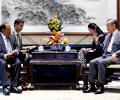
India and China are expected to discuss new confidence-building measures for durable peace and tranquillity along their contested border during Chinese Foreign Minister Wang Yi's two-day visit to India. The visit is seen as an effort to rebuild relations after the Galwan Valley clashes.
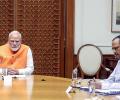
India's National Security Advisor Ajit Doval briefed US Secretary of State Marco Rubio on the country's missile strikes against nine terrorist targets in Pakistan. The strikes, dubbed "Operation Sindoor," targeted terrorist infrastructure in Pakistan and Pakistan-occupied Jammu and Kashmir. India stated that the strikes were measured, responsible, and non-escalatory in nature, targeting only known terror camps. The strikes followed a deadly attack on civilians in Jammu and Kashmir on April 22, for which India has accused Pakistan-based terrorists. The Indian government has cited credible leads, technical inputs, and survivor testimony as evidence of Pakistan's involvement in the attack.

National Security Advisor Ajit Doval met with Russian President Vladimir Putin in Moscow to discuss bilateral cooperation, reaffirming India's commitment to the relationship despite external pressures. Doval also extended an invitation from PM Modi for Putin to visit India later this year.
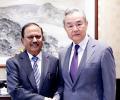
Wang is travelling to India days ahead of Prime Minister Narendra Modi's planned trip to the Chinese city of Tianjin to attend the annual summit of the Shanghai Cooperation Organisation.
India and Canada have agreed to adopt a collaborative approach towards a new chapter in bilateral ties, including working closely to combat terrorism and transnational crimes, the Ministry of External Affairs (MEA) said.

"I speak to journalists every day. But I do not remember giving any such interview. I strongly deny that I made such a statement," Doval said in a telephonic conversation to ANI.
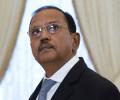
National Security Adviser Ajit Doval on Tuesday called for shunning double standards in combating terrorism and urged members of the Shanghai Cooperation Organisation (SCO) to hold accountable perpetrators, organisers and financers of cross-border terrorism, seen as reference to Pakistan.
India's National Security Advisor Ajit Doval is expected to attend a major security meeting in Moscow next week, organized by Russia's Security Council. Doval is invited for the 13th international meeting of high representatives for security issues, taking place from May 27-29. The meeting, chaired by Sergei Shoigu, Secretary of the Security Council of the Russian Federation, will see participation from over 150 countries and international organizations. Pakistan's NSA, Lt Gen Asim Malik, is also expected to attend the meeting, leading to speculation of a possible face-to-face meeting between the two NSAs amidst heightened tensions between India and Pakistan following the Pahalgam attack and subsequent retaliatory actions.
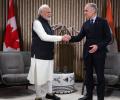
For Canada, important steps towards containing domestic elements that fuel pro-Khalistan sentiments can go a long way in signalling trust positively with regard to security and sovereignty, point out Harsh V Pant and Vivek Mishra.

Chinese Foreign Minister Wang Yi on Friday met Pakistan Army Chief Asim Munir and discussed regional security, counter-terrorism and matters of mutual interest.

'Prime minister is expected to hold some bilateral meetings on the sidelines of the SCO summit.'
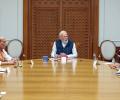
Shah briefed the prime minister on the attack and discussed the measures to be taken in its aftermath.
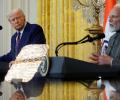
India responds to US President Trump's claim that PM Modi assured him of halting Russian oil imports, stating it is diversifying energy sources to meet market conditions and safeguard consumer interests.
US Ambassador-designate Sergio Gor emphasizes the importance of the India-US relationship after meeting with Prime Minister Narendra Modi, focusing on cooperation in defence, trade, and critical minerals.

United States President Donald Trump on Wednesday said Prime Minister Narendra Modi had assured him that India would stop purchasing oil from Russia, describing it as "a big step" in efforts to increase global pressure on Moscow.

"The NSA had to intervene as there was a large congregation going on there for several days and after his intervention, the Jamaat leaders also cooperated and vacated the place," the sources said.

Nepal has reiterated its claim over the Lipulekh territory, stating it is an inseparable part of the country, after India and China agreed to resume border trade through the area. The Nepalese government has incorporated the territory into its official map and Constitution. India has rejected Nepal's claims, asserting they are not based on historical facts or evidence.

National Security Advisor Ajit Doval on Monday emphasised the need to counter terrorism in all its forms for overall regional peace and stability during a meeting with Chinese Foreign Minister Wang Yi in Beijing.
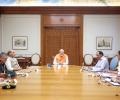
The NSAB is an advisory body that provides inputs to the National Security Council Secretariat.
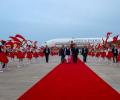
Prime Minister Narendra Modi arrived in China for the Shanghai Cooperation Organisation (SCO) summit. His meeting with President Xi Jinping is significant given global economic concerns.
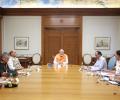
Prime Minister Narendra Modi chaired a meeting with top defence officials, including Defence Minister Rajnath Singh, National Security Advisor Ajit Doval and the chiefs of three services, amid India weighing its countermeasures following the Pahalgam terror attack which left at least 26 civilians, mostly tourists, dead. Modi has vowed to pursue the terrorists behind the attack and their patrons, a clear reference to Pakistan, to the "ends of earth" and inflict harshest punishment on them.
