
Indian eateries are adapting to the LPG crisis by cutting menus, increasing prices, and switching to alternative fuels like coal, as LPG supplies are disrupted due to global events. State authorities are cracking down on hoarding and black marketing of LPG cylinders.

External Affairs Minister S Jaishankar discussed the West Asia conflict and its impact on energy supplies with his Russian counterpart Sergey Lavrov and EU's Foreign Policy chief Kaja Kallas.

Iran has blamed the US for disruptions in oil and gas shipping through the Strait of Hormuz, citing 'destabilising actions' as the cause amid the ongoing West Asia conflict and rising energy prices.
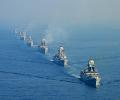
According to sources, the Indian Navy warships are on standby to provide assistance or help required by merchant vessels.

Iran has not closed the Strait. It remains open; however, due to current conditions and circumstances, ships are unable to pass through the Hormuz. Otherwise, Iran never wanted the Strait to be closed or blocked, the supreme leader's representative said.

Will rising tensions between US-Israel and Iran threaten crude oil supply through the Strait of Hormuz, putting India's fuel prices, imports, and economic stability at risk?

Trump also called upon China, France, and Japan, among others, to send ships to the Strait of Hormuz.

Let us start with ourselves. If we can reduce our LPG consumption by half, the problem is solved. Reduce wastage. Alter eating styles. Diversify methods of food preparation, suggests Vice Admiral Biswajit Dasgupta (retd).

Fathali further stated that Tehran has instructed its embassy in India to facilitate the Indian government, ensuring smooth operations amid the ongoing regional conflict.
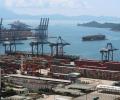
With the Iran war escalating sharply and crisis deepening in the global energy market, India on Monday unveiled a coordinated plan to support exporters and shippers caught in the fallout.

Indian refiners are negotiating for additional crude cargoes from the US, Russia, and West Africa to ensure adequate supplies amid Middle East tensions. Refineries are maintaining normal processing rates and deferring maintenance to build reserves. The move comes as conflict impacts tanker movements through the Strait of Hormuz, a key energy transit route.

What we are watching is something different: A fog manufactured and maintained by the people who started the war, so that the question of why it was started never has to be answered, observes Prem Panicker in his must read blog on the war in the Middle East.

When missiles fly in this region, they are never just aimed at military targets.

When everyone has footage and no one can verify it, the loudest voice wins, notes Prem Panicker who begins a daily blog on the War in the Middle East.

From the USA to UAE, Canada to Italy, Indian-origin cricketers will represent associate nations at the T20 World Cup. Meet the Desis chasing global glory at a home away from home.

The cost of any flight from Delhi and Mumbai could rise by up to Rs 3,000 soon unless the airport regulator is able to reverse a court order.

Brent crude oil prices can touch $150 a barrel (bbl) - up a whopping 103 per cent from the current levels - in the worst-case scenario if the Israel-Iran geopolitical tensions escalate, suggest analysts.
US strikes on Iran's three main nuclear facilities have once again raised concerns that Tehran might shut down the Strait of Hormuz - one of the world's most critical chokepoints, through which a fifth of global oil and gas supply flows.

Indian refiners are likely to import 2-2.2 million barrels per day of Russian crude oil in June - the highest in the last two years and more than the total volumes bought from Iraq, Saudi Arabia, the UAE and Kuwait, preliminary data by global trade analytics firm Kpler showed.

The Iran-Israel conflict has further increased global economic uncertainties, impacting world trade, including India's exports, as it is expected to drive up both air and sea freight rates, exporters say. They said that India's exports to Europe and counters like Russia may get impacted due to this war.
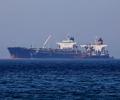
The US has sanctioned an Indian national based in the United Arab Emirates and two India-based entities for operating as part of Iran's shadow fleet and involved in shipping Iranian oil. The US Department of the Treasury said Jugwinder Singh Brar, who owns multiple shipping companies, operates as part of Iran's shadow fleet, which the US said is used to evade sanctions and transport Iranian oil. Brar also owns or controls India-based shipping company Global Tankers Private Limited and petrochemical sales company B and P Solutions Private Limited. The sanctions come as part of a US campaign of maximum pressure on Iran and target the country's petroleum and petrochemical sectors.

The finance ministry has rejected the formula and, instead, suggested an alternative that takes into account well-head prices of suppliers in Qatar, Oman, Abu Dhabi and Malaysia.
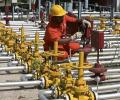
Gail India subsidiary Mahanagar Gas (MGL) on Friday announced a steep reduction in the retail price of compressed natural gas (CNG) by Rs 8/kg and domestic PNG (piped natural gas) by Rs 5/SCM across its licenced area. The move comes on the heels of the Centre revising the pricing methodology of domestically-produced natural gas on Thursday as proposed by the Kirit Parikh committee and following it with the new price announcement earlier in the day. In February, the city gas distributor reduced its CNG price by Rs 2.5/kg but prices are still around 80 per cent more than those in April last.
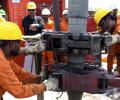
While prices sustaining lower levels is crucial, Govt actions are also a key monitorable given the forthcoming elections in 2024.
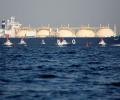
Oil and LNG prices are likely to shoot up if Iran is to block Strait of Hormuz, through which countries like India import crude oil from Saudi Arabia, Iraq and UAE, leading to a spike in inflation, analysts said on the Iran-Israel conflict. The Iran and Israel conflict has escalated over the last few days. Iran first launched drone and rocket attacks on Israel, which retaliated by firing a missile. Crude oil prices have hovered around USD 90 per barrel since the conflict.

A year after a Hamas attack against Israel on October 7 and the ensuing Israeli invasion of the Gaza Strip, India's trade with most West Asian countries has largely escaped any major disruption, except with countries like Israel, Lebanon, and Jordan. However, repeated flare-ups of geopolitical tensions in the region continue to drive up shipping and logistics costs.

India's net oil import bill could widen to $101-104 billion in current fiscal from $96.1 billion in 2023-24 and any escalation in the Iran-Israel conflict could impart an upward pressure on the value of imports, ICRA said on Tuesday. The domestic rating agency said based on its analysis, lower value of Russian oil imports is estimated to have led to savings of $7.9 billion in 11 months (April-February) of 2023-24, up from $5.1 billion in 2022-23.

The company had assets in countries like Yemen, Peru, Oman, Myanmar, Columbia, East Timor, Kurdistan and Australia, but it exited almost all these blocks later as part of its portfolio rationalisation

Top government officials in New Delhi have started discussions with stakeholders ranging from shipping and container companies to export promotion councils to understand the impact of the Iran-Israel tensions and plan ahead. Inter-ministerial talks are also being lined up amid the crisis situation in West Asia, sources confirmed. While the crude flows are not directly under any threat, elevated oil prices remain a concern, according to officials.

A government official said out that with hardly any economic activity, an immediate duty hike will not be productive and could be announced once the lockdown eases and demand revives.

'I have no problems with the finance ministry or with state governments treating petrol pump prices as the last resort for meeting their ambitious spending targets with very limited revenue resources.' 'But let's do away with this smokescreen of free pricing of petrol and diesel and go back to administered pricing regime,' says Dr Sudhir Bisht.

Electricity from Dabhol project in Maharasthra, which is being targeted to restart from July 2006, may cost over Rs 3 a unit as LNG suppliers quote twice the price of gas than the previous estimates.
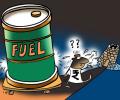
Given that India will get a huge part of its oil supplies from Iran through its government-owned oil PSUs, any unwelcome shocks in global crude rates could be absorbed well enough.

Declining crude price translates into lower under-recoveries for OMCs

The Indian basket represents the price of Oman and Dubai sour grade crude.

The public has benefited from this decline in crude oil, which has translated into lower prices of petrol and diesel.

Indian basket at 6-month low of $49.11 a bbl

Chinese stock markets suffered their biggest single-day drop since the global financial crisis.

According to estimates, if the companies are not allowed to raise petrol rates at least Rs 5 a litre by the first fortnight of September, they might begin to suffer underrecoveries on this decontrolled auto fuel, too -- for the first time this financial year.

Markets finished lower for the sixth consecutive day as hopes of the Goods and Services tax (GST) bill being passed in the current session of the Parliament faded considerably.
 © 2026 Rediff.com - Investor Information - Advertise with us - Disclaimer - Privacy Policy - Sitemap - Feedback - About us - Terms of use - Grievances