

Will rising tensions between US-Israel and Iran threaten crude oil supply through the Strait of Hormuz, putting India's fuel prices, imports, and economic stability at risk?

Tensions have sharply escalated after coordinated strikes by the United States and Israel on Iranian targets, followed by Iranian retaliatory attacks across the region. The conflict has raised fears of wider war and disrupted shipping near the Strait of Hormuz -- a key route for global oil and gas shipments.
Key Points
- The Strait of Hormuz is a narrow sea passage, about 33 km wide at its narrowest point, located between Iran and Oman.
- It connects the Persian Gulf to the Arabian Sea and is the world's most critical energy shipping route.
- Roughly 20 million barrels of oil -- about 20% of global consumption -- pass through it daily.
- Nearly one-fifth of the world's LNG trade, mostly from Qatar, also moves through this corridor.
- Escalating military tensions in West Asia have made the region highly unstable, raising fears of disruption.
- Even without a formal closure, threats or military activity can discourage ships and insurers from using the route.
- Saudi Arabia and the UAE have limited pipeline alternatives, together bypassing only about 2.6 million barrels per day.
- A full disruption could remove an estimated 15–18% of global oil supply, potentially triggering sharp price spikes.
- India imports about 85–86% of its crude oil needs, with roughly 46% coming from Gulf countries that depend on Hormuz.
- Higher oil and LNG prices would increase India's import bill, weaken the rupee, and raise fuel, food, and electricity costs.
What is the Strait of Hormuz?
It is a narrow strip of sea -- about 33 kilometres in width at its tightest point -- sitting between Iran on one side and Oman on the other. It connects the oil-rich Persian Gulf to the open Arabian Sea and thus acts as a major sea route for supply of oil and gas to the world.
Through this thin corridor passes roughly 20 per cent of oil consumed anywhere in the world. About 20 million barrels of oil flow through it every single day. One-fifth of the world's liquefied natural gas (LNG) also moves through here, most of it from Qatar.
In short: The Strait of Hormuz is the world's most important energy chokepoint.
What is happening there right now?

West Asia is currently facing a major crisis following a massive military attack on Saturday. On February 28, 2026, the United States and Israel teamed up to bomb several important military and nuclear locations across Iran. During these attacks, the country's top leader, Ayatollah Ali Khamenei, was killed in a strike on his home. This has left the Iranian government in a state of confusion as they try to figure out the repercussions of Khamenei's death.
In response to the bombing, Iran has fired many missiles at Israel and at American military bases in nearby countries like Qatar, Bahrain, Oman and the UAE. Because of the fighting, the Strait of Hormuz -- a very important sea route for the world's oil -- is now considered too dangerous for passage.
While there is no official international law closing it, the Iranian military is warning ships to stay away, and most large oil and shipping companies have stopped their boats from entering the area.
The Iranian parliament has not been able to meet yet to make any official decisions because the country is under constant attack and is observing a period of national mourning for their leader. This situation is causing a lot of worry around the world because the blocked shipping route could make gas and energy prices go up very quickly.
Has Iran actually closed it?
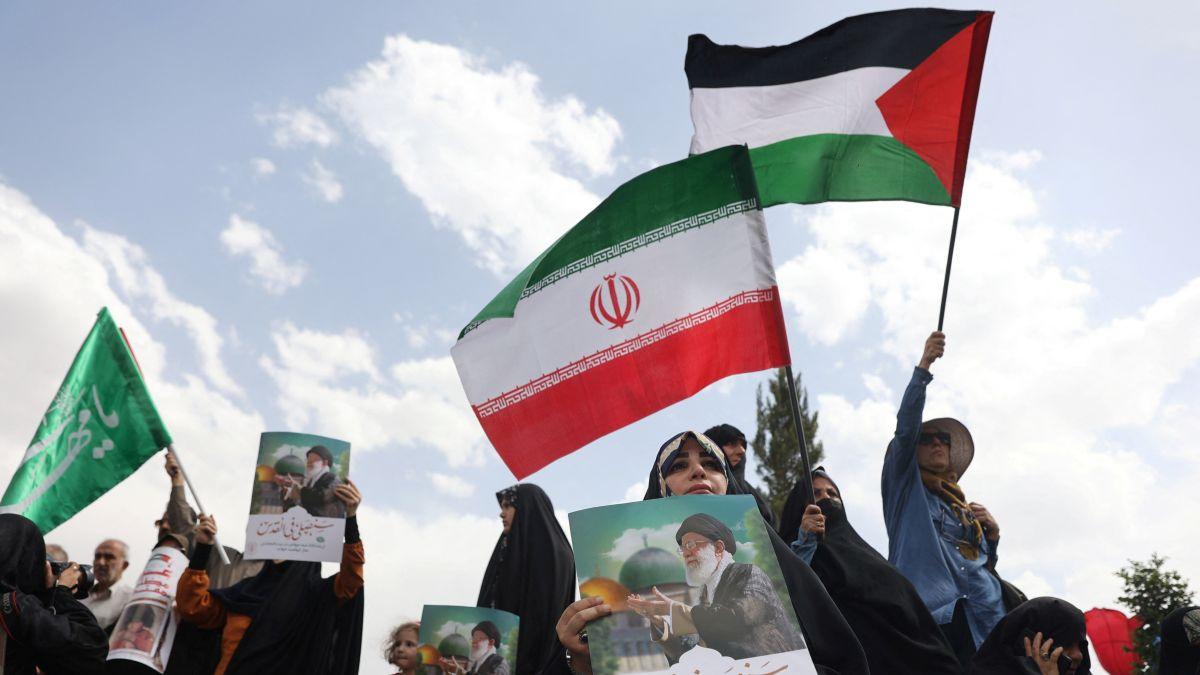
Not completely. Not yet. The parliamentary vote still needs to be approved by Iran's Supreme National Security Council.
But here is the thing: Iran does not necessarily need to physically block every ship. If tanker operators and insurance companies believe the route is too dangerous, they will stop sending ships themselves. That achieves the same result without Iran firing a single shot.
One US Congressional Research Service report had noted in its August 2025 report that even without physically blocking the strait, Iran could disrupt shipping through threats, mine-laying and harassment severe enough to deter tanker operators and insurers -- achieving much the same economic result.
Why would Iran do this? Doesn't it hurt Iran too?
Yes, it does. Iran exports roughly 1.9 million barrels of oil per day -- a vast majority of it to China -- and all of it passes through the same strait. Closing Hormuz would choke off Iran's own oil revenue, which is the country's economic lifeline, and would also impact China, Iran's most important ally in its current war against US-Israel.
This is why, despite decades of threats, Iran has never actually closed it.
But the situation today is different. The US and Israel have bombed Iranian nuclear sites, assassinated its Supreme Spiritual leader -- both red lines that Tehran has warned about for years. The domestic political pressure on Iran's leadership to respond dramatically is enormous.
Has something like this happened before?
Threats, yes. A full closure, no. But partial disruptions have happened -- and they give us a sense of what even a small shock can do to oil prices.
During the Iran-Iraq War in the 1980s, both countries attacked oil tankers in the Gulf for years in what became known as the Tanker War. Commercial shipping dropped sharply. The US eventually had to escort tankers through the region with their warships.
Going back, when Arab nations cut oil supplies during the 1973 war with Israel, they removed only about 7% of global supply -- and oil prices tripled.
A Hormuz closure could, according to some estimates, remove roughly 15-18% of global supply. The world has never seen a shock of that scale and magnitude.
What would happen to oil prices?
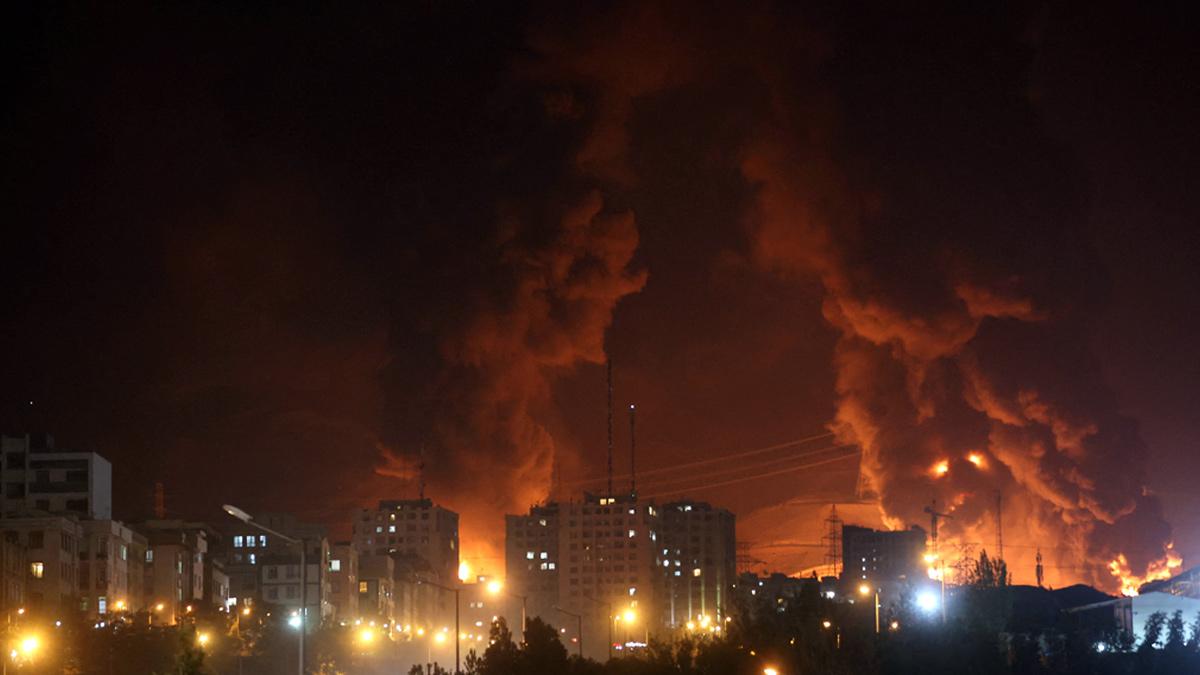
They would shoot up, and fast.
Barclays analysts have already warned that Brent crude could hit $100 per barrel just from the threat of disruption -- it was at $72 per barrel before the February 28 strikes. Some projections go much higher if the closure is sustained.
The reason prices move so fast is that oil markets run on what traders call a 'risk premium' -- the moment there is uncertainty about supply, buyers scramble and prices rise even before a single barrel is actually missing.
Is there any way to go around Hormuz?
Not much of one. Saudi Arabia and the UAE have pipelines that bypass the strait, but together they can only move about 2.6 million barrels per day -- against 20 million currently flowing through the strait. That covers roughly 13% of the gap.
Iraq, Kuwait, Qatar, and Iran itself have no bypass route at all. Ships can take the long way around Africa's Cape of Good Hope, but that adds two weeks to every journey and dramatically raises costs.
What does all this mean for India?
BIG PROBLEM…
India is the world's third-largest -- after US and China --- oil consumer. It imports about 85-86% of the crude oil it needs. And about 46% of those imports come from Persian Gulf countries -- Iraq, Saudi Arabia, the UAE and Kuwait -- all of whose oil use the passage through the Strait of Hormuz.
India also imports LNG mainly from Qatar, which has no alternative export route. LNG feeds fertiliser plants and power stations. When LNG gets expensive, so does food and electricity.
And it is not just energy. India's non-oil exports to Gulf countries -- engineering goods, gems, jewellery, chemicals -- likely exceed $50 billion a year. The livelihoods of millions of Indians working in the Gulf and sending remittances home are also at stake.
When oil prices jump, India's import bill swells, the rupee weakens, and petrol, diesel, and LPG prices all rise. The effects reach your kitchen and your commute via the beast called inflation.
Does India have any cushion?

Less than it did just a few months ago -- and that is the problem.
For the past three years, India's biggest buffer against a Gulf supply shock was cheap Russian crude. After Russia invaded Ukraine in 2022, India quietly ramped up purchases of heavily discounted Russian oil, which by mid-2025 accounted for roughly a third of all Indian crude imports.
Crucially, Russian oil reaches India via the Cape of Good Hope and the Suez Canal -- routes that have nothing to do with the Strait of Hormuz.
But that cushion has been significantly eroded. Under the India-US trade agreement announced on February 6, 2026, India committed to -- according to US President Donald Trump -- stop buying Russian oil in exchange for a reduction in US tariffs from 50% to 18%.
Euronews Indian exports of Russian oil were already down 29% month-on-month in December 2025, slipping further to 1.2 million barrels per day in January -- well below the roughly 2 million barrels per day seen in mid-2025.
In plain terms: the one supply source that bypassed Hormuz entirely is now being phased out -- just as Hormuz itself is under threat. India is, in effect, being pushed back towards greater Gulf dependence at the worst possible moment.
India's imports of US crude reached their highest level since March 2021 in October 2025, driven partly by the need to signal responsiveness to Washington, DC, and avert secondary sanctions on Indian refineries. But US oil, like Gulf oil, also has to navigate the Arabian Sea and Indian Ocean routes -- and at far higher prices than discounted Russian crude.
India does hold strategic petroleum reserves and several weeks of commercial inventory. The government has indicated it could reduce excise duties on fuel if prices spike sharply. But these are short-term shock absorbers, not structural solutions.
What about China?
China is even more exposed. It is the world's largest oil importer, and a massive share of its crude comes through Hormuz. China, India, Japan, and South Korea together account for 69% of all oil flowing through the strait.
China is also Iran's most important trading partner and buys almost all of Iran's exported oil. This puts Beijing in an awkward spot: it needs Hormuz open, but it will not support military action against Teheran.
Analysts believe China will apply quiet but significant pressure on Iran to keep the strait open -- which is itself one of the reasons a full closure may not happen.
So should we be worried?

Most analysts believe a prolonged, complete closure is unlikely. Iran has too much to lose. The US Navy -- which operates its Fifth Fleet from Bahrain, right next to the strait -- would act to reopen it. And China would push Iran hard behind the scenes.
But a partial disruption is a real possibility. Harassment of tankers, mine-laying, threats that push up insurance premiums -- these can achieve much of the same economic damage without Iran formally closing anything.
And in oil markets, even a possibility is enough to move prices. The uncertainty alone is the problem.
The petrol pump, the kitchen cylinder, the price of your vegetables -- they are all connected, one way or another, to that narrow strip of water between Iran and Oman.







 © 2026