
It's been 16 years since Rajeev Samant launched the first Sula wine by selling 50,000 cases. Today Sula is on track to sell a million cases this year.

'I believe one of the most critical issues is the common threat we face from Islamist radicals and the continuing and unimpaired financing of Al Qaeda, the 'D' Company, the Haqqani network, the LeT and the Jaish-e-Muhammed.'

Rediff.com's Rajesh Karkera made an 11-day road voyage across some of South Asia's most deserted, challenging, terrain, always under the gaze of the sacred, dazzling Himalaya.
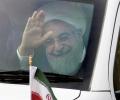
Hassan Rouhani to offer Friday prayers in Hyderabad's Mecca Masjid.

United States President Barack Obama on Sunday arrived in India for a highly anticipated three-day landmark trip during which the two countries will strive to make progress on climate change, defence and economic cooperation.
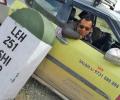
He has driven into the Limca Book of Records twice. Tamanna Naseer finds out more about the battles Eric Paul fights despite being paraplegic.

'More and more young chefs, instead of inventing new things, are exploring more deeply inside India,' Indian Accent's Manish Mehrotra tells Rahul Jacob.

'In our country, there is a lot of checks and balances, the figures cannot go wrong.' 'Because they are being checked by not only the governments, but by doctors themselves.'

Rediff Reader Ansh M visited Udaipur recently and came back with a bagful of memories!

'The best way to make an impact in this market is by focusing on three things: Unmet customer need, unarticulated customer need, and emerging customer need,' Metro's Arvind Mediratta tells Sangeeta Tanwar and Alokananda Chakraborty.

'I have been managing people since I was very young. I really enjoy it.' 'For me, age is only a proxy for experience.'
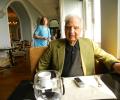
On a visit to India in 2013, writer Ved Mehta -- who passed into the ages on Sunday January 10, 2021 - gave Rediff.com's Vaihayasi Pande Daniel a rare glimpse into his state of mind and what he thinks of the changes he encounters in his motherland.
'The government must covertly eliminate the leaders of terrorist organisations abroad so as to eliminate the problem at its roots,' recommends Brigadier Gurmeet Kanwal (retd).

'Power is always transitory, and you should be the same person whether you have it or not,' the head of the number one law firm in India tells Pavan Lall.
'The airline business is very dynamic. If you are unable to keep up and lead, you end up last.' 'This is what has happened to Jet.'

'If Ruttie had been alive, Jinnah would never have turned communal.'

Naresh Chandra was most certainly among the greatest patriots two generations of Indian strategists have seen.
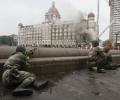
Through its early days to the 1980s, Pakistan sought to expand its sphere of Islamic influence through Afghanistan to Central Asia and got Pakistani citizens recruited in the Afghan government institutions in the 1990s when the Taliban were power. Now, it is looking eastward through India to Bangladesh and Myanmar to establish an imaginary caliphate.

Saroj Kumar Rath, author of the newly-published book Fragile Frontiers: The Secret History of Mumbai Terror Attacks, speaks to Rediff.com's Vicky Nanjappa.

"The space you inhabit is an extension of yourself," Nainika Karan had said in an interview. It is with this thought that Gauri and Nainika have extended their fashion line to home decor as well. Pradeep Sachdeva, architect and owner of a design studio, reviews fashion designer Gauri and Nainika's new home decor label

The new entrants are young, enterprising Chinese men and women who want to tap into the promising Indian market.

'Smita had it all planned out. She was pregnant then and planning to leave Raj Babbar after the baby was born. In an enthralling new book Smita Patil, A Brief Incandescence (HarperCollins), Maithili Rao reveals the many fascinating facets of the incomparable actress whom we lost too young.

Senior journalist Sandeep Unnithan, author of Black Tornado, a semi-official account of the 26/11 attacks, was on Rediff.com chat on November 26. In what was a frank and instructive interaction Rediff users spoke to the scribe about his views on the status of security and possible upgrades to the same.

Ratan Tata was the first one to realise that Indian companies had become a prisoner to tradition and needed to radically innovate.

'In 2015 I watched films in so many places. I attended several film festivals around the world -- Berlin, Tribeca (New York), Telluride, Toronto, Zurich, Mumbai, Dharamsala and Goa,' says Aseem Chhabra, author of a forthcoming book on Shashi Kapoor.


Amitabh Kant tells Rahul Jacob how India could be made an easier place to do business in and why India's software smarts will give it an edge.

The band's trip to Rishikesh delayed their split till 1970! This & other unheard stories...

26/11 survivor Anamika Gupta on her unforgettable encounters with the terrorists.
'My mantra is simple. If a customer demands something, we have to deliver at the speed he wants. No customer will wait for us. That is where local top-quality talent comes in,' says the MD of Bosch India.

Ranjita Ganesan and Nikita Puri chronicle the journey of Abhishek Poddar, one of India's leading art patrons.

Of all the other cities in India, Bangalore is one city, where you can actually walk around and take in the crowd and confusion, says Sumit Ganguli.

'Today if you look at the way India is growing many people are saying the sleeping elephant has finally woken up, is dancing!' 'I have travelled extensively, in about 60 countries. In all these the moment you say India, the first thing they mention is either an actor's name. Or they start humming a song.' 'I wanted to be in Bollywood. It is the most powerful medium we have in this country. That's soft power.' Listening in on Shobhaa De, Kabir Khan, Vikas Swarop and Saffron Art CEO Hugo Weihe speak on India's Soft Power, Hard Influence.
 © 2026 Rediff.com - Investor Information - Advertise with us - Disclaimer - Privacy Policy - Sitemap - Feedback - About us - Terms of use - Grievances