
Shares of fintech firms, particularly Paytm, saw significant movement after the Indian government introduced a 0.4 per cent fee on UPI transfers exceeding Rs 2,000 made to merchants, effective October 15.

The Indian government has introduced a 0.4% fee on UPI transfers above Rs 2,000 made to merchants, effective October 15, ending nearly six years of free merchant payments. This move led to initial rallies in fintech stocks like Paytm and Mobikwik, though some later pared gains. Person-to-person transactions and small payments remain free for customers, with the fee being a Merchant Discount Rate (MDR).

India-US ties may be strained, but abandoning the relationship is not the answer; India must deal with Washington firmly without becoming either servile or hostile, asserts Ambassador T P Sreenivasan.

Citizens in Delhi faced significant restrictions and detentions on Saturday while attempting to protest alleged irregularities in voter rolls. Despite barricades, metro closures, and vehicle diversions, individuals found various ways to reach central Delhi, determined to voice their concerns about the electoral process and fundamental rights.
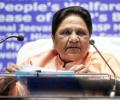
BSP chief Mayawati has criticised the Centre's decision to introduce a 0.4 per cent fee on UPI merchant transactions exceeding Rs 2,000, effective October 15. She termed it a "capitalist profiteering attitude" that burdens the common people, while the government clarified that the charge is on merchants and not customers for person-to-person transactions.

The Finance Ministry has clarified that the decision to impose a 0.4% Merchant Discount Rate (MDR) on UPI transactions above Rs 2,000 was made independently, refuting claims of foreign influence. The ministry stated the policy aims to build a self-sustaining digital payments ecosystem, with MDR funding infrastructure and supporting small merchants.

Samsung India has launched an Innovation Campus in Karnataka, in partnership with Nrupathunga University, to train 2,000 young individuals in industry-relevant AI skills. This initiative aims to support Karnataka's goal of building an AI-native ecosystem and developing a future-ready technology workforce, expanding access to practical AI education.
The Indian government has introduced a 0.4 per cent charge on UPI payments exceeding Rs 2,000 made to merchants, with a cap of Rs 300 for transactions of Rs 75,000 and above. This policy shift ends the zero-MDR regime, which was previously criticised by financial institutions. While essential sectors and capital markets have specific fee structures, small merchants with monthly UPI QR code earnings up to Rs 1 lakh remain exempt. Person-to-person transfers are unaffected, and measures are in place to prevent merchants from passing these costs to customers.

Left parties have strongly condemned the government's decision to impose charges on UPI payments exceeding Rs 2,000, with CPI General Secretary D Raja alleging the move was made under "US pressure" to favour foreign payment companies. Both CPI and All India Forward Bloc demand the withdrawal of this "anti-people decision," arguing it burdens consumers and merchants while undermining UPI's role as a public digital infrastructure. They highlight concerns that the charges weaken India's digital sovereignty and serve commercial interests of foreign corporations like Visa and Mastercard.

'93 lakhs deletions in Bengal, 96 lakhs in Tamil Nadu, 24 lakhs in Kerala, 77 lakhs in Gujarat, 45 lakhs in Madhya Pradesh, 44 lakhs in Rajasthan. 2.89 crores in Uttar Pradesh. Nearly 3 crores!'

Fintech company BharatPe has expressed strong support for the government's new Merchant Discount Rate (MDR) framework for UPI merchant transactions, which introduces a 0.4% fee on transfers exceeding Rs 2,000. The company explicitly distanced itself from critical remarks made by its former co-founder Ashneer Grover, clarifying that his views do not represent BharatPe's stance. BharatPe CEO Nalin Negi highlighted that the framework aims to strengthen digital payment economics, protect consumers and small merchants, and expand adoption in underserved markets, with most transactions remaining unaffected.

When it pretends to be deaf, a situation can snowball into something it cannot contain. The government cannot dismiss public anger merely because protests are inconvenient or politically embarrassing, asserts Ramesh Menon.

The Finance Ministry has clarified that the 0.4 per cent Merchant Discount Rate (MDR) on UPI transactions above Rs 2,000, effective October 15, is not expected to increase cash transactions or cause inflation. The ministry also dismissed allegations of US pressure influencing the decision, asserting that the policy aims to promote RuPay credit cards within the UPI ecosystem, and a monitoring mechanism will ensure the MDR burden is not passed on to consumers.

The scenes are same; placards, viral videos, riot, police but the grievances could hardly be more different, notes Abhay Jere, ex-Vice Chairman, AICTE.

The Congress party has criticised the Modi government over a notification regarding UPI transactions, alleging it paves the way for imposing fees, especially on transactions above Rs 2,000. Rahul Gandhi claimed the government is surrendering to American pressure, while Mallikarjun Kharge highlighted the potential burden on common citizens amidst inflation. The government's notification prohibits charges on UPI transactions up to Rs 2,000 but remains silent on higher amounts, sparking fears of a "Digital Payments Tax."

The Indian government has mandated that banks and payment providers cannot levy charges on UPI transactions up to Rs 2,000 or on payments made via RuPay debit cards. This directive follows an amendment to the Payment and Settlement Systems Act, 2007, aiming to sustain and expand the digital payments ecosystem.

Indian tennis players Dhakshineswar Suresh and Sumit Nagal have made winning starts to their men's singles campaigns at the Asian Games, securing places in the pre-quarterfinals.

'If Gyanesh Kumar had some shame he would have resigned and would have taken agni pariksha.'

Opposition MPs have voiced strong criticism against the government's new fee on UPI payments exceeding Rs 2,000 to merchants, calling it "anti-people" and expressing widespread "outrage". The issue was raised in a Parliamentary Standing Committee meeting, where concerns were also flagged regarding the methodology of GDP growth calculation and the government's stance on Virtual Digital Assets.

The RSS-affiliated Swadeshi Jagran Manch (SJM) has urged the government to reconsider imposing a merchant discount rate (MDR) on UPI transactions above Rs 2,000, arguing that the costs do not warrant such a move. This comes after the government announced a 0.4 per cent fee on merchant transfers over Rs 2,000 from October 15, while assuring that person-to-person and small payments remain free. SJM co-convener Ashwani Mahajan highlighted that banks have not demanded MDR and that UPI has reduced their transaction costs.

The government is introducing a 0.4% Merchant Discount Rate (MDR) on UPI person-to-merchant payments above Rs 2,000, effective October 15. This move ends the zero-MDR regime, aiming to fund UPI infrastructure and sustainability, as the previous government subsidy was insufficient to cover operational costs. Payments between individuals and most everyday merchant transactions will remain free.

Delhi Police launched a massive crackdown, detaining Cockroach Janata Party (CJP) leader Abhijeet Dipke, YouTuber Dhruv Rathee, and nearly 500 protesters who attempted to reach Jantar Mantar for a demonstration against Chief Election Commissioner Gyanesh Kumar. The Opposition, including AAP and Congress, denounced the situation as 'worse than the Emergency'.

Petrol pump dealers seek exemption from the proposed 5 UPI charge on fuel purchases above 2,000, citing pressure on their margins.

Former Rajasthan chief minister Ashok Gehlot has criticised the Centre for introducing a 0.4% charge on UPI transactions above Rs 2,000, alleging the decision was influenced by pressure from the United States and its payment companies like Visa and Mastercard. He highlighted a perceived shift in the government's stance on Merchant Discount Rate (MDR) for UPI, claiming it would ultimately burden consumers and small businesses while benefiting American firms.

The Congress party has criticised the government's new 0.4% charge on UPI transactions above Rs 2,000 for merchants, terming it a "Modi tax". Opposition leaders, including Rahul Gandhi and Mallikarjun Kharge, allege that this move will ultimately burden consumers through price hikes and accuse the government of succumbing to American pressure to dilute India's zero-MDR policy. The government states the charge will support banks and fintechs.

Remember when matching skirt-and-blouse sets were the unofficial uniform of every early-2000s It girl? Now, the trend's back.

UPI processed an average 802 million transactions a day in September, about 1 per cent more than the 792 million a day over the same period in August.

Pakistan volleyball captain Murad Jehan expressed frustration over logistical mismanagement at the Aichi-Nagoya Asian Games after his team was taken to the wrong venue, leaving them short on warm-up time and forcing players to change on the bus.

The National Payments Corporation of India (NPCI) stated that the Merchant Discount Rate (MDR) "is distributed only amongst the UPI ecosystem, to further invest into infrastructure resilience, innovation, cybersecurity (protecting the UPI infrastructure with banks and non-banks) and customer service."

The central government has introduced a 0.4 per cent fee on UPI transactions exceeding Rs 2,000, prompting traders' associations to advocate for cash payments to avoid additional costs on digital payments. This move ends the zero-Merchant Discount Rate (MDR) regime, with traders expressing concerns about operating on tight margins and the potential for increased charges.

Prime Minister Narendra Modi has urged for a global framework to combat cross-border cyber frauds and deepfakes, highlighting the need for governments, tech companies, telecom operators, and financial institutions to collaborate. Speaking at the India Mobile Congress 2026, Modi stressed that technology thrives on trust and that India is ready to share its expertise in tackling cyber threats. He also noted the rapid expansion of 5G and the success of digital governance initiatives like Direct Benefit Transfer.

The Indian government has challenged Congress leader Rahul Gandhi's criticism of levying fees on UPI payments above Rs 2,000 to merchants. The government highlighted that a parliamentary standing committee, which included Congress MPs, had previously backed a tiered Merchant Discount Rate (MDR) framework for UPI. This move aims to ensure the financial sustainability of the UPI ecosystem and reduce its dependence on government subsidies, a concern raised by the committee due to the significant funding gap between allocations and operational costs.

Thirteen-year-old Yu Zidi's three golds and MVP award provided a golden highlight as the Aichi-Nagoya Asian Games closed after a fortnight of logistical problems.
The Congress party has criticised the government's recent notification regarding UPI transactions, alleging it paves the way for users to be charged fees, particularly for transactions above Rs 2,000. The party claims the government lacks transparency and questions if the move is to benefit American firms. The government, however, states that charges are necessary for the system's sustainability and infrastructure upgrades, with the Finance Minister clarifying that Merchant Discount Rate (MDR) applies to merchants, not customers.

A football friendly match between India and Brazil, featuring star player Vinicius Jr, saw a surprisingly low attendance at Kolkata's Salt Lake Stadium. High ticket prices and the ongoing Durga Puja festival are cited as the primary reasons for the subdued response, contrasting sharply with the usual fan frenzy for local derbies and past international events.

Opposition parties, including Congress, TMC, and RJD, have strongly criticised the government's decision to impose a 0.4% Merchant Discount Rate (MDR) on UPI transactions exceeding Rs 2,000 made to merchants. They allege the move is a result of "American imperialism" and will lead to increased commodity prices, while the government maintains the charge is on merchants and not consumers, with person-to-person transactions remaining free.

The Finance Ministry has dismissed allegations of US pressure influencing the 0.4% Merchant Discount Rate (MDR) on select UPI transactions. It clarified that NPCI guidelines prioritise RuPay credit cards on UPI and do not favour international cards. The ministry also asserted that the MDR, applicable to person-to-merchant transactions above Rs 2,000, is unlikely to increase cash transactions or cause inflation, with measures in place to prevent burdening consumers.
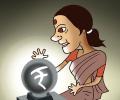
The Finance Ministry has refuted allegations that US pressure influenced the decision to levy a 0.4% Merchant Discount Rate (MDR) on select UPI payments. It clarified that NPCI guidelines prioritise RuPay credit cards on UPI to foster a domestic payment ecosystem and that the MDR introduction aims to create a sustainable revenue model for smaller domestic companies, thereby protecting India's sovereignty in digital payments.
The Congress party has accused the Indian government of imposing new charges on UPI transactions due to pressure from the United States, specifically to benefit American card companies. The opposition party demanded the withdrawal of the decision, calling it "anti-national" and alleging it fills the coffers of US firms while burdening Indian citizens. The government, however, clarified that the Merchant Discount Rate (MDR) charges apply only to commercial transactions above Rs 2,000 and are not levied on consumers, a stance supported by the BJP which accused Congress of spreading "fake news".
Congress leader Rahul Gandhi has accused the Modi government of quietly paving the way for imposing fees on UPI transactions, alleging it's a surrender to American pressure. The government's recent notification exempts charges only up to Rs 2,000, sparking concerns that higher value transactions and eventually all UPI payments could incur fees. Finance Minister Nirmala Sitharaman, however, clarified that Merchant Discount Rate (MDR) applies to merchants, not customers, and supports digital infrastructure.
