
The Lok Sabha is set to expand to 815 seats, with 272 seats reserved for women, according to Union Law Minister Arjun Ram Meghwal. The move aims to implement the women's quota without disadvantaging men or any state. The proposed legislations also include provisions for reservation for women from SC and ST categories within the women's quota.

A complaint has been filed against a woman who confronted Maharashtra minister Girish Mahajan over a traffic jam caused by a BJP rally in Mumbai, police said.

Prime Minister Narendra Modi appealed to Lok Sabha members to vote for the women's reservation bill, emphasising the need to empower women and rectify decades of political inaction.

Prime Minister Narendra Modi is advocating for the implementation of the Women's Reservation Act by the 2029 Lok Sabha elections and Assembly elections, urging all members of Parliament to support amendments to the Nari Shakti Vandan Adhiniyam during a special session.

Prime Minister Narendra Modi announced that Parliament is on the verge of creating 'new history' by amending the Women's Reservation Act this week, ensuring its implementation by 2029. He highlighted the unanimous passage of the law in 2023 and the collective demand for its early enforcement.
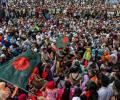
Union Health Minister J P Nadda launched a scathing attack on the TMC in West Bengal, accusing it of appeasement politics, shielding infiltrators, and presiding over a corrupt and lawless regime.

The woman who confronted BJP workers during a protest in Mumbai's Worli area last month has criticised all political parties for disregarding the general public.

A bill to implement 33 per cent reservation for women in Lok Sabha and state assemblies by increasing the lower house's strength to 850 is slated for introduction in Parliament. The bill seeks to amend Article 81 of the Constitution and utilise 2011 Census data for redrawing constituencies.

NDA leaders have defended proposed amendments to the Women's Reservation Act and the Delimitation Bill, 2026, arguing women have waited long enough for reservation, while opposition parties allege the process could undermine India's federal and democratic structure, particularly impacting southern states.

Prime Minister Narendra Modi addressed the BJP's 47th Foundation Day, highlighting the Uniform Civil Code and 'One Nation, One Election' as key unfinished agendas. He also reaffirmed the party's commitment to implementing women's reservation in the 2029 elections and criticised dynastic politics.

The government has released a set of FAQs to address concerns and clarify the details surrounding the Women's Reservation Bill, which aims to provide 33 per cent quota for women in legislatures.

Union Home Minister Amit Shah criticises the Congress and its allies for the defeat of the Constitution amendment bill aimed at implementing 33 per cent women's quota in legislative bodies before the 2029 Parliamentary polls.

According to a bulletin issued on Wednesday, 'The Constitution (One Hundred and Thirty-First Amendment) Bill, 2026', 'The Delimitation Bill, 2026' and 'The Union Territories Laws (Amendment Bill), 2026' will be introduced and debated for passage in the Lower House.

The Indian Parliament is expected to extend its budget session to introduce a bill increasing Lok Sabha seats to 816, reserving 273 for women, and amending the women's reservation law.

A Constitution Amendment Bill aimed at implementing 33 per cent reservation for women in legislatures and increasing Lok Sabha seats was defeated in Parliament, marking a setback for the government's efforts to empower women in politics.

An irate woman confronted Maharashtra minister Girish Mahajan during a BJP demonstration in Mumbai, blaming him for the traffic chaos caused by the protest over the women's reservation bill. The incident, captured on video, has sparked criticism of the BJP's protest tactics.

With the three-day special sitting of Parliament on the constitution amendment bill related to the implementation of 33 percent reservation for women from the 2029 Lok Sabha polls set to begin on Thursday, a meeting of opposition parties is slated to be held on Wednesday at the residence of Congress president Mallikarjun Kharge.

A viral video of a woman confronting a Maharashtra minister over traffic jams caused by a BJP rally has sparked a backlash, forcing the ruling party to defend its actions and prompting apologies for the inconvenience caused to commuters.

Haryana Chief Minister Nayab Singh Saini commemorated B.R. Ambedkar's birth anniversary, highlighting his contributions to women's empowerment and social justice. Saini and Union Law Minister Arjun Ram Meghwal criticised the Congress party for allegedly disrespecting Ambedkar, while praising the current government's efforts to honour his legacy.

Several opposition parties on Wednesday decided to jointly oppose the delimitation provisions in the Constitution amendment bill in Parliament, even as they reiterated support for women's reservation, with Mallikarjun Kharge alleging the move is politically motivated.

'The Supreme Court stated that once the delimitation plan is approved by Parliament and receives assent of the President, it cannot be undone. Nor can it be modified.'
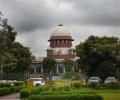
The Supreme Court has sought the Centre's response on a plea seeking the implementation of the 2023 Nari Shakti Vandan Act, which reserves one-third of seats for women in the Lok Sabha and state assemblies.
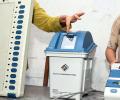
EVMs can't be used in presidential, vice-presidential, or Rajya Sabha polls because they only count simple votes, not the preference-based system needed for these elections.
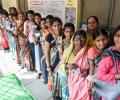
Former chief justices of India, who have conveyed their views to a parliamentary committee on the bill proposing simultaneous polls, have endorsed the constitutionality of the 'one nation, one election' concept but have raised concerns over its various aspects, including the power given to the Election Commission, and offered suggestions.
As an IAS officer in Kerala, Gyanesh Kumar -- who the Congress described as Amit Shah's 'right hand man' -- had a good working equation with the state's Congress and Left leaders.
The nearly 13-minute speech, with a booming voice resembling that of Bal Thackeray, began with his trademark opening line Jamlelya majhya tamam Hindu bandhavanu, baghinino ani matano (greetings to my Hindu brothers, sisters and mothers who have gathered here).
The government has deferred the introduction of bills related to 'one nation one election' in the Lok Sabha till after the completion of financial business, sources said.
The government has listed two bills related to 'one nation, one election' for introduction in the Lok Sabha on Monday.
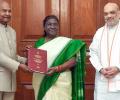
A high-level panel on 'One Nation, One Election' studied election processes in seven countries including South Africa, Sweden and Belgium before recommending simultaneous polls for Lok Sabha and state assemblies in India. The other countries where simultaneous elections are conducted are Germany, Japan, Indonesia, and the Philippines. The Union Cabinet approved bills to implement 'One Nation, One Election', and the draft legislations are likely to be introduced in Parliament in the ongoing Winter session.
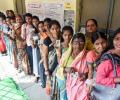
Ahead of the introduction of bills on holding simultaneous polls, the government Tuesday said the concept is not new to the country.
The bill which seeks to put in place a mechanism to hold simultaneous elections in the country has a provision for situations when election to an assembly cannot be held with those of Parliament.
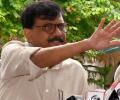
He said the opposition Maha Vikas Aghadi was studying the poll results and "technicalities" behind them.
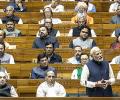
A constitutional amendment bill for holding Lok Sabha and assembly elections simultaneously is likely to be introduced in Parliament on Tuesday and could be referred to a joint committee of the two Houses.
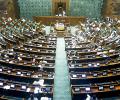
The Indian Parliament will introduce a constitutional amendment bill on Tuesday that seeks to hold Lok Sabha and state assembly elections simultaneously. The bill, popularly known as "one nation, one election", will be introduced by Union Law Minister Arjun Ram Meghwal and is likely to be referred to a joint committee of both houses for wider consultations. The bill also aims to align elections in the union territories of Jammu and Kashmir, Puducherry, and the NCT of Delhi. The move has been met with mixed reactions, with some supporting the idea of reducing election-related expenses and others expressing concerns about its impact on democratic processes.
A 39-member parliamentary panel has been constituted to examine the two bills proposing simultaneous elections to the Lok Sabha and state assemblies. The panel, chaired by BJP leader Bhratruhari Mahtab, will include prominent members from various political parties, including the BJP, Congress, SP, TMC, and DMK. The panel is expected to submit its report to the Lok Sabha by the first day of the last week of the next session. The government has decided to increase the committee's strength to include more political parties, highlighting the significance of this proposal to reform the election process in India.
The two 'One Nation One Election' (ONOE) bills, including one requiring an amendment in the Constitution, that lay down the mechanism to hold simultaneous elections were introduced in the Lok Sabha on Tuesday after a fiery debate.

Simultaneous polls will help save resources, spur development and social cohesion, deepen "foundations of democratic rubric" and help realise the aspirations of "India, that is Bharat", the panel had said.
The government must develop a legally tenable mechanism in order to restore the cycle of simultaneous elections.
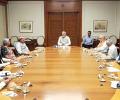
The Bharatiya Janata Party-led National Democratic Alliance government will implement 'one nation, one election' within its current tenure, sources said, exuding confidence that the reform measure would receive support across party lines.
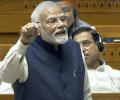
Prime Minister Narendra Modi on Saturday launched a scathing attack on the Congress party, accusing it of repeatedly "wounding" the Indian Constitution. He claimed that the Congress, driven by its "lust for power," has consistently undermined the principles of the Constitution. Modi, however, praised India's democratic journey since its independence, highlighting the country's strong democratic roots and its unwavering commitment to its founding principles. He underscored the importance of unity for India's future development and emphasized that the Constitution is the bedrock of that unity.
 © 2026 Rediff.com - Advertise with us - Disclaimer - Privacy Policy - Sitemap - Feedback - About us - Terms of use - Grievances