
The Election Commission reports a significant reduction in West Bengal's electoral rolls following a Special Intensive Revision, with nearly 9.1 million voters deleted.

The Election Commission's Special Intensive Revision (SIR) of electoral rolls has completed one year, leading to the deletion of nearly six crore voters across 19 states and Union territories. This exercise, which began in Bihar, has faced opposition criticism but was upheld by the Supreme Court. The purification drive has significant implications, including linking voter data to social security benefits in some states.

A PIL has been filed in the Supreme Court seeking a detailed constituency-wise disclosure of disenfranchisement caused by the Special Intensive Revision (SIR) of electoral rolls in West Bengal.

The EC also underlined that for electors whose enumeration forms have not returned, the Booth Level Officers (BLOs) would identify a probable cause, such as absent, shifted, dead and duplicate entry based on an inquiry from the nearby electors and would note the same.

The NCERT's Class 9 Social Science textbook now includes the Special Intensive Revision (SIR) of electoral rolls, explaining its purpose to ensure accurate voter lists. The textbook also commends the Election Commission of India (ECI) for conducting impartial polls despite challenges, highlighting the scale and autonomy of India's electoral process.

The TMC has refuted Prime Minister Modi's claim that high voter turnout in the first phase of the West Bengal Assembly polls indicates a mandate for change, asserting it reflects support for Mamata Banerjee and her government's development agenda.

West Bengal recorded its highest-ever voter turnout in the 2026 assembly polls since Independence, with a cumulative 92.47 per cent polling in two phases, the Election Commission said on Wednesday.

Repolling is taking place in 15 booths across two assembly constituencies in West Bengal's South 24 Parganas district, following reports of electoral malpractices during the previous phase of voting. The Election Commission ordered the repolls, and voting is being conducted under tight security with webcasting to monitor the proceedings.

Political parties in Kerala are increasingly using AI-generated content to influence voters in the upcoming elections, raising concerns about the blurring lines between reality and fiction in political messaging.

Government sources have clarified that a passport has never been considered proof of citizenship in India, a stance consistent for the past 12 years and rooted in the Passport Act 1967. This clarification, reiterated by the Ministry of External Affairs, has drawn criticism from opposition leaders and public figures.

West Bengal's upcoming 2026 election may hinge on the impact of recent electoral roll revisions, particularly in 65-70 closely contested constituencies where victory margins are slim. The deletion of over 90 lakh names, especially in key areas like Nandigram, Bhabanipur, and the Matua belt, has redrawn the electoral map, potentially influencing the outcome for both the TMC and BJP.

Amid the passport row, Shashi Tharoor has proposed legal changes to simplify proof of Indian citizenship.

Kerala's Chief Electoral Officer, Ratan U Kelkar, addressed concerns regarding the release of detailed polling data from the recent Assembly elections, defending the timeline and transparency of the process.

West Bengal Chief Minister Mamata Banerjee has accused the BJP of manipulating voter rolls to divide the state, alleging a conspiracy to deprive Bengali-speaking people of their voting rights. She claims the Election Commission is complicit in deleting lakhs of names from voter lists.
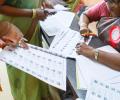
The Election Commission is preparing to launch the third phase of the Special Intensive Revision (SIR) of voters' lists, potentially covering 22 states and Union Territories with approximately 40 crore electors.
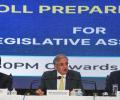
The Chief Election Commissioner, Gyanesh Kumar, has stated that the primary goal of the Election Commission is to ensure all voters in West Bengal can participate in the upcoming assembly elections without violence or intimidation.

Prime Minister Narendra Modi criticised the Mamata Banerjee government in West Bengal, citing misrule and corruption, and urged voters to elect the BJP for development and progress.

Prime Minister Narendra Modi criticised the Mamata Banerjee government in West Bengal, accusing it of misrule and hindering the state's progress. He appealed to voters to remove the TMC from power in the upcoming assembly elections, promising development and a corruption-free government under the BJP.

The Nationalist Citizens Party of India's campaign posters carry the message: 'To save your rights, reject political turncoats. Support social workers, not political personalities,' and urges voters to press the symbol of a pen nib.

Ideology is dead; long live the numbers game that is being played with the sole intention of securing a two-third majority in the Lok Sabha for the NDA, observes Nilanjan Mukhopadhyay.
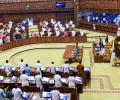
Kerala PWD Minister P A Mohammed Riyas has accused the UDF leaders of attempting to raise funds by falsely claiming they will form a government after the Assembly poll results.

Rebel Trinamool Congress MP Arup Chakraborty on Monday said the breakaway faction is trying to "rectify" the party, and would fight for the control of its election symbol, even as the Mamata Banerjee-led outfit termed the move illegal under the anti-defection law.

According to data released by the ECI, the revised electoral roll has 2,69,53,644 voters, compared to 2,78,50,855 before the Special Intensive Revision began in October last year.
Kerala PWD Minister P A Mohammed Riyas accuses UDF leaders of attempting to raise funds by falsely claiming they will form the government after the Assembly poll results.

Kerala is set to hold its Assembly election, with the ruling LDF aiming for a historic third term, the UDF seeking a comeback, and the NDA striving to gain a foothold in the state's political landscape.

While the total number of assembly seats remains unchanged at 126, the redrawing of boundaries has reshaped voter composition across constituencies -- a shift that is likely to influence electoral outcomes in the years ahead.
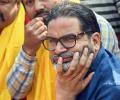
Jan Suraaj Party founder Prashant Kishor has moved to an ashram on the outskirts of Patna to continue his political activities ahead of the next assembly elections. He criticised Nitish Kumar and urged voters to prioritise their own interests.
The Supreme Court of India has upheld the Election Commission's documentation framework for the Special Intensive Revision of electoral rolls, affirming the commission's authority and stating that Aadhaar is not proof of citizenship.

The Trinamool Congress (TMC) has released its manifesto for the West Bengal elections, focusing on welfare politics and women's empowerment with pledges to expand existing schemes, improve healthcare, and develop infrastructure.

The 2026 election appears to have reinforced a new political formula in Assam: Strong organisation, continuous grassroots engagement, effective alliance management and welfare-based voter outreach.

Immigrants' contribution to the US economy is disproportionate to their share of the population, meaning that losing them would shrink the economy even more than losing a random group of Americans, points out Sree Sreenivasan.

Senior Trinamool Congress leader Kalyan Banerjee has commented on the Supreme Court judgment regarding the Special Intensive Revision (SIR) of electoral rolls, emphasising its specific application to the Bihar case and highlighting the Election Commission's limited authority in determining citizenship.

'The BJP's tally may dip, but the NDA is likely to retain power.'

The outcome of the assembly elections will not only determine AIUDF's immediate relevance but could also shape its long-term role in Assam's political landscape.

For over a decade, the TMC's dominance in districts such as Murshidabad, Malda and Uttar Dinajpur rested on a near-complete consolidation of Muslim votes, a bloc that accounts for 50 per cent or more of the population in large parts of this belt.

A significant 7.87 per cent increase in the BJP's vote share in West Bengal, reaching 45.84 per cent, propelled the party to secure an additional 130 assembly seats, bringing their total to 207, while the Trinamool Congress experienced a 7.22 per cent decline, losing 135 seats and falling to 80.

The delimitation in Assam has quietly changed the political scene, raising questions about whether new constituency boundaries helped the BJP by spreading out Muslim-majority voters.
The upcoming publication of West Bengal's electoral rolls is expected to intensify political tensions and debates ahead of the Assembly elections, reflecting concerns about voter inclusion and identity.

The Rashtriya Swayamsevak Sangh (RSS) conducted extensive voter awareness campaigns and small group meetings across West Bengal, encouraging people to vote without fear, while also providing valuable feedback to the BJP on public sentiment and rival strategies.

Voting has commenced in 142 constituencies for the second and final phase of the West Bengal assembly elections, with significant security measures in place. The outcome will determine whether the TMC maintains its dominance or if the BJP can gain ground in the state.
