
Tarique Rahman was sworn in as Bangladesh's new prime minister following the Bangladesh Nationalist Party's landslide victory in the national elections. The swearing-in ceremony, administered by President Mohammed Shahabuddin, took place at the south plaza of the parliament building in Dhaka on Tuesday, February 17, 2026, evening.

The BNP on Friday claimed victory in the general elections in Bangladesh to replace the interim administration

Bangladesh is reportedly planning to invite Prime Minister Narendra Modi and other regional leaders to the swearing-in ceremony of its next prime minister, Tarique Rahman. Modi may not attend due to a prior engagement with French President Emmanuel Macron.

If the Bangladesh Nationalist Party wins, Tarique Rahman will be Bangladesh's first male prime minister in 36 years.

Prime Minister Narendra Modi has invited Bangladesh Prime Minister Tarique Rahman to visit India, conveying his best wishes to the newly sworn-in leader.
Lok Sabha Speaker Om Birla and Foreign Secretary Vikram Misri attended the swearing-in ceremony.

BNP chairman Tarique Rahman called for maintaining law and order and sought cooperation in building a safe and humane Bangladesh after his party's victory in parliamentary elections.

Highlighting the party's broader stance on international relations, he added, "Friends to all, malice to none."

Tarique Rahman, after 17 years in self-exile, has led the Bangladesh Nationalist Party (BNP) to a significant victory, becoming the country's Prime Minister. This marks a major turnaround for the BNP after years of being targeted by the Awami League government.
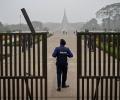
Bangladesh Nationalist Party (BNP) acting chairman Tarique Rahman visited Dhaka University and offered prayers at the grave of slain student leader Sharif Osman Hadi amid heavy security. He also offered prayers at the grave of Bangladesh's national poet Kazi Nazrul Islam.
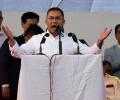
Bangladesh Nationalist Party (BNP) acting chairman Tarique Rahman on Thursday urged people to maintain peace as he presented a vision of an inclusive society, saying the country belongs to people of all faiths, including Muslims, Hindus, Buddhists and Christians.

Bangladesh's newly-elected Prime Minister Tarique Rahman pledged to strengthen the rule of law and ensure the country is a safe land for people of all faiths, while also addressing corruption and improving law and order.
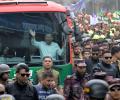
Bangladesh Nationalist Party (BNP) acting chairman Tarique Rahman has returned to Dhaka after 17 years in self-exile in the UK, amid political instability following the killing of a youth leader. His return is significant as BNP emerges as a forerunner in the changed political landscape.

Lok Sabha Speaker Om Birla attended the swearing-in ceremony of Bangladesh's new Prime Minister Tarique Rahman in Dhaka, conveying India's support for Bangladesh's democratic and progressive development and extending an invitation from PM Modi to visit India.

Lok Sabha Speaker Om Birla will represent India at the swearing-in ceremony of Bangladesh's next prime minister, Tarique Rahman. Foreign Secretary Vikram Misri and Secretary-General of Lok Sabha Utpal Kumar Singh are also likely to accompany Birla.

'Tarique Rahman's refrain during the electoral campaign was that the minorities are safe under BNP. He has to honour that promise.'

'It is best to remain vigilant. Tarique Rahman arranged arms smuggling to Indian insurgent groups.' 'He has criticised India for sheltering Sheikh Hasina, but has also sought India's support.'
Sensitive issues remain. Water sharing of the Ganga and Teesta rivers. Treatment of minorities, particularly Hindus. Border management. Trade imbalances. Connectivity projects.What happens next will shape not just bilateral ties, but the balance of South Asia itself, points out Ramesh Menon.


Tarique Rahman is Bangladesh's first male prime minister in more than three decades, ending an era of female leadership that began in 1991.
Following the BNP's victory in recent elections, Bangladesh is seeking to reset its relationship with India, emphasizing mutual benefit and a recognition of the changed political landscape.

Following the new government's assumption of power, the Bangladesh Army has undergone a significant reshuffle, including the appointment of a new Chief of General Staff and changes in key strategic commands.
Unidentified miscreants smashed a window and threw "petrol or similar substance" inside before igniting the blaze

Bangladesh held its 13th general election on February 12, 2026, with voters across Dhaka casting ballots in a significant democratic exercise.

External Affairs Minister S Jaishankar conveyed the condolences of the people of India and the government to Tarique Rahman, Khaleda Zia's elder son.

'The people of Bangladesh have voted for a party that represents political interest.'
'It is a pro-Liberation party and it believes in the spirit of 1971, as opposed to the Jamaat-e-Islami, which was opposed to the Liberation struggle of Bangladesh in 1971.'

In the recent Bangladesh elections, four minority candidates, including two Hindus, secured parliamentary seats, highlighting the evolving political landscape and representation of minority communities within the BNP's victory.
'Pakistan's role in Bangladesh will always be negative, since it's a one-point agenda is hostility against India.'

Over the past week in Bangladesh, two Hindu men were killed in separate incidents while four people, including a priest, sustained injuries after a crude bomb went off inside a temple in the country.

External Affairs Minister S Jaishankar handed over a letter from Prime Minister Narendra Modi to BNP leader Tarique Rahman, conveying condolences after the death of former Prime Minister Khaleda Zia. Jaishankar's visit comes amid existing tensions between India and Bangladesh.

The Bangladesh Nationalist Party (BNP) has reiterated its demand for the extradition of former Prime Minister Sheikh Hasina from India to face trial in Bangladesh, emphasizing the need for equal and respectful relations with all neighboring countries.

The voting for the 13th parliamentary elections was held along with a referendum on a complex 84-point reform package.

Relations with India experienced a downturn during Yunus's tenure, while ties with Pakistan saw positive developments.

Former Bangladesh Prime Minister Khaleda Zia is in an 'extremely critical' condition, according to her personal physician. She has been hospitalized since November 23 for multiple health complications and is currently on ventilator support.

'The BNP's election manifesto lists grievances against India, mirroring the attitude of past BNP governments.' 'Political parties have been careful not to say bad things about China.'

A crude bomb explosion in Dhaka, Bangladesh, resulted in one fatality. The incident occurred near the office of Liberation War veterans and is under investigation. It precedes the return of a prominent political figure after a long exile.

Political analysts express skepticism about the upcoming Bangladesh general election, citing concerns over manipulation, voter participation, and the influence of money and muscle in the changed political landscape.

Sarjis Alam, chief organiser of the NCP for the northern region, alleged that attacks occurred at more than 30 locations involving the homes and business establishments of party leaders and activists after the results were declared.
Family of former Bangladesh prime minister Khalada Zia, who remains in a critical condition, is preparing to transfer her to London for medical treatment. Her son, Tarique Rahman, lives in London.

Bangladesh is set to hold parliamentary elections with unprecedented security measures in place, following a period of interim governance and political changes.
 © 2026 Rediff.com - Investor Information - Advertise with us - Disclaimer - Privacy Policy - Sitemap - Feedback - About us - Terms of use - Grievances