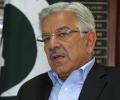
Regarding the possibility of talks, the minister said he was not aware of any such potential engagements.

The court order came on a PIL alleging issuance of illegal leases in favour of private parties in Ganga riverbed.

India's Air Chief Marshal A P Singh met Prime Minister Narendra Modi on Sunday to discuss the security situation arising from escalating tensions with Pakistan. The meeting comes after a similar briefing by the Navy Chief on the situation in the Arabian Sea. This follows a deadly terror attack in Pahalgam, which India has blamed on Pakistan. India has taken several retaliatory measures, including suspending the Indus Waters Treaty and banning imports from Pakistan.

India has asserted that the Indus Waters Treaty with Pakistan will remain in "abeyance" until Islamabad "credibly and irrevocably" abjures support to cross-border terrorism. External Affairs Ministry spokesperson Randhir Jaiswal said that any bilateral talks with Islamabad will only be on vacation of illegally occupied territories of Kashmir by Pakistan. He also said that India is open to discussing the handing over of terrorists whose list was provided to Pakistan some years ago. India on April 23 announced a raft of punitive measures against Pakistan including suspension of the Indus Waters Treaty after the Pahalgam terror attack that killed 26 civilians.

The Pakistan Army has vowed to respond to Indian air strikes that targeted locations in Pakistan-occupied Kashmir and Punjab. The strikes were carried out from within Indian airspace, according to the army spokesman, who said that Pakistan will respond at a time and place of its choosing. The army is currently assessing the damage caused by the strikes.

Of the 22 crew members on board the ship, MV Wan Hai 503, 18 have abandoned the vessel and are being rescued by Indian Navy and Coast Guard assets, he said.
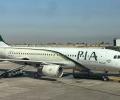
India has closed its airspace to flights operated by Pakistani airlines in a retaliatory move following the Pahalgam terror attack. The ban will be in effect until May 23 and applies to all aircraft registered in Pakistan, as well as planes operated, owned or leased by Pakistani airlines and operators. This comes a week after Pakistan closed its airspace to Indian carriers. The move is part of various measures taken by the Indian government against Pakistan in the wake of the Pahalgam terror attack that killed 26 people.

The statement came hours after Prime Minister Narendra Modi on Tuesday told the top defence brass that the armed forces have "complete operational freedom" to decide on the mode, targets and timing of India's response to the Pahalgam terror attack, government sources said.
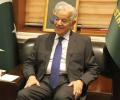
Last week, Information Minister Atta Tarar had said that 24-36 hours were important, fearing a possible strike by India. However, the time passed and there was no action by India.

The Pakistani military fired unprovoked shots across the Line of Control (LoC) in Kashmir for a second consecutive night, triggering retaliatory action from Indian troops. This escalation follows heightened tension between India and Pakistan after the Pahalgam terror attack that killed 26 civilians. Despite the exchange of fire, no casualties were reported. India has imposed a series of punitive measures in response to the attack, including the suspension of the Indus Waters Treaty and closing the Attari land-border crossing. Pakistan has responded in kind, closing its airspace to Indian airlines and suspending trade with India.

The CCS meet was held at the prime minister's Lok Kalyan Marg residence, a day after he held a meeting with the top military brass and accorded operational freedom to the armed forces on the "mode, targets and timing" of India's response to the April 22 attack that killed 26 people.
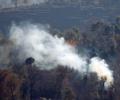
Pakistani troops continued to violate the ceasefire along the Line of Control (LoC) by resorting to unprovoked firing in Jammu and Kashmir's Poonch and Kupwara districts, army officials said. This was the fourth consecutive night that Pakistan resorted to unprovoked firing along the LoC and came amid heightened tension between New Delhi and Islamabad following last week's terror attack in Pahalgam. Indian troops responded swiftly and effectively.

Vice President J D Vance has said that the United States hopes that India will respond to the Pahalgam terrorist attack in a way that does not lead to a 'broader regional conflict' and expects Pakistan to 'cooperate' with New Delhi to 'hunt down' militants sometimes operating from their soil.
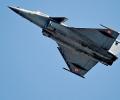
The mega procurement project has been approved by the Cabinet Committee on Security chaired by Prime Minister Narendra Modi, they said.
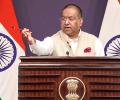
External affairs ministry spokesperson Randhir Jaiswal said India will keep the IWT in abeyance until Pakistan "credibly and irrevocably" abjures its support for cross-border terrorism.

The government on Thursday told an all-party meeting that the Pahalgam attack was carried out to vitiate the atmosphere at a time when the economy of Jammu and Kashmir was on the upswing and tourism was booming. Briefing reporters after the meeting chaired by Defence Minister Rajnath Singh, Union minister Kiren Rijiju said all parties said they were with the government and against terror. The party leaders were briefed by Intelligence Bureau (IB) and Union Home Ministry officials on the steps being taken to prevent the recurrence of such incidents, Rijiju said. Home Minister Amit Shah, present in the meeting, interjected wherever required as officials briefed MPs, according to sources. At least 26 people, mostly tourists, were killed and scores injured when terrorists shot them in Pahalgam in Jammu and Kashmir on Tuesday.
Pakistan's Deputy Prime Minister and Foreign Minister Ishaq Dar has warned India of a strong response, saying Pakistan will respond to a "brick with a stone" if India takes any action against Pakistan, amid heightened tensions following the April 22 terror attack in Jammu and Kashmir's Pahalgam. Dar alleged that India might have staged the Pahalgam attack to abolish the Indus Waters Treaty (IWT) and warned that any attempt by India to interfere with the treaty would be considered an act of war. He also said that Pakistan had no involvement in the Pahalgam incident and is getting support from countries like Saudi Arabia, China, the United Arab Emirates, the United Kingdom, Kuwait, Bahrain, and Hungary.

India has warned Pakistan against its unprovoked firings along the Line of Control (LoC) in Jammu and Kashmir as the directors general of military operations of the two armies spoke on the hotline amid the escalating tensions over the Pahalgam terror attack.

India briefed envoys of the US, UK, France, China, Russia, Germany and several other countries on the Pahalgam terror attack and its link to cross-border terrorism. Foreign Secretary Vikram Misri apprised the diplomats about various aspects of the dastardly terror attack on innocent civilians and India's firm policy of "zero tolerance" against terrorism. The briefing was held a day after India announced a raft of measures against Pakistan including expulsion of Pakistani military attaches, suspension of the Indus Water Treaty of 1960 and immediate shutting down of the Attari land-transit post. The Cabinet Committee on Security headed by Prime Minister Narendra Modi firmed up the punitive measures against Pakistan in view of the cross-border links to the Pahalgam attack that killed 26 people. Diplomats of Oman, the United Arab Emirates, Qatar, Norway, Italy, Indonesia and Malaysia were also part of the briefing. Prime Minister Narendra Modi vowed to punish terrorists behind the strike and said India's spirit will never be broken by terrorism.

Tensions between India and Pakistan are escalating following last week's dastardly terror attack in Pahalgam that claimed 26 lives.
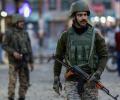
UN Secretary-General Antonio Guterres has called for maximum restraint between India and Pakistan following a deadly terror attack in Jammu and Kashmir. Guterres' spokesperson, Stephane Dujarric, said that the UN chief is following the situation "very closely and with very great concern." Dujarric also stated that any issues between the two countries "can and should be resolved peacefully, through meaningful, mutual engagement." India has downgraded diplomatic ties with Pakistan and announced a raft of measures, including expulsion of Pakistani military attaches, suspension of the Indus Water Treaty of 1960 and immediate shutting down of the Attari land-transit post in view of the cross-border links to the terror attack.

Prime Minister Narendra Modi on Thursday said India will identify, track and punish every terrorist and their backers who were responsible for the attack in Pahalgam "beyond their imagination". Addressing a public gathering in Madhubani, Modi said, "Today, from the soil of Bihar, I say to the whole world that India will identify, track and punish every terrorist and their backers. We will pursue them to the ends of the earth." He added that India's spirit will never be broken by terrorism and that terrorism will not go unpunished. Modi also assured that every effort will be made to ensure that justice is served, saying that the entire nation stands firm in this resolve. He thanked the people of various countries and the leaders who have stood with India in these times. Earlier, Modi and a large crowd gathered for a National Panchayati Raj Day programme observed silence for a few moments to pay homage to the victims of the terror attack in Pahalgam. Bihar Chief Minister Nitish Kumar condemned the terror attack and told the prime minister that the entire nation was united against terrorism.
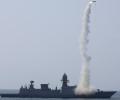
The visuals show the BrahMos anti-ship and anti-surface cruise missiles being launched from a fleet of warships, including Kolkata-class destroyers and Nilgiri and Krivak-class frigates, reaffirming the Navys operational prowess.

Man United boss Amorim says he has no plans to quit
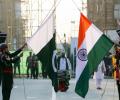
The UN Security Council will hold closed consultations on Monday on the situation between India and Pakistan after Islamabad sought an emergency meeting on the issue. Pakistan, which currently sits as a non-permanent member of the council, requested the meeting in light of rising tensions between the two countries following a terror attack in India. The meeting comes after India's foreign minister spoke with all council members except China and Pakistan, emphasizing the need to bring perpetrators of the attack to justice. The Pakistani envoy has argued that the situation in Jammu and Kashmir poses a threat to regional and international peace and security, justifying the need for a council discussion.

Pakistan has banned Indian-flagged ships from entering its ports with immediate effect after India imposed fresh punitive measures, including a ban on the import of goods and entry of Pakistani vessels into its ports, against Islamabad amid heightened tensions following the Pahalgam terror attack. The move comes after India announced a raft of punitive measures against Pakistan, including the suspension of the Indus Waters Treaty, shutting down of the only operational land border crossing at Attari, and downgrading of diplomatic ties following the terror attack. The Pakistan Army has also conducted a successful training launch of the Abdali Weapon System, a surface-to-surface missile with a range of 450 km, saying it was aimed at ensuring the operational readiness of troops and validating key technical parameters. India considers the test launch of the ballistic missile a "blatant" act of "provocation."
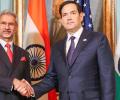
The phone conversation came amid escalating tensions between India and Pakistan over the April 22 terror attack that killed 26 civilians.
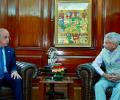
India briefed envoys of around 45 nations on the Pahalgam terror attack and its link to cross-border terrorism. The envoys were briefed in two batches by senior officials of the Ministry of External Affairs (MEA). India also announced punitive measures against Pakistan, including expulsion of Pakistani military attaches, suspension of the Indus Water Treaty of 1960 and immediate shutting down of the Attari land-transit post. Pakistan responded by shutting its airspace to all Indian airlines and suspending trade with New Delhi.

UN Secretary-General Antnio Guterres expressed concern over the heightened tensions between India and Pakistan, calling for maximum restraint and urging both countries to step back from the brink. Guterres offered his "good offices" to both governments in the service of peace and condemned the recent terror attack in Pahalgam, emphasizing the need to bring those responsible to justice. He also stressed that a military confrontation would be detrimental and could easily spin out of control. His remarks came hours before a closed consultation of the UN Security Council on the matter, requested by Pakistan. The UN Secretary-General highlighted the need for de-escalation, diplomacy, and a renewed commitment to peace.

Puri said Pakistan was a country in "terminal decline" periodically using terrorism as an instrument of state policy.
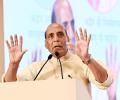
Defence Minister Rajnath Singh on Sunday said it is his responsibility to work with the armed forces and give a "befitting reply" to those who cast an evil eye on India, his remarks coming in the backdrop of the recent Pahalgam terror attack. Singh's assertion came as India is mulling retaliatory measures against Pakistan in view of the cross-border linkages to the April 22 Pahalgam terror attack that has killed 26 people, mostly tourists. He said, "As the defence minister, it is my responsibility to work with my soldiers and ensure the protection of the country's borders. And it is my responsibility to give a befitting reply, by working with the armed forces, to those who cast an evil eye on our country."
As tensions escalated between India and Pakistan following the deadly Pahalgam terror attack, Iran reached out to both countries, urging de-escalation. Saudi Arabia also expressed concern, with its foreign minister engaging in phone conversations with his Indian and Pakistani counterparts. Iran's foreign minister, Seyed Abbas Araghchi, emphasized the importance of bilateral relations, stating Tehran's willingness to "forge greater understanding" at this critical time. Saudi Arabia's foreign minister, Faisal bin Farhan Al Saud, spoke with both India's External Affairs Minister S Jaishankar and Pakistan's Foreign Minister Mohammad Ishaq Dar. Amidst heightened tensions, India has taken a series of punitive measures against Pakistan, including suspending the Indus Waters Treaty and downgrading diplomatic ties. Pakistan responded by shutting its airspace to Indian airliners and suspending all trade. Both countries exchanged warnings, with Pakistan emphasizing its commitment to "respond firmly to any aggression."

Several Pakistani nationals visiting India started returning home through the Attari-Wagah land route in Amritsar on Thursday, a day after the Centre set a 48-hour deadline for them to leave the country. The decision came after India announced a raft of measures, including the expulsion of Pakistani military attaches, suspension of the Indus Water Treaty of 1960, and the immediate shutting down of the Attari land-transit post in view of the cross-border links to the horrific terror attack in Kashmir's Pahalgam that killed 26 civilians on Tuesday.
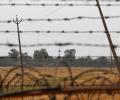
The United States on Thursday said it supports India's right to defend itself and its fight against terrorism as US Defence Secretary Pete Hegseth dialled Defence Minister Rajnath Singh amid rising tensions between India and Pakistan over the Pahalgam terror attack.
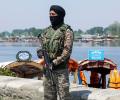
The United Nations Secretary-General, Antonio Guterres, has called for de-escalation between India and Pakistan, expressing deep concern over rising tensions following a terrorist attack in Jammu and Kashmir. Guterres reiterated his condemnation of the attack and urged both sides to avoid a confrontation, which he described as catastrophic. The Secretary-General has also offered his good offices to support de-escalation efforts. The President of the UN General Assembly, Philemon Yang, has also expressed concern over the escalating violence and called for a resolution through diplomatic means. Meanwhile, Pakistan has denied any involvement in the attack and reiterated its commitment to fighting terrorism.

Main imports from the neighbouring country during April-January 2024-25 included fruits and nuts (USD 0.08 million), certain oil seeds and medicinal plants (USD 0.26 million), and organic chemicals.
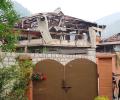
Army spokesman Lt Gen Ahmad Sharif Chaudhry in a media interaction said at least 26 people were killed and 46 injured in the missile strikes on cities in Punjab and PoK. "The six locations that India attacked last night... Pakistan lost 26 people and 46 were injured," he said.

US Vice President J D Vance and National Security Adviser Michael Waltz are scheduled to visit India on April 21, reflecting Washington's focus on strengthening its relationship with India amidst global concerns over President Donald Trump's tariff policy. Vance's visit is likely to be more of a private trip, while Waltz's visit will be a business trip with discussions on security in the Indo-Pacific region, high technology, critical minerals, and export controls. Both are expected to meet Prime Minister Narendra Modi before his trip to Saudi Arabia. The visits come in the wake of Trump's recent pause on tariffs on all countries except China, following widespread economic concerns.

The Tasmanian police on Wednesday recovered the body of Indian soldier Kailash Rana, who went missing last week while being part of a joint Indo-Australian rafting expedition. Rana, 26, was on a rafting expedition in Franklin river in Tasmania on Friday, when he was pulled into surging rapids and failed to surface, the Tasmanian police told PTI. He was one of the five Indian Army officers, taking part in the rafting expedition with Australian troops.
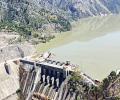
India has suspended the Indus Waters Treaty with immediate effect, accusing Pakistan of breaching the pact by refusing to negotiate modifications and engaging in sustained cross-border terrorism. The decision follows a recent terror attack in Jammu and Kashmir that killed 26 people. Pakistan has rejected India's move, calling it an "act of war."
