
India has rejected any role for third parties in resolving its border dispute with Nepal, following comments from Nepal's Prime Minister suggesting involvement of China and the UK.

Nepal has reiterated its commitment to resolving the border issue with India through diplomatic channels, emphasising historical agreements and understanding.

The Nepalese foreign minister was speaking to the media a day after holding wide-ranging talks with his Indian counterpart S Jaishankar that focused on ways to further expand ties in diverse sectors, including trade, critical technology, connectivity and energy.

Nepal's Prime Minister Balendra Shah addressed parliament on the ongoing border dispute with India, stating both countries have agreed to seek resolution through diplomatic means and expert consultation. Shah's remarks about Nepal also encroaching on Indian territories have sparked controversy.

'Our discussions focused on the India-Nepal development partnership and people-to-people ties.'
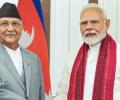
Nepal's claim on Lipulekh and Kalapani reopens a 200-year-old border dispute, while historical maps and treaties show the area belongs to India, asserts Lieutenant General Shakti Gurung (retd).

The boundary mess between India and Nepal needs a solution in a manner as mentioned by Nepal's Foreign Minister Shishir Khanal: 'On evidence not emotions', counsels Lieutenant General Shakti Gurung (retd).

China and Bhutan held the 15th Expert Group Meeting to discuss boundary alignment, focusing on areas where there are no disputes, and agreed to maintain the momentum of negotiations.

As of now, in the case of China's border dispute with India, China is not likely to lose much if it does not resolve the dispute. In fact, the unresolved border dispute has much to offer to China, says Sana Hashmi.

'Nehru was an idealist, he was certainly a visionary in one way, but Mao Zedong was not. Mao Zedong was a very down-to-earth strategist. He wanted to take Tibet, to take the plateau, to take the rivers, to take the minerals.'
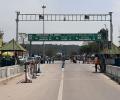
Nepal's border guarding force on Saturday released the Indian national who was detained for allegedly trying to snatch a weapon from one of their personnel during an altercation which sparked tension on the Indo-Nepal border along Bihar's Sitamarhi district, an official said.
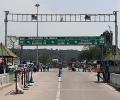
India has already termed as untenable the 'artificial enlargement' of the territorial claims by Nepal after its Parliament unanimously approved the new political map of the country featuring Lipulekh, Kalapani and Limpiyadhura areas which India maintains belongs to it.
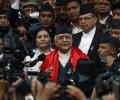
Nepal recently released the revised political and administrative map of the country laying claim over the strategically key areas of Lipulekh, Kalapani and Limpiyadhura.

India maintains Lipulekh, Kalapani and Limpiyadhura belong to it.
India has already termed as untenable the 'artificial enlargement' of the territorial claims by Nepal after its Parliament unanimously approved the new political map of the country featuring Lipulekh, Kalapani and Limpiyadhura areas which India maintains belongs to it.
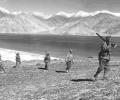
As India and China continue to face off across the Himalayas six decades later, the echoes of that earlier conflict remain unmistakable. The core of China's sensitivity lies not in maps or mountain passes, but in its perception of sovereignty over Tibet, points out Dr Kumar.
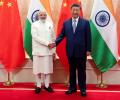
'China's basic purpose of taking the Shaksgam Valley was access to the Indian Ocean.'
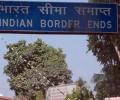
Both India and Nepal claim Kalapani as an integral part of their territory -- India as part of Uttarakhand's Pithoragarh district and Nepal as part of Dharchula district.

Pakistan's Army chief, Field Marshal Syed Asim Munir, has warned India of a decisive response to any provocation, emphasizing the dangers of war in a nuclear environment. He also accused India of using terrorism to destabilize Pakistan and urged the resolution of core issues.

India emerged from the war militarily bruised and strategically altered. The United States, under the guise of friendship, had succeeded in achieving what open alignment never could: The psychological and political repositioning of India within the Cold War order, points out Dr Kumar.

'We keep saying that we have a very close historical, cultural, linguistic and religious affinity with Nepal. Then why be so insensitive that we cannot find time to talk to them for more than 5-6 months'

In 2017, a retired R&AW officer conveyed that Uttar Pradesh Chief Minister Yogi Adityanath was keen to get monarchy restored in Nepal and suggested that I support these efforts.

Describing the visit as "productive" in a post on X, the PM said he emphasised India's position on key global issues during his engagements.
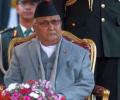
Speaking about the COVID-19 pandemic in Parliament on Tuesday, Oli said it has become very difficult for Nepal to contain the spread of the deadly virus due to the flow of people from outside.

"India is open to engaging with all its neighbours on the basis of mutual sensitivity and mutual respect, in an environment of trust and confidence. This is a continuous process and requires constructive and positive efforts," Srivastava said.

Though General Naravane's visit will not deal with 'impermanent' issues like the changing stands of politicians, it will certainly reinforce the deeper 'permanent' links between the people of Nepal and India. Time will hopefully tackle the present impermanence of the Sino-Nepalese romance, notes Claude Arpi.
'The redrawing of the map with the inclusion of Kalapani area by Nepal and endorsement from the House of Representatives shows the KP Oli government's move to gain cheap popularity in the name of nationalism'

According to media reports in Kathmandu, China has allegedly constructed 11 buildings on the Nepalese territory in the Humla district bordering Tibet. The disputed area lies in Lampcha village of Namkha Rural Municipality in Humla district.
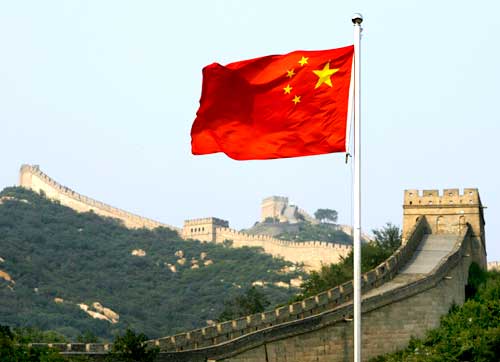
Bhutan firmly abides by the one-China principle meaning Taiwan and Tibet are part of China and stands ready to work with China for an early settlement of the boundary issue and advance the political process of establishing diplomatic relations, it said.

The new height is 86 cms more than the previous measurement.
According to India's assessment, the release of the new political map by Nepal and obtaining a legal backing to it from the lower house of Nepalese Parliament were part of a "myopic" agenda to gain mileage in domestic politics.

Prachanda took the oath of office and secrecy from President Bhandari at an official ceremony at Shital Niwas.
The government had registered the amendment proposal in Parliament on May 22 after releasing the new political map of Nepal depicting Kalapani, Lipulekh and Limipiyadhura as its territories on May 18.
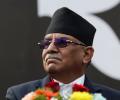
In a dramatic turn of events, Communist Party of Nepal-Maoist Centre chairman Pushpa Kamal Dahal 'Prachanda' was appointed as the new prime minister of Nepal by President Bidya Devi Bhandari on Sunday.
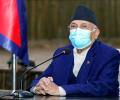
Former Nepalese prime minister KP Sharma Oli claimed that he was removed from power last year after his government published a new map of Nepal that included Kalapani, Limpiyadhura and Lipulekh as its territories.

In an address at the Indian Council of World Affairs, he said Nepal wants to take the relations with India to the next level, but at the same time added: "We should be mindful equally that healthy relations require continuous nurturing, creative thinking, promptness and readiness to understand each other in changing dynamics."

The Mumbai Crime Branch and the Uttar Pradesh police Special Task Force arrested Gautam along with Anurag Kashyap, Gyan Prakash Tripathi, Akash Srivastava and Akhilendra Pratap Singh on Sunday in Uttar Pradesh's Nanpara area, near the Nepal border.

The two countries sealed 10 agreements, including the much-publicised transit trade treaty which will end Nepal's total dependency on Indian sea ports for third-country trade.

'China is India's primary strategic challenge, which will not go away.

Nepal said it was confident that both its "friendly neighbours" India and China will resolve their border stand-off at the Line of Actual Control through peaceful means.
