
Set up by India's first Prime Minister Jawaharlal Nehru, the Planning Commission brought 12 five-year plans and six annual plans involving fund outlays of over Rs 200 lakh crore in its nearly 65-year-history.

80-85 per cent of about 700 major infrastructure projects within the Centre's domain have been delayed.
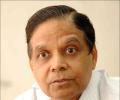
Status to enable Arvind Panagariya to attend Cabinet meetings.
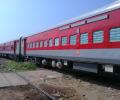
LHB coaches are safer. Two high-level railway safety commissions came down heavily on ICF coaches, recommending their replacement by LHB, says Bibek Debroy.
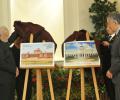
India and Singapore on Tuesday elevated their ties to the 'strategic partnership' level and signed bilateral agreements for enhanced defence cooperation and in areas like cyber security, shipping and civil aviation.

Decisions at a G20 meet are not added to the UN climate negotiations.

Inviting private sector in Indian Railways is a good idea.

The service conditions and judges' remuneration are not alluring .

The Budget will indicate where the Modi government stands on reforms, growth and development.

There are significant differences in the scope, jurisdiction, functions and personnel requirements of RPF and GRP.

Even if the new body focuses on long-term planning, it is unlikely to do so through five-year Plans.
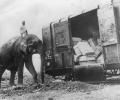
Bibek Debroy highlights the importance of the Assam Rail Link Project.

The NITI Aayog is likely to continue to both formulate plans and engage with the states.

The NITI Aayog's vice-chairman's charge holds ground.

When trains and stations become desirable again, we might have a murder mystery with the Mumbai-Ahmedabad bullet train as a setting.
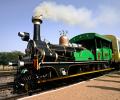
Why is a Katra-Chennai train known as Andaman Express? Since no capitals are involved, why should a Katihar-New Jalpaiguri train be called Capital Express? What about Matysagandha Express, Padmavati Express or Sanghamitra Express?
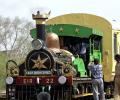
While we complain about comfort in coaches, rarely do we think about the comfort of engine drivers.

Be it roads, railways, ports, civil aviation, energy or electricity, the Narendra Modi govt has invigorated all these sectors since it took over, says Arvind Panagariya.
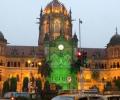
If we can adhere to those standards, most passengers will be happy.
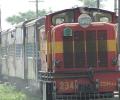
A historic railway service flounders for an inflexible privatisation policy.
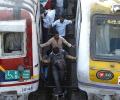
Indian Railways (IR) will transfer existing assets at nominal values, invite bids and grant concessions for 10-15 years.

The maintenance of track is increasingly becoming mechanised and capital-intensive.

India had its own battle over gauges.

Voices from the Treasury are clamouring for lowering rates as this would boost demand.

India annually spends Rs 4.5 lakh crore on importing petroleum products, and Transport Minister Nitin Gadkari feels methane is a cost-effective import substitution. But is it? Pallava Bagla examines the pros and cons.

'Mr Modi has inherited a system that taxes businessmen and fritters the money away over ministries.'

The station with the most annual revenue is CST Mumbai, followed by Dadar.

Of the thousands of railway bridges in India, 36,470 are more than 100 years old, and 6,680 are more than 140 years old! But of these, only 21 rank on the Heritage Directorate of the Indian Railways because for them heritage isn't necessarily a function of age, says Bibek Debroy.

The centre's promise of a new deal for the states is a welcome development.

Link between oil exploration and markets can be used by India to great advantage.

It is time to take a few macroeconomic risks to kick start the growth.

The upcoming Budget gives Finance Minister Arun Jaitley a chance to let states boost spending.
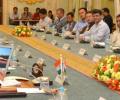
Thirty one outstanding teachers were invited to Rashtrapati Bhavan for a first-ever in-residence programme.

The economy could return to 8% growth by the end of 2017-2018, says Arvind Panagariya, vice-chairman NITI Aayog.

The Budget sets out a comprehensive vision.

Make in India has few advantages and some disadvatnages too.
'There is tension between the zones all the time.'

Modi is optimistic that the reforms will be passed soon.
'A lot will depend on the first Aayog and the power it derives.'

Modi government has to come up with a robust economic agenda to impress the masses.
 © 2026 Rediff.com - Advertise with us - Disclaimer - Privacy Policy - Sitemap - Feedback - About us - Terms of use - Grievances