
Chinese foreign ministry spokesperson Mao Ning said that the country believes that dialogue and negotiation are the only viable solutions to resolving disputes and that the continued escalation of the conflict serves no one's interests.

China has denied reports of finalising a deal with Iran to sell CM-302 supersonic anti-ship missiles, amidst rising tensions in the Middle East and joint US-Israeli airstrikes.

Ambassadors of the Quad nations, consisting of the United States, India, Australia and Japan, held a rare publicised meeting in Beijing.

China has reaffirmed its territorial claims over the Shaksgam Valley, dismissing India's objections to infrastructure projects in the area. The Chinese Foreign Ministry spokesperson stated that the territory is part of China and its activities there are beyond reproach.

China refutes allegations of harassment of an Indian woman from Arunachal Pradesh at Shanghai airport, claiming actions were lawful and reiterating its claim over the region.

China has expressed surprise over India's clarification regarding its stance on Taiwan, following reported comments by External Affairs Minister S Jaishankar. Beijing claims India's position is inconsistent with facts and undermines China's sovereignty.

China defended the BRICS economic alliance, stating it is not a bloc for confrontation, after former US President Donald Trump threatened tariffs on countries aligning with its 'anti-American policies'.

India and China have reached new common understandings agreeing to conduct normalised management and control of the boundary during Foreign Minister Wang Yi's visit to New Delhi, Beijing said.

China has objected to Indian Minister Kiren Rijiju's remarks on the Dalai Lama's reincarnation, urging India to be cautious on Tibet-related issues to avoid impacting bilateral relations. China insists any future Dalai Lama must receive its approval.

China has protested to India over Prime Minister Narendra Modi's greetings to the Dalai Lama on his 90th birthday and the attendance of Indian officials at the celebrations, stressing New Delhi should appreciate Beijing's sensitivities on Tibet-related issues.
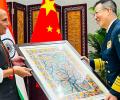
Defence Minister Rajnath Singh, in his meeting with Chinese counterpart Dong Jun in Qingdao on June 26, proposed that India and China should solve the "complex issues" under a structured roadmap comprising steps to de-escalate tensions along the frontiers and rejuvenate the existing mechanism to demarcate the borders.

India has stated its neutral stance on religious matters following the Dalai Lama's announcement of his succession plan, which China has rejected. The statement comes as the Dalai Lama approaches his 90th birthday, with China urging India to exercise caution on Tibet-related issues.

His successor issue is also expected to flare up fresh tensions between Beijing and Washington as China's policy comes in conflict with the US Tibetan Policy and Support Act of 2020, which reaffirmed America's steadfast support for the Dalai Lama and Tibetan Buddhism.

China has downplayed reports of a massive flu outbreak overwhelming hospitals, stating that cases of respiratory diseases this winter are less severe than last year. The Foreign Ministry assured foreigners that it is safe to travel to China.
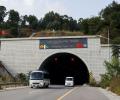
The announcement on expansion of CPEC was made following a meeting among Chinese Foreign Minister Wang Yi, his Pakistani counterpart Ishaq Dar and Afghanistan's Acting Foreign Minister Amir Khan Muttaqi in Beijing, according to a Pakistani readout.

China's military has said it is willing to work with India to find a solution to the border issue, while also pushing for sound and stable defence ties. The statement comes after recent meetings between officials from both countries to normalize relations following a prolonged period of tension.
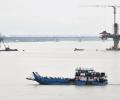
India has expressed concerns over China's plan to build a mega dam on the Brahmaputra River in Tibet, stating that it will continue to monitor and take necessary measures to protect its interests. New Delhi has urged Beijing to ensure that the interests of downstream states are not harmed by activities in upstream areas. The dam, estimated to cost USD 137 billion, has raised apprehensions about its impact on the ecological balance of Arunachal Pradesh and Assam, through which the Brahmaputra flows. India has repeatedly expressed its concerns to China through diplomatic channels, highlighting the need for transparency and consultation with downstream countries.

On Saturday, Ministry of External Affairs spokesperson Randhir Jaiswal told the media in New Delhi that the Indian Army has commenced verification patrolling at Depsang, the second friction point in eastern Ladakh.
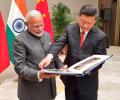
China's foreign ministry on Monday parried questions on a possible meeting between Prime Minister Narendra Modi and President Xi Jinping on the sidelines of the BRICS summit in Russia this week.

India's Foreign Secretary Vikram Misri has arrived in Beijing for a two-day visit during which he will hold talks with Chinese officials. The visit comes amid ongoing efforts to de-escalate tensions along the Line of Actual Control (LAC) in eastern Ladakh and to resume bilateral cooperation in various fields, including the Kailash Mansarovar Yatra.

China has reiterated its plan to build the world's largest dam over the Brahmaputra River in Tibet, near the Indian border. The Chinese Foreign Ministry has assured that the project, estimated to cost around USD 137 billion, will not have any negative impact on downstream countries, India and Bangladesh. The ministry has stated that the project has undergone rigorous scientific verification and will be conducive to disaster prevention and mitigation, as well as climate change response. India has expressed concerns about the dam, raising the issue during talks with the visiting US National Security Advisor, Jake Sullivan. China has maintained that the project will not negatively affect the lower reaches and has committed to maintaining communication with downstream countries.
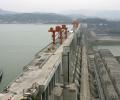
China has defended its plan to build the world's largest dam on the Brahmaputra River in Tibet, assuring that the project will not affect riparian states and safety issues have been addressed through decades of studies. The dam, estimated to cost USD 137 billion, has raised concerns in India and Bangladesh, but Chinese authorities maintain that the project has been thoroughly studied and safeguards are in place. The dam is part of China's efforts to develop clean energy and respond to climate change.
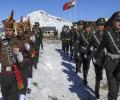
China and India were able to "reduce differences" and build "some consensus" on disengaging troops from friction points to end the standoff in eastern Ladakh and agreed to maintain dialogue to reach a resolution acceptable to both sides at an "early date", the Chinese defence ministry said on Thursday.

Chinese President Xi Jinping on Thursday congratulated President-elect Donald Trump on his election victory and called for China and the United States to find the right way to manage the differences by strengthening dialogue and communication.

China on Monday conducted day-long large-scale military drills aimed at surrounding Taiwan by deploying an aircraft carrier group, besides army, navy, air force and missile forces, in an apparent response to Taiwanese President Lai Ching-te's remarks that Beijing has no authority to represent Taipei.
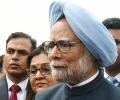
Condolences have poured in from across the globe, including from the United States, Canada and Sri Lanka following the demise of former Prime Minister Manmohan Singh.

During a regular press conference on Thursday, the Chinese foreign ministry spokesperson Mao Ning said that the unmanned Chinese civilian airship into US airspace is entirely caused by 'force majeure'.

Modi's remarks came in response to a congratulatory message from Taiwan President Lai Ching-te on his election victory.
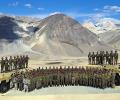
Her comments come a day after External Affairs Minister S Jaishankar said in Geneva that roughly 75 percent of the "disengagement problems" with China are sorted out but the bigger issue has been the increasing militarisation of the frontier.
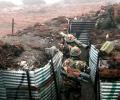
The Chinese military on Thursday said the situation along the India-China border 'at present' is 'generally stable' and both sides have maintained 'effective' communication to resolve the military standoff in eastern Ladakh.

The Kashmir issue should be resolved through dialogue and consultation between India and Pakistan, China said on Tuesday while reacting to the Supreme Court judgment on Article 370 upholding the central government's decision on the erstwhile state of Jammu and Kashmir.

The question and her reply did not figure in the official transcript of the media briefing posted on the Chinese foreign ministry website hours later.

China and India have made 'positive progress' to resolve the border standoff, with both sides maintaining close communication through diplomatic and military channels, a senior foreign ministry official said in Beijing on Friday.
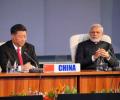
China on Thursday said Beijing views the BRICS as an "open and inclusive" platform and it backs moves to expand the five-member grouping with "like-minded partners".
China said that "sound and stable ties" serve the common interests of China and India.
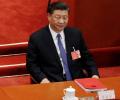
President Xi is also skipping the ASEAN (Association of Southeast Asian Nations) and East Asia summits in Jakarta this week.

China Thursday offered to play a 'constructive role' to ease tension between Pakistan and Iran following their missile strikes against each other over the last two days and asked the two countries to 'exercise restraint and calmness and avoid escalation'.

China on Monday said cooperation between countries should not undermine regional peace and stability and target any third party, as it reacted to a host of defence and commercial pacts recently signed between India and the US including joint production of jet engines in India to power military aircraft and a deal on armed drones.

The comments by external affairs ministry spokesperson Arindam Bagchi in Delhi came days after China decided to "freeze" visas of two Indian journalists.

China on Monday dismissed the existence of a 'median line' in the volatile Taiwan Strait after Taiwan's defence ministry said it detected a record 103 Chinese warplanes flying around the self-ruled island in a 24-hour period.
 © 2026 Rediff.com - Investor Information - Advertise with us - Disclaimer - Privacy Policy - Sitemap - Feedback - About us - Terms of use - Grievances