
The API of Paracetamol, a fever and pain medication, has grown 25 per cent from Rs 450-480 per kg in December 2020 to Rs 580-600 per kg in April. When compared to the pre-Covid prices of December 2019, the surge is much steeper -- around 140 per cent, reports Sohini Das.


India will export anti-malarial drug hydroxychloroquine, high in demand globally, only to foreign governments and not to private companies, as the product is under prohibited or banned category of exports, sources said. Although exports of this medicine is completely banned, India has decided to export this anti-malarial drug in sync with its global commitment to deal with the coronavirus pandemic.
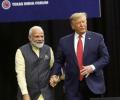
'I want to thank Prime Minister Modi of India for allowing us to have what we requested for the problem arose and he was terrific. We will remember it'
Ranbaxy Laboratories, the biggest member of the Indian Pharmaceutical Alliance, has come out in the open against the alliance's stand on patent issues.
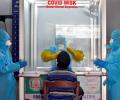
Cadila, Biocon developing rapid antibody testing kits; Eris, Mylan, Gland importing. There are two kinds of testing for the novel coronavirus - the real-time polymerase chain reaction test kit that uses throat or nasal swabs and provides results in a few hours, and the other is antibody-based rapid testing kit that use blood samples and provides results in a few minutes.
The 11-member Indian Pharmaceutical Alliance has frozen the prices of all decontrolled medicines until March 31, 2005, in view of high inflation.
Domestic pharma companies have warned that the Patent Bill in its original form could lead to ever-greening of patents and rise in prices of drugs.
Exports of 13 APIs - including paracetamol, tinidazole, metronidazole, vitamin B1, vitamin B6, vitamin B12, acyclovir, progesterone - along with formulations made from these APIs, would be restricted.

Pharma companies gear up for the 'new normal' as they train and align their sales forces for a paradigm shift. GSK leads the charge with staggered return-to-work, others plans yoga sessions and health care webinars for salesperson's family.
India lost its competitive advantage as China gave fiscal benefits to its local manufacturers. Besides, recent policy flip-flops have, however, dented India's image as the 'pharmacy of the world'.

The Indian Pharmaceutical Alliance has approached regulator for a dialogue to understand the concern raised by it

The intention of the government is to cap prices of drugs that are essential and which the public widely uses.

The government said that "in exercise of extraordinary powers in public interest, conferred by paragraph 19 of the DPCO, 2013", the ceiling prices of 21 key formulations had been increased. These formulations include common medicines like BCG vaccines, penicillin, malaria and leprosy medicines (Dapsone), life-saving drugs like Furosemide (used to treat fluid build-up due to heart failure, liver scarring, or kidney disease), vitamin C, some common antibiotics, and anti-allergy medicines.

In his press conference on Wednesday, Trump targeted drug-makers and vowed to bring back production in the US.
.jpg)
The Drug (Prices Control) Order implemented in May last year brought into its purview 652 packs of 348 formulations.

The government regulates prices of all other medicines.
Industry fears tougher US stance on IP after President Donald Trump asserted that foreign countries must pay a fair share for drug development costs. Aneesh Phadnis reports.

Currently, the spend on R&D as a percentage of GDP is just 0.9%
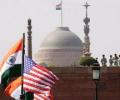
Multinational organizations including PepsiCo and industry associations like IPA, have come in favour of India's intellectual property regime, which is being reviewed by the US administration.
Various domestic companies such as Ranbaxy, Wockhardt and Agila Specialities recently came under the US FDA scanner for lapse in manufacturing practices.
Industry is gathering scientific data to approach the regulator, DCGI, for a review of the suspension order.
In a letter to health minister Harsh Vardhan, the Indian Pharmaceutical Alliance, an industry body representing leading pharma companies, including Sun Pharma, Lupin, Dr Reddy's Labs, Cadila Health and Glenmark, stressed the need for an out-of-court settlement with health activists fighting for the rights of clinical trial participants.

The next hearing on Pfizer's plea is slated for March 21
This is to take head on big American pharmaceutical giants, which in the recent past had launched a strong anti-India campaign against efforts of such companies to provide affordable health care not only to people in India, but also in the third world countries.

Under the current administration, political attitudes toward IP seem to have improved.
Among the companies likely to sign deals with Gilead are Cadila, Hetero, Strides Arcolab and Mylan, while Cipla is expected to earn active pharmaceutical ingredient rights.

A notice issued by the Indian Health Ministry at the weekend said that a government-appointed committee of experts had found that the banned combinations were "likely to involve risk to human beings, whereas safer alternatives to the said drug are available."

Besides opposing the suspension of three medicines, the sector has also questioned the process adopted by the government.

India had been engaged in a contentious battle with the US over the issue, especially in the pharmaceutical sector.
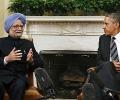
A federal body began a hearing on the impact of Indian trade policies on US businesses wherein American bodies and advocacy groups slammed India for its trade practices, alleging they hit their jobs and business.

Since 2013, the FDA has banned around 30 Indian drug manufacturing units for various violations

The National Pharmaceutical Pricing Authority will soon notify prices of as many as 150 packs of essential medicines in line with the new pharma pricing policy, according to official sources.

Dispute over IPR was a bone of contention in bilateral ties till a couple of months ago.

The category is expected to cross Rs 38,400 crore by 2020.
Roadblocks ahead as these medicines could face new clinical tests, more scrutiny
 © 2026 Rediff.com - Advertise with us - Disclaimer - Privacy Policy - Sitemap - Feedback - About us - Terms of use - Grievances