
'Can you believe there are over 26,500 deaths linked to heatwave-driven ozone in 2024?'

Health experts warn that rising temperatures could create a growing burden of silent and cumulative health stress across the population.

Prime Minister Narendra Modi has urged Indian citizens to take precautions during the ongoing heatwave, emphasising hydration and care for vulnerable individuals and animals.

Several parts of India are experiencing a severe heatwave, with temperatures soaring past 44 degrees Celsius. States are issuing alerts and taking measures to protect people and animals from the extreme conditions.
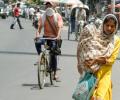
North India is experiencing an intense heatwave, with temperatures soaring to 48 degrees Celsius in some areas. Several states have issued warnings and advisories as the heatwave is expected to continue.
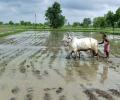
Maximum temperatures dropped below 40 degrees Celsius in several areas of Punjab, providing slight respite to residents from the intense heat. Haryana continued to experience hot weather, with Rohtak being the hottest spot at 45.3 degrees Celsius.

India's peak power demand reached an all-time high of 257.37 GW on Monday, driven by increased use of cooling appliances during an intense heatwave, according to power ministry data. The Indian Meteorological Department has forecast continued heatwave conditions in northwest and central India.

Large parts of India are experiencing a severe heatwave, with temperatures soaring to dangerous levels. Authorities have issued alerts and health advisories as the heatwave intensifies across multiple states.

Punjab and Haryana are experiencing severe heatwave conditions, with temperatures soaring several notches above normal. Bathinda recorded the highest temperature at 46.2 degrees Celsius, while Rohtak reached 44.5 degrees Celsius, impacting daily life across the region.
Uttar Pradesh is experiencing an intense heatwave, with Banda recording the highest temperature at 47.6 degrees Celsius. The IMD has issued a 'Red Colour Warning' for severe heatwave conditions. The extreme heat is disrupting daily life and economic activity, prompting government action to prevent heat-related illnesses.

The IMD has issued an orange alert for heatwave conditions in parts of Kerala, prompting authorities to urge caution. Maximum temperatures are expected to reach up to 41 degrees Celsius in some districts. Strict guidelines have been issued, including the suspension of vacation classes and rescheduling of working hours.

Researchers at IIT Bombay have discovered that heatwaves in the Indo-Gangetic Plains are primarily caused by local land and weather conditions, rather than hot air originating from elsewhere, emphasising the need for location-specific early warning systems.

Schools in Delhi are taking precautionary measures to protect students from the ongoing heatwave, including suspending outdoor activities, shifting assemblies indoors, and considering early closure for junior classes.

Many places across northern states including Delhi recorded above-normal temperatures crossing 40 degrees Celsius, while the India Meteorological Department warned of heatwave conditions in parts of Uttar Pradesh in the coming days. Jammu and Kashmir saw a dip in temperatures with fresh snowfall in the higher reaches and rainfall in the plains.

Aligarh resident Habib Saifi has built a small hut-like structure on his bike to protect himself from direct sunlight during this intense summer.

Fans heading to watch Portugal play Croatia in the World Cup round of 32 in Toronto on Thursday are being warned to keep hydrated and limit their alcohol intake after a heat warning issued by Environment Canada.

Over 100 villages in Marathwada, India, are now dependent on water tankers due to severe water shortages amid peak summer. A total of 194 tankers are supplying water to 119 villages and 55 settlements across six districts, with Chhatrapati Sambhajinagar facing the most acute shortages.

With the temperatures set to rise again in London, Wimbledon chiefs and accommodation organisers are making sure that the fans and players have what they need to keep cool.

Delhi Chief Minister Rekha Gupta has instructed officials to ensure the transparent and timely implementation of welfare schemes announced in the budget. She also appealed to the public to take precautions during the ongoing heatwave.
Sindh province in Pakistan is experiencing a severe heatwave with temperatures exceeding 45 degrees Celsius and high humidity, leading to a 'feels-like' temperature of up to 54 degrees Celsius in Karachi. Hospitals in the region, particularly in Karachi, are overwhelmed with patients suffering from heat-related illnesses, prompting medical staff to work round the clock.

The persistent heat has also put pressure on daily life, affecting outdoor work, travel, and electricity consumption in many parts of the country.

Linda Noskova defeated Marta Kostyuk in straight sets to reach her maiden Grand Slam final, setting up a historic all-Czech Wimbledon title clash against compatriot Karolina Muchova and extending Czech dominance.

India's hydropower generation has been significantly constrained in July due to the El Nio effect, which has weakened the southwest monsoon and reduced reservoir levels. This decline, following a 21 per cent year-on-year drop in June 2026, is forcing greater reliance on coal generation and straining grid flexibility amidst rising power demand.

Alexander Zverev, fresh off his French Open victory, faces the daunting task of overcoming Jannik Sinner in the Wimbledon final, who has beaten him nine times in a row and won their last 14 sets.

The Asian Development Bank (ADB) has revised down India's GDP growth forecast for fiscal year 2026-27 (FY27) to 6.6 per cent from an earlier 6.9 per cent, primarily attributing the change to elevated energy prices stemming from the Middle East conflict. Despite this moderation, India is still expected to remain the world's fastest-growing major economy.

A new report by child rights NGO CRY reveals that nearly seven in every 10 school-going children across India missed school or routine activities from May to June this year due to extreme heat, with 76 per cent reporting negative impacts on their ability to focus on studies.

The India Meteorological Department (IMD) has predicted that the June-September southwest monsoon seasonal rainfall over India is expected to be 90 per cent of the long-period average. While the Northeast is likely to witness normal rainfall, the remaining parts of the country may see below normal rainfall.

Northern states in India are experiencing severe heatwave conditions, with temperatures reaching up to 46.6 degrees Celsius. The heatwave has impacted daily life, leading to a decline in tourism and increased power demand. Authorities have issued advisories and implemented measures to mitigate the effects of the extreme heat.

Veterinarians and animal rescuers in Delhi report a surge in cases of heat-related illnesses among birds and stray animals as the city grapples with a severe heatwave. Dehydration, heatstroke, and gastrointestinal infections are rampant, prompting calls for residents to provide water and shade for animals.

India's total automobile retail sales recorded a significant 9.55 per cent year-on-year growth in May, reaching an all-time high of 25,31,067 units, driven by strong performances in three-wheelers, passenger vehicles, and tractors, despite prevailing heatwave conditions and fuel price pressures.

Novak Djokovic defeated Felix Auger-Aliassime in a five-set thriller lasting over five hours to reach his eighth consecutive Wimbledon semi-final, setting a new record.

Summer, no matter how hot, cannot slow down life in India. The season's rhythms must go on. There is great beauty to an Indian summer and these 10 pics tell that story...

Delhi Chief Minister Rekha Gupta has directed officials to ensure the transparent and timely implementation of welfare schemes announced in the budget, warning of potential fund reductions for departments failing to utilise allocated budgets effectively.

'People told me to go back to school and leave climate issues to adults. But if adults had done their job, I wouldn't be here protesting.' At just 14, climate activist Licypriya Kangujam says children are paying the price for a crisis they did not create, while governments continue to make promises without delivering meaningful change.

Fuel prices have risen by about Rs 7.5 per litre since May 15, as global crude oil prices surged due to the ongoing conflict in West Asia and supply concerns around the Strait of Hormuz.

India is likely to witness a mixed temperature pattern along with wetter-than-usual conditions in May, with the India Meteorological Department (IMD) indicating that rainfall across the country is "most likely to be above normal" at over 110 per cent of the long period average (LPA).

High levels of ultraviolet (UV) radiation have been recorded across Kerala, prompting warnings from the Kerala State Disaster Management Authority (KSDMA). Residents are advised to take precautions to avoid prolonged exposure, especially during peak hours.

'I like to celebrate who I am. I like to experiment, and am not afraid to make mistakes. You have to be your biggest cheerleader.'

India's retail inflation, measured by the Consumer Price Index (CPI), increased to 3.48 per cent in April, up from 3.40 per cent in March, primarily due to a surge in prices of gold and silver jewellery, as well as certain kitchen staples like tomatoes and cauliflower.

Rising mercury levels in Madhya Pradesh are causing sleepless nights for residents as minimum temperatures remain high. Doctors report an increase in sleep-related issues, allergies, and fatigue due to the heat.
