
India has launched an open Health AI benchmarking platform to evaluate artificial intelligence models on diverse Indian datasets before deployment at a population scale. The initiative aims to strengthen AI-driven claims management under the Ayushman Bharat Pradhan Mantri Jan Arogya Yojana (AB PM-JAY).

A new report by Philips indicates that Artificial Intelligence is significantly enhancing healthcare in India, with 71% of professionals reporting increased patient capacity and 85% believing it improves patient outcomes. AI is also seen as a tool to improve access to quality healthcare in rural areas, with patients also embracing its benefits for more meaningful interactions with doctors.

Union Health Secretary Punya Salila Srivastava highlighted the strong health cooperation within BRICS, emphasising the critical role of digital health and artificial intelligence in ensuring continuity of care. Speaking at the 16th BRICS Health Ministers' meeting, she noted shared challenges among member nations and showcased India's advancements in digital health infrastructure and AI strategy.

The Delhi government has signed a Memorandum of Understanding with EkStep Foundation to transform its administrative data into an AI-ready format. This initiative aims to improve governance, enhance public service delivery, and enable proactive, evidence-based decision-making by leveraging artificial intelligence.

InsuranceDekho and RenewBuy have merged to establish India's largest artificial intelligence (AI)-enabled insurance distribution platform, targeting a significant premium book and extensive reach across the country.

GE Aerospace is utilising artificial intelligence solutions, developed by its Bengaluru team, to significantly improve aircraft engine inspection, analytics, and maintenance. These innovations have reduced turnaround times by at least five days, enhancing engine durability, reliability, and time on wing, with specific tools like the AI-enabled Blade Inspection Tool cutting inspection times by 50%.

'Applying AI to change the lives of Indians and at population scale -- just like we did with DPI [digital public infrastructure] -- is really where it's going to go.'

A World Bank report highlights how Artificial Intelligence-powered weather forecasts have enabled small farmers in Telangana, India, to save up to USD 560 by adapting their farming practices to specific risks. The report, "The Promise of Artificial Intelligence," advocates for developing countries to rapidly adopt small, low-cost AI tools to enhance productivity, improve government services, and avoid missing out on the AI revolution.
The World Bank's "World Development Report 2026" urges developing countries to adopt low-cost AI tools to accelerate progress in healthcare, education, and judicial services. The report highlights AI's potential to boost productivity and improve public services, while noting that jobs in high-income countries are more at risk from automation than those in developing nations.
Karnataka Chief Minister D K Shivakumar met with AI major Anthropic to discuss a long-term partnership aimed at accelerating AI adoption across governance, education, healthcare, research, and the state's startup ecosystem. The collaboration focuses on deploying AI solutions responsibly, ensuring data privacy, and developing AI-focused skilling programmes and an AI University.
A study conducted on older adults in India suggests that the health of the brain's white matter wiring can help mitigate the cognitive effects of gray matter loss, supporting overall cognitive health. Researchers found that healthier superficial white matter is linked to stronger language skills and may act as a source of resilience against cognitive decline.

A new study reveals that AI chatbots often provide inaccurate and incomplete medical information, raising concerns about their use in healthcare communication.

The aim is to win over the country's enterprises, developers and startups as AI systems shift from answering questions to autonomously executing tasks.
Union Health Minister J P Nadda has emphasised the need for sound regulation, ethical oversight, and equity in the application of Artificial Intelligence (AI) to healthcare, speaking at the World Health Assembly in Geneva.
A joint report by Deloitte India and FICCI projects India's consumer economy to reach USD 1.9 trillion by 2030. This growth will be fuelled by rapid AI adoption, evolving consumer preferences, and new commerce models like e-commerce and quick commerce. India leads in AI adoption among top countries, with businesses leveraging it for engagement, innovation, and forecasting. The report also highlights the emergence of a new Indian consumer seeking convenience and transparency, and identifies key trends shaping FMCG, retail, and e-commerce sectors.

IIT Ropar's ANNAM.AI, in collaboration with Syngenta and Google, has launched 'HACK CORE 2026', a national AI hackathon. It invites innovators to develop AI-driven solutions for critical agricultural challenges like crop health, pest management, and climate-resilient farming, offering significant prizes and mentorship.

Queen Maxima of the Netherlands, the UN Secretary-General's Special Advocate for Financial Health, visited Mumbai to understand India's digital public infrastructure, including UPI and AI, in improving financial health for salaried individuals. She interacted with healthcare professionals and SalarySe leaders, praising India's advancements in financial inclusion and technology's role in empowering individuals.

A senior health expert warns against the growing trend of using AI for self-diagnosis and treatment, emphasizing that these tools should not replace human clinical judgment.

NITI Aayog member Abhay Karandikar stated that the US government's new export controls, which led AI giant Anthropic to take its latest models offline, underscore the critical need for India to achieve self-reliance in technology development, particularly in AI infrastructure and hardware.
New research from the Revived Genomics of Personality Consortium, published in Nature, suggests that the genetics of personality, involving over 1,200 gene variants linked to the Big Five traits, are significantly associated with various life outcomes including health, education, and career paths. While individual gene variants have small effects, their combined impact is substantial, and environmental factors also play a crucial role in shaping personality.
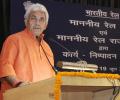
Jammu and Kashmir LG Manoj Sinha addressed the 'IMMUNOCON-2026' conference, stressing the importance of translating scientific immunological knowledge into public health action. He urged scientists to focus on precision medicine, immuno-AI fusion, climate immunity, and accelerating translational research to combat infectious diseases and enhance healthcare delivery.

The US and India are collaborating to de-risk global supply chains for artificial intelligence technologies, particularly in semiconductor manufacturing and critical minerals processing. This partnership is facilitated through the US-led Pax Silica initiative, which aims to address over-concentration issues and single points of failure in supply chains, fostering a resilient global economy.
The government's e-marketplace platform, GeM, is significantly enhancing public procurement through the integration of AI, advanced analytics, and digital monitoring systems. This strategic adoption has led to substantial savings for the exchequer and improved transparency, while also playing a crucial role in health sector procurement.
AI firm Pramaana Labs, with a significant Indian workforce, has successfully raised $27 million in seed funding led by Khosla Ventures. The company aims to use these funds to advance its unique technology that converts complex knowledge into machine-verifiable truth, addressing the accountability gap in AI across regulated sectors like tax, healthcare, and financial compliance.
Jammu and Kashmir LG Manoj Sinha emphasised the critical need to translate scientific immunological knowledge into public health action. Speaking at the IMMUNOCON-2026 conference, he highlighted immunology's evolving role in healthcare, stressing continuous innovation and collaboration in areas like immuno-AI fusion, climate immunity, and translational medicine to combat infectious diseases and prepare for future global health threats.
The IndiaAI Mission, under MeitY, has selected 10 Indian AI startups for its Global Acceleration Programme, aimed at fostering international growth and innovation.
India's Rayhan Thomas and Indian-origin Mahanth Chirravuri delivered impressive opening rounds at the AdventHealth Championship, a key Korn Ferry Tour event. Thomas shot an 8-under 64, placing him fifth, while Chirravuri's 9-under 63 put him in fourth, both in strong contention.
A new study in mice reveals that psychological stress can significantly alter the gut microbiome, leading to changes in blood-forming stem cells and increasing the risk of conditions like heart disease and diabetes. Researchers found that stress impacts specific brain regions, which in turn affect intestinal microbiota balance and hematopoietic stem cell function.

A study by Morarji Desai National Institute of Yoga (MDNIY) suggests that a five-minute session of chanting 'Shanti mantra' or 'Mahamrityunjaya mantra' followed by rest can significantly reduce heart rate, blood pressure, and cardiac workload. The research indicates that mantra chanting activates the parasympathetic nervous system, promoting physiological relaxation and improved cardiovascular health.
Banaras Hindu University (BHU) has received approximately Rs 15 crore in funding from the Indian Council of Medical Research (ICMR) for six biomedical research projects. These projects aim to address critical national health priorities, including cancer detection, antimicrobial resistance, and pediatric septic shock, fostering advanced research and improving patient care.

The CEO of the National Health Authority, Sunil Kumar Barnwal, highlighted BRICS nations' shared aspiration for connected, patient-centric, and resilient healthcare systems through digital health infrastructure and responsible AI. Discussions at the 16th BRICS Health Ministers' meeting focused on overcoming challenges like limited interoperability and workforce constraints, with countries like Brazil and Indonesia sharing successful digital health initiatives.

One 97 Communications Ltd, operating Paytm, is set to issue its first bonus shares, following a landmark year of achieving its maiden full-year profit and gaining significant market share. The board will meet on July 20 to decide on the bonus issue, reflecting confidence in its financial strength and aiming to improve stock accessibility for retail investors.
Researchers at IIT (ISM) Dhanbad have secured a patent for a novel temperature-independent optical sensor designed to precisely measure structural tilt in two directions. This lightweight sensor, utilising Fiber Bragg Grating (FBG) technology, offers enhanced monitoring capabilities for various applications including bridges, robotics, aerospace, and geotechnical systems, promising low maintenance and long-term stability checks.

Amazon CEO Andy Jassy announced an additional USD 13 billion investment in India, bringing the company's total capital commitment to USD 48 billion by 2030. This significant investment will primarily focus on expanding AI and cloud infrastructure, supporting job creation, boosting e-commerce exports, and digitising small businesses, aligning with India's growing digital economy.

A week-long mental health training programme, 'Psychological Risk Assessment, Health Awareness and Resilience' (PRAHARI), has commenced for jail staff at Sabarmati Central Jail in Ahmedabad, Gujarat. The initiative aims to equip prison personnel with skills to identify and manage mental health risks among inmates and to support their own mental well-being.

The Rajasthan high court, Jodhpur, has taken suo motu cognisance of issues concerning Gen Z, Gen Alpha and Gen Beta, expressing concern over junk food, excessive screen time, paper leaks, inadequate infrastructure in rural schools and the possible erosion of basic learning skills in the age of artificial intelligence.

SCTIMST and Invasive Technologies have launched "Chitra Core," a new drug-eluting coronary stent designed with significantly less metal to reduce complications. This indigenous innovation, developed in collaboration, aims to provide advanced and cost-effective cardiac care, building on decades of Indian medical device development. The institute is also developing a unique TiN-coated stent for global markets.

'Think of the brain like a machine, and Alzheimer's is like rust.'
'Like a rusty machine breaks down, a rusty brain also breaks down. And when it breaks down, you have memory loss, cognitive issues and so on.'
A new study published in The Journal of Neuroscience reveals a precise connection between individual breath patterns and neural activity in the brain. Researchers found that subtle variations in each breath, such as longer inhales or slower exhales, are directly reflected in corresponding brain activity patterns. This goes beyond traditional measures of breathing rate, offering a richer understanding of how respiration influences cognition, emotion, and memory, and could have implications for conditions like SUDEP and SIDS.
A new study from The Rockefeller University reveals that short, intense sprints significantly alter a quarter of measured plasma proteins, far more than moderate exercise. These protein changes are linked to a lower risk of cardiovascular and metabolic diseases, including obesity and type 2 diabetes, and even slower biological aging. The findings suggest that high-intensity exercise triggers profound molecular adaptations crucial for health.
