
'The generals couldn't care less about political corruption, being complicit themselves.' 'Coup d'etats are out of fashion.' 'Their only desire is backroom control,' says Sunil Sethi.

'Imran had the misfortune to be in an age when there was a surfeit of mighty all-rounders.' 'Indians would not put him on a par with Kapil Dev or Vinoo Mankad,' points out Uddalok Bhattacharya.

'What is required is to make Pakistan less war-like and more modest in its ambitions. To normalise with India and to reduce the State's fondness for religion.' 'It is pragmatism and not charisma that it required and it is by being boring and not heroic that this can be achieved.' 'This is the moment of realisation which brings the Pakistani leader into conflict with the army.' 'Imran Khan will learn the lesson in time,' says Aakar Patel.

Contradicting perceived proximity to the Soviet Union in the Cold War era, India under the then Prime Minister Rajiv Gandhi had toyed with the idea of supporting anti-Russian civilian groups in Pakistan if the then Zia regime was thrown out by Moscow, a recent declassified Central Investigation Agency document has claimed.

India's majoritarian regime is now making a dangerously fast-paced move towards theocracy, like its western counterpart did a few decades ago, warns Mohammad Sajjad.

Kashmir has a deep resonance inside Pakistan and the tense situation in the Valley acts as bait and encourages radical elements 'to wage jihad to liberate fellow Muslims', says former Pakistan foreign minister Khurshid Mahmud Kasuri.
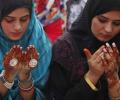
'The osmosis between Hinduism and Islam that really gave birth to the Hindustani or Indo-Islamic civilisation was due to the conversation between Muslim mystics and yogis.'
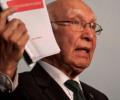
In India, Sartaj Azizis respected as a man of grace, wit and patience. He is a wizened soldier of many diplomatic battles between the two neighbouring nations
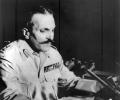
29 years ago this August, Pakistan's dictator, the general who made jihad part of Pakistani State policy, died in a mysterious air crash. Did the KGB, the then USSR's dreaded espionage agency, assassinate Zia-ul Haq? Was India's RA&W responsible for blowing Zia's military aircraft out of the skies? Was it Zia's many enemies in Pakistan's military? Was it a box of mangoes as Mohammad Hanif speculated in his fascinating novel about Zia's death? Or was the assassin someone else?
29 years ago this August, Pakistan's dictator, the general who made jihad part of Pakistani State policy, died in a mysterious air crash. Did the KGB, the then USSR's dreaded espionage agency, assassinate Zia-ul Haq? Was India's RA&W responsible for blowing Zia's military aircraft out of the skies? Was it Zia's many enemies in Pakistan's military? Was it a box of mangoes as Mohammad Hanif speculated in his fascinating novel about Zia's death? Or was the assassin someone else?
29 years ago this August, Pakistan's dictator, the general who made jihad part of Pakistani State policy, died in a mysterious air crash. Did the KGB, the then USSR's dreaded espionage agency, assassinate Zia-ul Haq? Was India's RA&W responsible for blowing Zia's military aircraft out of the skies? Was it Zia's many enemies in Pakistan's military? Was it a box of mangoes as Mohammad Hanif speculated in his fascinating novel about Zia's death? Or was the assassin someone else?

'Afghanistan cannot be at peace until the Pashtuns regain their pre-eminent role in the country's governance,' says Ambassador M K Bhadrakumar.

'Gujaratis need not be ashamed of the lack of martial tradition.' 'They contribute to their country in other ways.' 'And, of course, they can also claim that while they may not have produced many martyrs, they produced the greatest one: Gandhi.'

'Its internal economic rot and corrupt political elite have made the resurgent supremacy of the military establishment more invincible,' says Sunil Sethi.

'Bolstering India's conventional military capability against China is in America's strategic interest,' says military historian Colonel Anil A Athale (retd).

'Whatever the two countries are doing these days, on the diplomatic front and on their borders, that hostility is not sustainable.' 'Today's world doesn't approve it.'

'When it vanishes as a national force (meaning when it can no longer get sufficient votes to hold onto its symbol, the hand) it will not have been the first large Indian party to die,' says Aakar Patel.

'Why has the rhetoric gone down on the Indian side, Durrani wondered aloud.' 'I said because almost total normalcy and peace had returned on the ground in Kashmir,' recalls Shekhar Gupta. 'The general gave me that career spook's laser look. And he said: "That situation on the ground can change in no time".' 'This was precisely when the Pakistanis began their first incursions into Kargil.' 'Durrani had been retired for five years.' 'But once the ISI boss, you are always in the know.'

'Nawaz Sharif asked: "What if I invited him and he declined?"' 'I said I will check.' 'Vajpayee liked the idea. He said I should see him on my return.' Shekhar Gupta reveals how Sharif wanted to make peace, but was tripped by the army and notes the lessons it has for Imran Khan.

'India can replicate what Pakistan did to Kulbhushan Jadhav should the need arise.' 'Hopefully, Pakistan will see reason before that transpires,' says Ambassador G Parthasarathy, former high commissioner to Pakistan.

Bilawal Bhutto's political inheritance is his biggest asset as well as the biggest liability as he tries to make his mark in Pakistan politics. Challenging the Taliban militants is part of that strategy, though it matches with his political ideology. Shahzad Raza profiles the son of Benazir Bhutto and Asif Ali Zardari.

'Kulbhushan Jadhav is a very sad case.' 'I think Pakistan handled this issue very clumsily.' 'They gave too much of publicity and also said that they will hang him.' 'Now obviously, they are not going to hang him.'

'Civilian casualties are something that could change the mood overnight, and therefore should be avoided by every means.'

There is a great danger of the government getting stampeded into actions in Kashmir that could result in long lasting damage, warns Colonel Anil A Athale (retd).

Not far from Delhi, the orchards of Rataul offer a wide variety of mangoes, including one that rarely makes it to the market
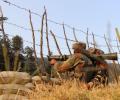
'India has to understand that the permanent state of war that exists between India and Pakistan has to be expected,,' says Colonel Anil A Athale (retd). 'The only way to ensure peace or absence of war is to maintain a militarily-dominant position over Pakistan.'

Just for a moment, says Kamaraj Gopalan, consider the possibility: Dawood Ibrahim captured a few days before the next general election. It would be Dr Singh and the Congress's Osama moment. What answer could Narendra Modi possibly have to that?

'At the end of the interview, as he walked with us to the elevator, he looked at me and said, "Do you think it was my karma that I should have made this film?"' Arthur J Pais/Rediff.com recalls his encounter with Richard Attenborough.

Both Messrs Imran Khan and Tahirul Qadri claim to march independently, but most of Pakistan believes they are marching to the Army's tune

'Minorities should not fear a Modi sarkar... Who has given the right to kill in the name of religion? No one! You are not James Bond 007, that you will just take a shotgun and kill anybody at your whims and fancies. We are not living in a banana republic...' The inimitable Shatrughan Sinha on Narendra Modi as a dabbang action hero, what a Modi Sarkar would be like.

'The biggest advantage for India was its seasoned and experienced political leadership who had spent decades struggling against the Raj and had spent years behind bars.' 'Not a single prominent leader of the Muslim League spent one day in jail.' 'Gandhiji, Nehru and Sardar Patel were intelligent, shrewd men with their hands on the popular pulse.'


'People in Pakistan opened their homes and hearts to me because I was an Indian. I didn't feel alien at all and I felt as if I was in my own country.' 'I believe that there is a strong chance that the Taliban can win over Pakistan. In an era of ideological confusion these people (Taliban) thrive.' 'The Pakistani State is an enemy state not just for India but for Pakistan itself. By funding non-state actors, the Pakistani government is destroying itself.' Film-maker Hemal Trevedi speaks on her experiences when filming a documentary on Pakistani madrasas

'I want to be murdered at your hands, so I can live on in history. The verdict of who is or is not a traitor cannot be pronounced by a secret agency, but by history.' Pakistani journalist Hamid Mir, who survived an assassination attempt on April 19, challenges his enemies to dub him a traitor and says nothing will stop him from exposing them.

'Small bands of terrorists believe they can destabilise superpowers if they are ready to become martyrs.' 'Since the road to paradise is under the shade of swords, it is a win-win situation for those ready to die for the cause of Allah.'

A lot of the terrorism that is affecting Pakistan is really a blowback of the Pakistani state's policy of using jihadist groups as instruments of state policy. And unlike some other countries with similar policies, Pakistan doesn't have the benefit of the political and social space for pulling back from the disastrous course, says Sushant Sareen.

Jaswant speak of his new book India At Risk, Mistakes, Misconceptions and Misadventures of Security Policy and explains to Sheela Bhatt why India is at risk.
 © 2026 Rediff.com - Advertise with us - Disclaimer - Privacy Policy - Sitemap - Feedback - About us - Terms of use - Grievances