
'The political direction that Pakistan and provinces bordering Afghanistan are taking is becoming clear. It is only a question of time before the little support that America has in locating Al Qaeda in the NWFP significantly dries up.'

Chastened by the Kargil conflict, Pervez Musharraf will be remembered for gradually lowering the profile of terrorism and seeking a realistically negotiated settlement to the issue of Jammu and Kashmir, notes Ambassador G Parthasarathy, who served as India's high commissioner to Pakistan when Musharraf seized power in a coup in October 1999.

India should watch the emergence of the situation and then see how others react, he said adding that Russia has stood by India in very difficult times.
Hurried and ill-planned Summits like the Vajpayee-Musharraf Summit in Agra which preceded the attack on the Indian Parliament in December 2001 are best avoided for now, says G Parthasarathy
India must sit up and take notice of the activities going on in Gilgit-Baltistan due to the immense strategic importance of the region, according to G Parthasarathi, former ambassador to Pakistan.
At a seminar in Washington, DC, a group of former diplomats, military leaders, politicians, businessmen and others said the minimum requirement from Pakistan is 'an irrevocable disbandment of the infrastructure of terrorism.'
Tuesday's violent clashes unfolded a day after the severe snub the Pakistan Supreme Court gave to the Musharraf establishment.

Former Indian diplomats on Monday termed the Taliban's takeover of Afghanistan as a "setback" for India strategically, and asserted that the priority for New Delhi right now should be to evacuate its citizens from the war-torn nation.
'The opposition party was disappointed that the UN listing does not mention the Pulwama terror attack, in which 40 CRPF personnel lost their lives, and has no reference to Jammu and Kashmir'
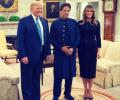
'Trump's new discovery is that Pakistan and its army are virtually god's gift to mankind.' 'They are required to facilitate a relatively orderly American exit from Afghanistan,' points out Ambassador G Parthasarathy, who served as India's high commissioner to Pakistan.

'The onus is now on China to explain to the world why it feels Pakistan should accompany India on the question of NSG Membership!! China's not so covert help for Pakistan's nuclear weapons and ballistic missile programmes will stand exposed,' says former ambassador G Parthasarathy.
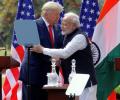
'New Delhi and Washington are now on the same page, on dealing with growing Chinese assertiveness, across the entire Indo-Pacific region,' notes Ambassador G Parthasarathy, Chancellor, Central University of Jammu.

'There will be much for President Trump and Prime Minister Modi to discuss including growing Chinese military cooperation with Pakistan, which heralds a new attempt by China and Pakistan to neutralise India's influence in its Indian Ocean neighbourhood,' notes Ambassador G Parthasarathy.

Just like China wants Trump to lose the US presidential poll, it may want Modi to lose the Lok Sabha polls. So months before the 2024 elections, China may take possession of an important area, say one of the Char Dhams, warns Sanjeev Nayyar.

'At critical moments an inability to take tough decisions resulted in potentially far-reaching solutions slipping out of our grasp.' 'If similar opportunities come Narendra Modi's way will he act differently?' asks Karan Thapar.

Foreign policy experts in New Delhi do not expect any major policy shift towards India under Donald Trump with a few feeling New Delhi could hope to derive "some benefit" from his stand on radical Islam.

Interrelations of India, Pakistan and Afghanistan on Thursday took centre stage at the Jaipur LitFest where panelists discussed the upswing in talks between Pakistan and Afghanistan besides India's ties with its neighbour.
'We need to be in a perpetual state of aggression, and able to swiftly change the goal posts to keep Pakistan in a state of imbalance,' argues Sanjeev Nayyar.
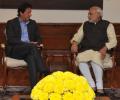
Should India engage Pakistan's generals directly, bypassing Imran? Ambassador G Parthasarathy, India's former high commissioner to Pakistan, ponders Delhi's diplomatic dilemma.

'ISI-backed jihadi groups like the Jaish-e-Mohammed and Lashkar-e-Tayiba are now prepared to cross the International Border and attack targets in Punjab at will,' says Ambassador G Parthasarathy, India's former high commissioner to Pakistan.

A group of former senior military and civil services officers has asked the government to cancel the proposed talks between the Prime Ministers of India and Pakistan in New York next month in view of unabated Pakistan-inspired terrorism against this country.
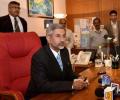
'Given his stint in Beijing, as India's longest serving ambassador there and that too through some challenging and interesting times, Jaishankar ought to have been appointed as foreign secretary in 2013 itself,' says Sanjaya Baru.

Ties with Pakistan and China which were on the centre stage of Indian diplomacy saw a "deterioration" in the year gone by, according to foreign policy experts who feel that the relationships are unlikely to see any forward movement in the new year.
Indians must remember that Pakistanis hate losing to India, at war or in cricket, says Sanjeev Nayyar.

How to deal with a country that has made export of terror a reason to make the world notice and fund it? Rediff.com contributor Sanjeev Nayyar offers a few suggestions
Prime Minister Narendra Modi seems to have secured a rare concession from Pakistan that 'terrorism' and not the issue of Kashmir be the central theme of the India-Pakistan dialogue.

'Nehru was singularly clear sighted about the international political situation.'

'India can replicate what Pakistan did to Kulbhushan Jadhav should the need arise.' 'Hopefully, Pakistan will see reason before that transpires,' says Ambassador G Parthasarathy, former high commissioner to Pakistan.
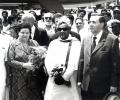
'I was present at a meeting where he decided to permit the IAF to strike at Pakistan positions in Kargil, with the caveat that they should not cross the LoC.' 'Confident that the Indian Army would succeed, Mr Vajpayee was positioning himself to tell the world after the Kargil conflict was won that India did not violate the 'sanctity' of the LoC,' recalls Ambassador G Parthasarathy, who served as India's envoy in Islamabad in that eventful year, 1999.

Pakistan's prime minister is trying to use the unrest in Kashmir to save his government, says Ambassador G Parthasarathy, a former high commissioner to Islamabad.

The question really is whether the US can be persuaded to embark on a path of calibrated and stronger sanctions on Pakistan.

'The two NSAs, who have been mandated to address mutual concerns on terrorism, will need to devise credible and irreversible measures to see that the likes of Hafiz Saeed and Masood Azhar do not ever get a free hand to run riot again,' says Ambassador G Parthasarathy, India's former high commissioner in Pakistan.

Sanjeev Nayyar suggests 16 measures by which we can tackle our unrelenting and untrustworthy neighbour.

One thing Beijing must understand is that India is not obsessed with being a threat to China but only wants a rightful place for itself in the world, says Sanjeev Nayyar.

'We will have to wait till the snows melt in June/July 2016 before we can get a clearer idea of whether Pakistan intends to get serious about ending support for cross-border terrorism,' says G Parthasarathy, India's former high commissioner to Pakistan.

20 years ago this day, May 11, 1998, India conducted its second nuclear test at Pokharan in Rajasthan. In a fascinating interview on Rediff.com, K Subrahmanyam revealed how Indian PMs reacted to nuclear ambitions.
 © 2026 Rediff.com - Investor Information - Advertise with us - Disclaimer - Privacy Policy - Sitemap - Feedback - About us - Terms of use - Grievances