
CPI(ML) Liberation general secretary Dipankar Bhattacharya has strongly criticised the newly introduced Merchant Discount Rate (MDR) on select UPI transactions, labelling it a "UPI tax" and demanding its immediate rollback. He drew parallels with demonetisation, arguing that the new framework would negatively impact small shopkeepers, MSMEs, and ordinary citizens by increasing prices.

The Indian government has introduced a 0.4% transaction fee on UPI payments above Rs 2,000 for merchants, effective October 15, sparking a political row. The Congress party has labelled it a "Modi tax" and accused the government of succumbing to US pressure, while the BJP has defended the move, clarifying that consumers will not be charged and small vendors are protected. The finance ministry reiterated that the charge is on merchants, not customers.

The main accused in the Kerala Lottery Welfare Fund fraud case, Sangeeth, has claimed he burnt Rs 6 crore in cash, consisting of demonetised Rs 500 and Rs 1,000 notes, after being unable to use them. He is accused of embezzling Rs 14 crore from the welfare fund, prompting a forensic investigation.

The Congress party has criticised the government's new 0.4% charge on UPI transactions above Rs 2,000 for merchants, terming it a "Modi tax". Opposition leaders, including Rahul Gandhi and Mallikarjun Kharge, allege that this move will ultimately burden consumers through price hikes and accuse the government of succumbing to American pressure to dilute India's zero-MDR policy. The government states the charge will support banks and fintechs.

Digital money is gradually starting to behave like software. It's no longer inert -- sitting passively in accounts. In the not-so-distant future, your money could become 'smart' and 'active,' understanding your preferences, paying your bills automatically, optimising your returns, and managing your risks -- all without you having to manage the details.

As the world's most populous country, India's economy looks large in the aggregate even as its average incomes stay modest.

'They are claiming that they are very good in governance. All governments do propaganda. This is the propaganda of the government that they are doing very well, in spite of all the troubles.'
'They are claiming that they are very good in governance. All governments do propaganda. This is the propaganda of the government that they are doing very well, in spite of all the troubles.'

Making UPI payments fee-based for some transactions could enhance mental reservations against digital payments -- which have largely been overcome -- once more. Do we want to regress?, asks R Jagannthan.

'Every period of excessive optimism eventually gives way to a correction, while periods of extreme pessimism often create the best investment opportunities.'

Poor families, she said, cut corners on their own needs to pay for coaching and fees, and when their child clears JEE, it's the happiest day the family has had in years. So why, she asked, her voice already starting to climb, does the same system that we're told is the best in the country keep pushing those very students toward what she called 'institutional deaths'?

The CPI(M) has strongly opposed the Union government's proposal to levy charges on UPI transactions, calling it a "breach of public trust" and demanding the immediate withdrawal of the legislation. The party highlighted that the government had previously promoted UPI as a free public utility, encouraging widespread adoption, and now seeks to monetise this infrastructure. They also linked this move to a broader trend of increasing banking charges.

Congress leader Rahul Gandhi launched a scathing attack on the BJP-RSS, labelling them a "bunch of jokers" with no understanding of India, and criticised Prime Minister Narendra Modi's foreign policy as merely "hugging leaders." He also claimed the RSS has become an instrument of large capital, serving Adani and Ambani, and vowed that the Congress would keep pressure on the government until Modi and Shah resign. The BJP hit back, calling Gandhi immature and out of depth.

It was left to an incensed Gen Z to show the rest of India that enough was enough, and that the time had come to shatter the fear psychosis generated by the government's authoritarian approach to protests and criticism, points out M R Narayan Swamy.

'After that the burdens of an ageing population will be upon us, and the share of working age population will shrink.'

The India Story adopts a very soap opera-like approach, piling on ham-fisted melodrama along with plenty of unevenness, sighs Sreeju Sudhakaran

Foreign investors have largely been exiting one part of the market while domestic investors have been enthusiastically accumulating another, points out Debashis Basu.

Mr Pradhan is not an especially charismatic leader or a brilliant orator, but his understanding of realpolitik and organisational dynamics makes him the ultimate party man, points out Aditi Phadnis.

Few leaders since Independence have been able to establish such a direct connection with the electorate or shape the national conversation to the extent that Narendra Modi has done over the past decade, points out former Union minister Dr Karan Singh.

Congress leader Rahul Gandhi criticised Prime Minister Narendra Modi and West Bengal Chief Minister Mamata Banerjee, accusing them of favouring the wealthy over the poor and prioritising power.
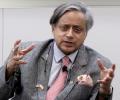
Senior Congress leader Shashi Tharoor criticised the government's decision to link women's reservation with the expansion of Parliament, calling delimitation a 'political demonetisation'. He argued that women's reservation should be implemented immediately based on existing parliamentary strength.

From Mohanlal's commanding act in Company to Dulquer Salmaan's chilling turn in Chup, these Malayalam stars proved they could shine far beyond Mollywood.

Trinamool Congress MP Kirti Azad has accused the BJP of being linked to the alleged NEET paper leak, claiming that individuals associated with the ruling party are involved in the scandal. He alleges the BJP is an 'expert in theft,' citing previous instances of 'vote theft' and 'job theft'.

Congress leader Rahul Gandhi criticised Prime Minister Narendra Modi for gifting 'Melody' toffees to Italian Premier Giorgia Meloni, calling it a 'gimmick' while India faces an 'economic storm'. He accused Modi of prioritising public relations over addressing the struggles of farmers, labourers, and youth, a sentiment echoed by other Congress leaders.

A State Bank of India report indicates a sharp increase in precautionary cash holding in India, with the gap between per capita currency in circulation and ATM withdrawals widening significantly, driven by global uncertainties despite record digital payment transactions.

Senior TMC leader Abhishek Banerjee criticised the Modi government's economic policies, citing rising prices and hardships caused by demonetisation and lockdown measures during an election rally in West Bengal.

The Dravida Munnetra Kazhagam on Thursday said that it will move the Supreme Court against the delimitation bill, if it is passed in the Parliament.
Congress leader Rahul Gandhi criticised Prime Minister Narendra Modi and West Bengal Chief Minister Mamata Banerjee, accusing them of prioritising the wealthy over the poor and failing to create job opportunities.

The English subtitles in Dhurandhar The Revenge don't get it right, and at regular intervals, the sub-titles and the Tamil dialogues are saying different things. Those in the audience, who know both languages, can be heard laughing at each blunder, observes A Ganesh Nadar.
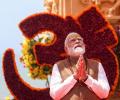
'At the first sign of real trouble, that money will move. There will be a run.'

Rahul Gandhi accuses the government of using the women's reservation bill as a smokescreen to manipulate India's electoral map and diminish representation for certain states.
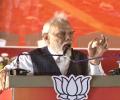
West Bengal Chief Minister Mamata Banerjee has accused the BJP-led central government of using the proposed amendment to the women's quota law as a front for the Delimitation Bill, which she claims will divide the country. She asserted that her party will fight this move at every step.

West Bengal Chief Minister Mamata Banerjee criticised the BJP after the central government failed to pass a Constitution amendment bill for women's quota in legislatures, accusing the BJP of using the bill as a political ploy to divide the country and Bengal.

Despite all the bumps along the way, the finale of Dhurandhar The Revenge lands perfectly, giving the protagonist and the story a sense of closure. In the current landscape of stretching the narrative for blockbuster appeal, Aditya Dhar wisely opts for a proper ending. And that deserves respect, applauds Mayur Sanap.

The Dhurandhar movies will undoubtedly shape the minds of the audience much more than news reports, court investigations, books and documentaries. But it is worth remembering that Pakistan's irridentist claims against India's national security have succeeded due to strategic planning, diplomacy, and the unsung heroines and heroes across government agencies, not due to a single maverick leader, points out Shweta Desai.But it is worth to remember that Pakistan's irredentist claims against India's national security have succeeded due to strategic planning, diplomacy, and the unsung heroines and heroes across government agencies -- not a single maverick, points out Shweta Desai.

What is missing in the BJP's armour is dominance over 50 percent of the electorate: Women. And this is a gamble Modi-Shah have indicated that they are willing to take, explains Saisuresh Sivaswamy.

West Bengal Chief Minister Mamata Banerjee has accused the BJP of stoking fights among all sections of society and attempting to loot the country by exploiting these divisions. She also criticised the BJP's economic policies and alleged discrimination in welfare schemes.
TMC leader Abhishek Banerjee has accused the BJP of misusing democratic institutions and stoking communal discord in Bengal, criticising their 'double engine' governance model.

Senior Trinamool Congress leader Abhishek Banerjee has accused the BJP-led central government of planning to increase fuel prices after the West Bengal assembly elections. He challenged the BJP to promise no price hikes for LPG, petrol, and diesel over the next five years.

If you are willing to spare four hours of your day on a spy action thriller, Dhurandhar The Revenge will surprise, shock and overwhelm you with its nervous energy, notes Divya Nair.
