
'40 percent of voters in Bihar will be excluded.'
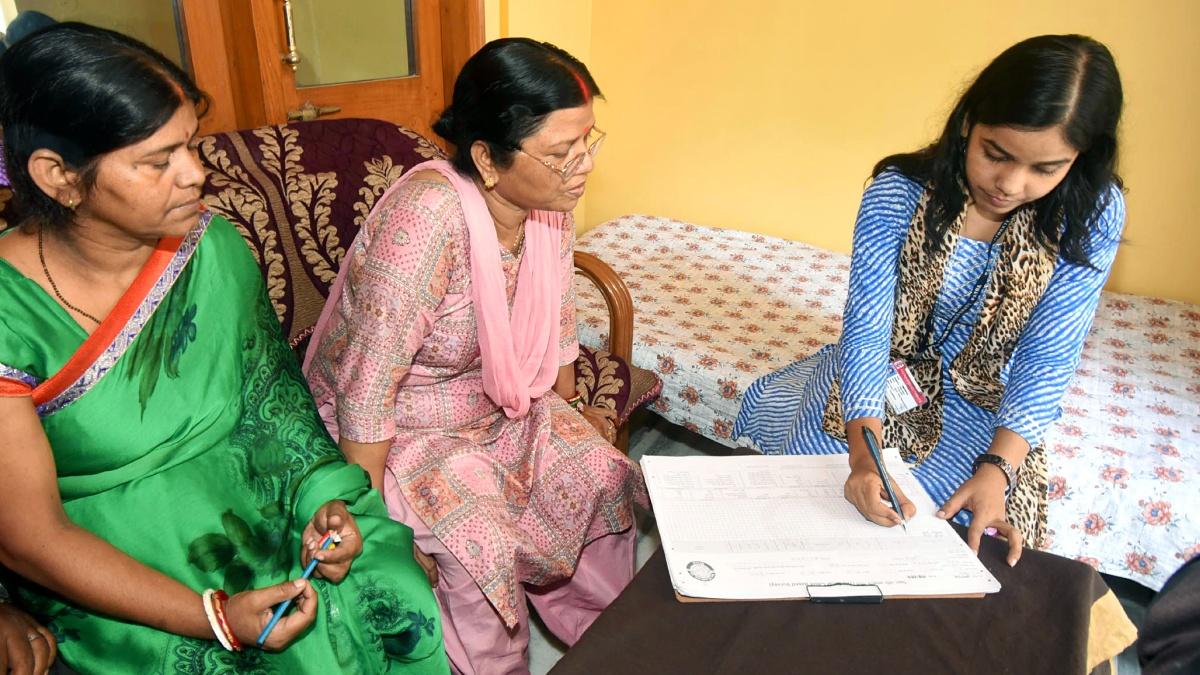
The Election Commission of India has launched a comprehensive voter verification exercise across Bihar as the state prepares for assembly elections later this year. Dubbed the Special Intensive Revision, the initiative requires voters to present one of 11 specified documents to confirm their eligibility.
The ECI has outlined the following documents as acceptable for the Special Intensive Revision:
- Any identity card/pension payment order issued to a regular employee/pensioner of any central/state government/Public Sector Undertaking.
- Any identity card/certificate/document issued in India by government/local authorities/banks/post offices/Life Insurance Corporation /PSUs prior to July 1, 1987.
- Birth certificate issued by a competent authority.
- Passport.
- Matriculation/educational certificate issued by recognised boards/universities.
- Permanent residence certificate issued by competent state authority.
- Forest right certificate.
- OBC/SC/ST caste certificate.
- National Register of Citizens (wherever applicable).
- Family register prepared by state/local authorities.
- Any land/house allotment certificate by the government.
However, the verification process includes an additional layer of scrutiny. Beyond submitting one of the listed documents, Bihar residents are categorised into three groups, each facing specific requirements to affirm their Indian citizenship before being registered as a voter.
The categories are as follows:
Born before July 1, 1987: Individuals in this category must furnish evidence of their date and place of birth.
Born between July 1, 1987, and December 2, 2004: In addition to one of the 11 primary documents, these individuals must provide a document certifying the place and date of birth of either of their parents.
Born after December 2, 2004: For this group, a document certifying the place and date of birth of both parents is mandatory.
The Election Commission's stringent verification efforts have drawn severe criticism.
"It will be very difficult for people born post December 2, 2003, to prove their Indian citizenship. This means post 2003, every Bihari voter is a doubtful Indian citizen," Dipankar Bhattacharya, general secretary of the Communist Party of India-Marxist Leninist since 1998, tells Syed Firdaus Ashraf/Rediff.
"90 percent people of Bihar have an Aadhaar card and many of them also have the voter ID card or ration card. Young people have a driving licence. But all these three cards -- Aadhaar, ration card and driving licence - are useless according to the Election Commission of India."
What are your concerns about the Election Commission's Special Intensive Revision of Bihar's electoral rolls? You have termed this exercise as vote bandi.
I used the word 'vote bandi' because this exercise is similar to 'notebandi' (demonetisation) done on November 8, 2016. Till the evening no one knew about notebandi and in this case too the Election commission announced vote bandi on June 24.
On June 24 the voter list of Bihar was scrapped all of a sudden. Today, there is no voter list in Bihar.
The word they use is 'intensive revision', but it is wrongly used because this is not intensive revision but invasive revision. People in remote parts of Bihar have no idea till now about what is going on.
What is the one thing that worries you most about the Special Intensive Revision?
There are trappings of the National Register of Citizens like we see in Assam.
For the first time electors will have to prove their Indian citizenship.
There is something called eligibility test going on. The number one criterion for eligibility is to prove your citizenship and your age. For migrant workers, they have to prove they are ordinary citizens of Bihar state, and one does not know how you assess that.
The citizenship is proved by (11) documents that you need to have and if you ask any common citizen of Bihar, they won't have that list of documents.
90 percent people of Bihar have an Aadhaar card and many of them also have the voter ID card or ration card. Young people have a driving licence. But all these three cards -- Aadhaar, ration card and driving licence -- are useless according to the Election Commission of India.
ECI requires the birth certificate because it proves your date of birth as well as your place of birth.
Besides a birth certificate there are 10 other documents to be eligible for voting in Bihar, isn't it?
Yes, but it also includes the NRC. We all know the NRC document is only limited to Assam and no other state requires an NRC document. (Note: The documents required state's National Registration Certificate wherever it exists).
The point is, these 11 documents do not include the common document like Aadhaar which most Indians possess.
Does it mean if I have a voter card and Aadhaar card it still does not prove that I am an Indian citizen?
These are not sufficient documents as far as the Election Commission is concerned. Now besides those 11 documents you need to possess, you have to have the birth certificates of your parents too if you are born after December 2, 2004. And if you are born between July 1, 1987 and December 2, 2004, you need to produce the birth certificate of either of your parents.
But has not India changed its citizenship law? We no longer have jus soli (birthright) based citizenship but follow jus sanguins (citizenship by descent) from 1987.
There are 140 countries in the world which follows jus sanguins and only 30 countries follow jus soli.
Even in a country like the US where they have jus soli, Donald Trump wants to change it. So what is wrong if India practises citizenship by descent?
There are so many things that are wrong here.
Firstly, you cannot reach eight crore (80 million) voters of Bihar in one month's time from July to August when the monsoon is at its peak. It is designed to exclude people.
In my opinion 40 percent of voters of Bihar will be excluded.
Secondly, as I told you earlier, never before in the history of India an elector has had to prove he is an Indian citizen.
In this exercise I feel it will be very difficult for people born post December 2, 2003, to prove their Indian citizenship.
This means post 2003, every Bihari voter is a doubtful Indian citizen.
We have seen this in Assam where they got something called 'D' voters. These 'D' voter names have been eliminated from the voters list. Many of these 'D' voters ended up in detention centres. Some of them are being deported to Bangladesh and again sent back to India by the Bangladesh government. All this is happening in Assam.
This process in Assam took six years after the Supreme Court of India-ordered NRC was conducted in two rounds.
But that NRC list was not accepted by the Assam government.
Yes, those 19 lakh (1.9 million) people were left out. The Assam government did not accept that list.
Sadly, if your name is there on the Assam NRC list the Assam government can tell you anytime you are a foreigner and you can be deported to Bangladesh any time.
The tribunal, that is the local body, has the power (in Bihar) whether NRC or no NRC.
The same insecurity we will see in Bihar post the SIR exercise by the Election Commission.
The migrant workers of Bihar, for example, have gone to other states for work or education. They constitute 20 percent of the population. The Election Commission considers them as voters who are from outside the state and not voters of Bihar.
- Part 2 of the Interview: The Courage Of A Soldier's Wife









 © 2025