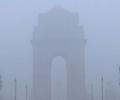
The India Meteorological Department (IMD) reported that very dense fog began forming around 5.30 am, resulting in a thick haze over different parts of the national capital.

This deterioration in air quality led to prompting enforcement of Stage II of the Graded Response Action Plan (GRAP) in the national capital.

Among heavy criticism of West Bengal Chief Minister Mamata Banerjee's remarks on Prayagraj's Mahakumbh, Jagadguru Shankaracharya Swami Avimukteshwaranand Saraswati Maharaj on Wednesday supported the CM, saying that the religious event has been mismanaged.

Delhi's air quality improved for the second consecutive day on Thursday, with the Air Quality Index (AQI) recorded in the "moderate" category at 165. This marks a significant improvement from the "poor" category recorded on Tuesday. Several restrictions imposed under Stage 4 of the Graded Response Action Plan (GRAP) were lifted, but some restrictions under Stage 2 remain in place. The Decision Support System (DSS) has not been updated since Friday, with technical difficulties hindering the update of data for the last six days.

The Indian government has announced staggered working hours for its employees in Delhi due to the severe air pollution in the city. The move comes after a week of 'severe' pollution levels, which have slightly improved but are still in the 'very poor' zone. The order also encourages employees to pool vehicles and use public transport to minimize vehicular pollution.

Dense fog enveloped Delhi for a second consecutive morning, leading to disruptions in air and rail traffic. Visibility dropped to zero in several areas, causing delays for 81 trains and diversions for 15 flights. The Met office attributed the fog to calm surface winds, and predicted continued dense to very dense fog throughout the day. Meanwhile, the national capital's air quality remained in the 'very poor' category, with an AQI reading of 380 at 9 am.

Forty years after the Bhopal gas tragedy, 377 tons of hazardous waste has been shifted from the defunct Union Carbide factory for its disposal, an official said.

A strong dust storm and gusty winds followed by rain hit Delhi-NCR on Friday evening, causing trees to be uprooted in several parts and leading to traffic congestion. Thunderstorms caused power disruptions in several parts of the city, primarily due to trees and branches falling on electricity cables. The India Meteorological Department (IMD) has issued an orange alert, recommending people stay indoors and avoid unnecessary travel.

The Indian government has stated that the water in the Ganga river at Triveni Sangam in Prayagraj was fit for bathing during the recently concluded Maha Kumbh, citing a new report from the Central Pollution Control Board (CPCB). The report, however, contradicts an earlier CPCB report that found high faecal coliform levels at several locations in Prayagraj during the Maha Kumbh. The government also highlighted measures taken to ensure water quality during the event, including the installation of sewage treatment plants and the use of advanced oxidation techniques to treat wastewater.

The Uttar Pradesh government, citing a scientist, has asserted that Ganga water at the ongoing Maha Kumbh in Prayagraj is as pure as "alkaline water", debunking concerns raised by the Central Pollution Control Board (CPCB) about water quality. The government claims that a scientist found no bacterial growth or decline in the water's pH level, despite millions of devotees bathing in the river. However, experts caution that the quality of the Ganga water is not static and can vary greatly depending on various factors.

The Ganga water at the Triveni Sangam in Prayagraj, where lakhs of people are taking a holy dip every day during the ongoing Maha Kumbh, is currently unsafe for bathing as it exceeds the prescribed limit for biological oxygen demand (BOD), a key parameter to determine water quality, according to government data.

The AQI recorded in Mumbai at 8 am was 131, categorised as 'moderate', as per the Central Pollution Control Board.
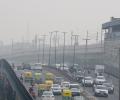
'The pollution has increased. We are facing breathing problems and irritation in the eyes'

After a long and harsh spell of heatwave, Delhi witnessed a pleasant morning on Thursday, with the weather department saying parts of the national capital received light rains.

A thick layer of fog was seen in several parts of the city, weather officials said.

'Many of these patients arrive at emergency departments in distress, struggling to breathe and requiring immediate medical intervention.'

With such announcements grabbing the voters' attention, critical issues like pollution, especially the smog that chokes Delhi every winter, remain largely unaddressed. Many residents have raised concerns over the lack of concrete action plans to combat air pollution, which continues to pose a severe health risk to Delhiites.

Delhi's air quality plummeted to alarming levels on Tuesday after 24 days, with many areas witnessing a significant spike in pollution despite the strictest measures, including a ban on construction activities and the entry of trucks into the city, coming into force.

Ramesh asked the PM why river Ganga is "dirtier than before" even after spending Rs 20,000 crore on the Namami Gange project.
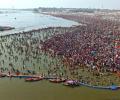
The Maha Kumbh, billed as the world's largest gathering, concluded on Wednesday after 45 days, with lakhs of devotees taking a dip in the Sangam, the confluence of the Ganga, Yamuna, and mythical Saraswati rivers. Despite a stampede that killed at least 30 people, millions continued to visit the Kumbh, seeking salvation through the ritual bath. The event saw a mix of faith, tradition, and technology, drawing pilgrims and tourists from across the globe.

Air quality index (AQI) soared past 350 level in parts of Delhi on Thursday and experts cautioned that as weather turns colder it may breach the 400-mark ceiling and enter the 'severe' zone soon, notwithstanding the incidents of stubble burnings which have nosedived from 17,529 in 2020 to 4,262 this year.

The work to remove 377 metric tonnes of hazardous waste from the now-defunct Union Carbide factory in Bhopal has begun. The waste will be transported to an incineration site in Pithampur near Indore, around 250 km from Bhopal. The move comes after the Madhya Pradesh High Court ordered the authorities to clear the site, 40 years after the deadly gas leak that killed thousands and left hundreds of thousands with health problems.

The Madhya Pradesh high court in Jabalpur on Monday directed the state government to take steps within six weeks for disposal of Bhopal-based Union Carbide's 337 tonnes of hazardous waste as per safety protocols, while restraining the media from publishing any fake news on the same.

The Congress on Friday claimed that a 'silent undercurrent' is brewing across western Uttar Pradesh against the 'failures' of the Modi government, as it flagged issues such as 'neglect' of sugarcane farmers and examination paper leaks.

The maximum temperature on Saturday settled at 18.1 degrees Celsius, two notches below the season's average, and the minimum was recorded at 3.6 degrees Celsius, four notches below the season's average, the IMD said.

Delhi's air quality deteriorated significantly on Monday, with areas like Dwarka, Mundka and Najafgarh recording an AQI of 500, the worst this season. The city's overall AQI reached 491, triggering the implementation of the Graded Response Action Plan (GRAP) Stage-IV restrictions in Delhi-NCR. Doctors warned of health risks, urging people to wear N95 masks and avoid outdoor activities. The Supreme Court questioned the Delhi government on its anti-pollution measures and warned against scaling down preventive measures without its permission. Delhi Chief Minister Atishi accused the BJP-led central government of political maneuvering while neglecting stubble burning in states it governs. Meanwhile, the city enforced stricter pollution control measures, including a ban on truck entry and suspension of construction activities. Air purifier sales surged, reflecting the public's concern over the severe air pollution.
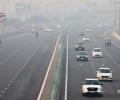
The city's 24-hour Air Quality Index (AQI), recorded at 4 pm daily, stood at 417, making it the worst in the country. On Friday, the AQI level was 396.

The environment ministry is likely to soon issue regulations that will mandate automakers to recycle a specified percentage of steel from old vehicles, starting from the next financial year, according to people familiar with the matter. "We recently held a meeting with members of the Society of Indian Automobile Manufacturers (Siam). "The final regulations are likely to be issued in the next 10 days," a government source informed.

Clean air needs action all year round; and that it will work only if we act jointly and at scale, asserts Sunita Narain.

The city's 24-hour Air Quality Index, recorded at 4 pm every day, stood at 418, up from 334 the previous day, and it may trigger stringent restrictions under the third stage of the graded response action plan to mitigate hazardous conditions.

The rains could lead to a rise in the water levels of the Yamuna, which has been flowing above the danger mark of 205.33 metres for days now.

Six weather stations across Delhi recorded over 100 mm of rain in a single day, the India meteorological department (IMD) said on Thursday, categorising it as an "extremely intense spell".

Over the past three trading sessions, the stock of Cummins India has gained about nine per cent on strong January-March quarter (Q4) results and good near-term prospects. Its Q4 performance was led by a healthy 29 per cent revenue growth over the year ago quarter. This was largely on the back of a 33 per cent jump in domestic revenues while exports witnessed a growth of 17 per cent.

The city recorded a minimum temperature of 14.6 degrees Celsius, a notch above normal, according to the India Meteorological Department.

The central government's Great Nicobar development project, proposed around an unprecedented transhipment port, will be executed to keep environmental impact minimal, and is essential as it is of national importance, the government has said amid calls to abort the controversial project due to ecological concerns, the Centre said in an official statement.

The petition alleged that "illegal mining" was being carried out by Singh, the MP from Kaiserganj, in Majharath, Jaitpur and Nawabganj villages of Tarbganj tehsil in the district.
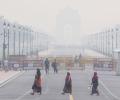
The capital witnessed a clear morning on Friday with the minimum temperature settling a notch below normal at 14.6 degrees Celsius.

Genset manufacturer Cummins India has seen its share price rise by 45 per cent in the past three months. The management has reaffirmed that growth would be in double digits over the coming two fiscal years. Growth is expected to be driven by a pickup in domestic infrastructure spending.

People stood at their places with their phone cameras open but faced trouble capturing aircraft formations due to the layer of fog and smoke cloaking the capital.

Areas in the National Capital Region -- Noida and Gurugram -- recorded an AQI of 529 and 478 respectively both in the highly toxic 'severe'.
