
The Indian government has claimed a significant increase in waqf land following the 2013 amendment to the Waqf Act, asserting that the addition of 20 lakh acres raises concerns about potential "misuse" of the provisions. In an affidavit to the Supreme Court, the Centre highlighted a 116% rise in auqaf area after the amendment and urged the dismissal of petitions challenging the Act's validity.

Protests against the Waqf Act turned violent in parts of West Bengal on Friday, with demonstrators setting ablaze vehicles, disrupting traffic and rail movement, and injuring several policemen. The unrest erupted in Suti, Murshidabad district, where protesters defied prohibitory orders, hurled stones at security personnel, and torched police vans and public buses during processions. Police responded with lathi charges and tear gas, while some officers were forced to seek refuge in a nearby mosque. Similar protests were held in Malda and Kolkata, prompting Governor C V Ananda Bose to direct the state government to take swift action against those responsible. The governor also contacted Union Home Minister Amit Shah and held discussions with Chief Minister Mamata Banerjee. The Waqf (Amendment) Bill, which was recently passed by both houses of Parliament, aims to improve the management of Waqf properties, safeguarding heritage sites and promoting social welfare.
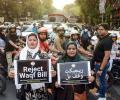
The Congress party announced its intention to challenge the constitutionality of the recently passed Wakf (Amendment) Bill, 2024 in the Supreme Court. AICC general secretary Jairam Ramesh stated that the party will "very soon" file a petition, citing concerns about the bill's impact on constitutional principles. Ramesh highlighted the Congress's ongoing legal challenges against other legislation, including the Citizenship Amendment Act (CAA), amendments to the Right to Information (RTI) Act, and changes to the Conduct of Election Rules. He emphasized the party's commitment to defending the Constitution's principles, provisions, and practices.

The specter of how the Munambam issue was exploited during the November by-elections is proof of the price Kerala is paying for its emergent politics. Controversies become the stuff of slow-burn and brinkmanship. The former promises mileage; the latter searches for an advantage, notes Shyam G Menon.

In FY24, the net income generated from Waqf properties fell to about Rs 1.26 crore from Rs 150 crore in FY20.
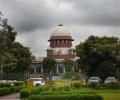
The Supreme Court of India will likely hear a batch of petitions challenging the constitutional validity of the Waqf (Amendment) Act, 2025 on April 15. The Act, which came into force on April 8, has been met with widespread criticism from various stakeholders, including politicians, the All India Muslim Personal Law Board (AIMPLB), and Jamiat Ulama-i-Hind. They argue that the law is discriminatory and violates the fundamental rights guaranteed under Articles 25 and 26 of the Constitution. The petitions allege that the amendments give the government more control over the administration of Waqf, effectively sidelining the Muslim minority from managing their own religious endowments.

The situation in Muslim-dominated Murshidabad district of West Bengal, which was marred by incidents of violence following protests over the Waqf (Amendment) Act, was calm and peaceful on Wednesday with no reports of any untoward incident. Prohibitory orders were clamped in and around Raghunathganj and Suti police station areas and large police force deployed in all sensitive areas of the district, especially in and around Jangipur town, where a large number of people had assembled on Tuesday afternoon, demanding the withdrawal of the legislation. Internet connectivity remained suspended within the areas under the Jangipur sub-division to prevent the spread of any disinformation. Protestors, who had gathered in large numbers on the NH-12 in the Jangipur area to protest against the Waqf Bill, hurled stones at the police who were deployed in the area, on Tuesday afternoon. A couple of vehicles belonging to the police were allegedly torched during the protest and police had to resort to lathi-charge and use tear gas shells to bring the situation under control. A few policemen were injured in the stone pelting. Police have also detained a few people in connection with the incident. West Bengal Governor C V Ananda Bose condemned the incident and said attempts to disturb the law and order situation in the state "should be put down with an iron hand". The opposition BJP alleged that the law and order situation in the state was "crumbling" under Chief Minister Mamata Banerjee, who was busy with "minority appeasement". The Waqf (Amendment) Bill was passed by the Lok Sabha on Thursday, and by the Rajya Sabha in the early hours of Friday after marathon debates in both Houses of Parliament. The Act aims to streamline the management of Waqf properties (assets permanently donated by Muslims for religious or charitable purposes) with provisions to safeguard heritage sites and promote social welfare. It also seeks to improve governance by enhancing transparency in property management, streamlining coordination between Waqf boards and local authorities and protecting stakeholders' rights.

Prime Minister Narendra Modi hailed the passage of the Waqf (Amendment) Bill in Parliament as a "watershed moment" in the country's quest for socio-economic justice, transparency and inclusive growth. He said the legislation will particularly help those who have long remained on the margins, thus being denied both voice and opportunity. Modi stated that the Waqf system was synonymous with lack of transparency and accountability, especially harming Muslim women, poor Muslims and Pasmanda Muslims. He added that the legislation will boost transparency and safeguard people's rights, ushering in a more modern and socially just framework. The prime minister thanked all members of Parliament and the public for their contributions to the legislation.

Tamil Nadu Chief Minister and DMK president M K Stalin announced that his party will file a case in the Supreme Court against the Waqf Bill passed in the Lok Sabha. The opposition AIADMK expressed solidarity with the DMK's stance, while the BJP members staged a walkout from the Assembly in protest. The CM argued that the amendment was passed at the behest of a few allies despite opposition from majority parties and that it is an attack on the Constitution and religious harmony. The DMK claims the bill threatens the autonomy of the Waqf Board and the Muslim minority population.

Protests against the Waqf (Amendment) Act turned violent in Cachar district of Assam on Sunday, with protesters throwing stones at police and the police using batons to disperse the crowd. The incident occurred in Berenga area of Silchar town where around 300-400 people protested without permission. The Cachar district administration imposed prohibitory measures across the district under Section 163 of the Bharatiya Nagarik Suraksha Sanhita (BNSS) to prevent further unrest. The order prohibits gatherings of five or more people without permission, carrying weapons, organizing protests, and traffic disruptions.

The joint committee of Parliament examining the Waqf (Amendment) Bill submitted its report to Lok Sabha Speaker Om Birla on Thursday. The panel adopted the report by a majority vote, with changes suggested by members of the ruling BJP. Opposition members, who submitted dissent notes, called the exercise an attempt to destroy Waqf boards and termed the bill an attack on the constitutional rights of the Muslim community.

Hours after the Waqf (Amendment) Bill was passed in Parliament, 50 individuals embroiled in land disputes in Kerala's Munambam joined the BJP, hoping for a resolution to their claims. The residents, who have been protesting for 174 days, allege that the Waqf Board is claiming ownership of their properties. BJP leader Rajeev Chandrasekhar assured them of the party's support and a meeting with Prime Minister Narendra Modi to express gratitude. The BJP capitalized on the Catholic Church's support for the legislation, accusing the Congress and the Left of appeasement politics. The opposition, however, questioned the impact of the bill on the Munambam issue.

The All India Muslim Personal Law Board (AIMPLB) has called for a nationwide 'lights out' protest from 9 PM to 9:15 PM on April 30 to oppose the amendments made to the Waqf Act. The AIMPLB spokesperson, SQR Ilyas, stated that the protest is a symbolic expression of solidarity against the 'discriminatory and constitutionally incompatible' amendments. The Board has been running a campaign against the amendments since April 10, organizing meetings and protests across the country.

The parliamentary committee scrutinising the Waqf bill is set to propose that existing 'Waqf by user' properties will remain so if not in dispute or are government facilities but they must be registered before the new law takes effect, providing little relief to Waqf bodies in their unverified title claims.

Banerjee said she will protect the minority people and their property.
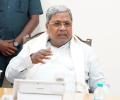
Karnataka Chief Minister Siddaramaiah directed officials on Saturday to immediately retract all notices sent to farmers regarding Waqf land.

'Under this amendment, in any dispute over Waqf properties, the Waqf Board cannot approach the court.' 'This is very surprising because the government instead of protecting Waqf properties they are snatching it away and not allowing them to go to court.' 'The third biggest landowner in India is the Waqf Board after the Indian Army and Indian Railways.'

Protesters in West Bengal's Murshidabad district set fire to police vehicles and hurled stones during a demonstration against the Waqf (Amendment) Act. The incident occurred on Tuesday afternoon in the Jangipur area, where a large crowd had gathered demanding the withdrawal of the legislation. Police responded with lathi charges and tear gas to control the situation. Several people were detained and police personnel were injured in the stone-pelting. The West Bengal Police has said the situation is under control and strict action will be taken against those who resorted to violence.
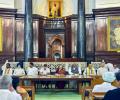
Lok Sabha Speaker Om Birla criticized former Congress president Sonia Gandhi's remarks about the Waqf (Amendment) Bill being "bulldozed through" the Lower House. Birla said a senior member casting aspersions on the House proceedings was "most unfortunate" and against the dignity of parliamentary democracy. He pointed out that the bill was debated for 13 hours and 53 minutes with several members participating and was passed after multiple divisions.

Two individuals claiming to be members of the Janata Dal (United) (JD(U)) in Bihar announced their "resignation" from the party, citing dissatisfaction with its support for the Waqf (Amendment) Bill. The JD(U) denied the resignations, claiming the individuals were not party members. However, some senior JD(U) leaders have expressed discontent over the passage of the bill, which they believe is detrimental to Muslims. The controversy over the Waqf Bill is likely to influence the upcoming assembly elections in Bihar.

Five individuals have been arrested in Ahmedabad, India, for allegedly impersonating trustees and collecting rent for 17 years from properties belonging to two Waqf Board-registered trusts. The accused, who are not actual trustees, constructed around 100 houses and shops on the trust land and collected rent from them, misusing the properties for personal benefits. An FIR has been registered against them for cheating and forging documents.
The Waqf (Amendment) Bill, 2025 was passed in the Lok Sabha early Thursday, with 288 members supporting it and 232 against it.

A section of Biju Janata Dal (BJD) leaders in Odisha are expressing discontent over the party's decision to support the Waqf (Amendment) Bill. The issue has sparked internal turmoil, with young leaders submitting a memorandum to party president Naveen Patnaik, urging him to address the situation. Patnaik has held meetings with senior leaders, assuring them that necessary action will be taken to mitigate the fallout and maintain the party's secular image.

The Supreme Court has rejected a petition seeking to prevent the construction of mosques named after Mughal emperor Babur.

Uttar Pradesh Chief Minister Yogi Adityanath on Sunday condemned the violence in West Bengal's Murshidabad district following the passage of the Waqf (Amendment) Bill, accusing the opposition of instigating the violence. He also criticized the opposition for their alleged silence over the persecution of Hindus in Bangladesh and emphasized the BJP's commitment to protecting Hindus.

They stated that when a soldier fights for the nation, he does so not as a Hindu, Muslim, or any other religion, but as a patriot.

The All India Muslim Personal Law Board (AIMPLB) has urged Muslims to wear a black armband on their right hand during Juma prayers on the last Friday of Ramzan as a mark of protest against the Waqf (Amendment) Bill. The AIMPLB has been vocal in its opposition to the Bill, calling it "controversial, discriminatory and damaging." The organization has planned nationwide protests against the Bill, with large sit-ins scheduled in several cities.
Amid a row over change in stand over voting on the Waqf (Amendment) Bill, 2025, the Biju Janata Dal (BJD) on Friday asserted it is a secular regional outfit and maintains equal distance from the Bharatiya Janata Party-led National Democratic Alliance and the opposition Indian National Democratic Inclusive Alliance bloc led by the Congress.

Authorities in Kishtwar district of Jammu and Kashmir have issued an order regulating the collection of donations during Ramzan to prevent unauthorized fundraising and ensure transparency.

All opposition members of the parliamentary panel on the Waqf Amendment Bill were suspended for a day on Friday amid continuous protests and accusations against Chairman Jagdambika Pal of steam-rolling through the proceedings.

Congress Parliamentary Party chairperson Sonia Gandhi has criticized the Waqf (Amendment) Bill, calling it a 'brazen assault' on the Constitution and part of the BJP's strategy to keep society in a 'permanent state of polarization.' She also spoke out against the One Nation, One Election Bill, calling it a 'subversion of the Constitution.' Gandhi further accused the Modi government of ignoring the women's reservation bill and other demands for reservation, and of 'dragging the country into an abyss' where the Constitution will only exist on paper. She also criticized the government for limiting the speaking time of the Leader of the Opposition in Parliament and for not allowing discussions on important issues like the working of the defense and external affairs ministries and the challenges posed by China on the border.
'They want to snatch the land and give it to their friends'
The government has also listed three new bills for the session -- 'The Protection of Interests in Aircraft Objects Bill, 'Tribhuvan Sahkari University Bill', and the 'Immigration and Foreigners Bill'.
Nitish Kumar's decision to contest the Rajya Sabha elections signals the end of his long-standing tenure as Bihar's Chief Minister, paving the way for a potential BJP leader to take the helm.

Senior leaders of the Biju Janata Dal (BJD) in India are calling for action against Rajya Sabha MP and national spokesperson Sasmit Patra for allegedly creating confusion among lawmakers regarding the Waqf (Amendment) Bill. The controversy arose after Patra, despite the party's announced opposition to the Bill, revealed he had voted in favor of it and stated that MPs could vote according to their conscience. The situation has led to accusations of a possible "deal" between the BJD and the Bharatiya Janata Party (BJP).

'We are not all Abduls, you know. Our community has any number of retired civil and defence officers, doctors, engineers, lawyers.'

The district court in Shimla on Thursday upheld the municipal commissioner court's decision to demolish the entire structure of Sanjauli mosque, rejecting a plea by the Himachal Pradesh Waqf Board and the Sanjauli Mosque Committee.

BJP president JP Nadda said on Sunday that the party does not seek to control the Waqf Board but wants to ensure that those managing it operate within the bounds of law and adhere to established rules. He said the properties and funds of the Waqf Board should be dedicated to promoting education, providing healthcare and employment opportunities for the Muslim community. Nadda also highlighted the BJP's growth and achievements, emphasizing its commitment to national unity and cultural heritage.

The Maharashtra State Waqf Board has denied issuing notices to farmers in Latur over land ownership. The notices were issued by the Waqf Tribunal following a claim filed by an individual. The Waqf Board says it has not made any claim on land in any village in Latur district.

Parliament's approval of the Waqf (Amendment) Bill, a contentious piece of legislation aimed at reforming Waqf bodies, has sparked strong reactions from the opposition, who allege that the bill was "bulldozed" through Parliament. The bill, considered the government's most consequential legislation in its third term, was passed with comfortable majorities in both the Lok Sabha and Rajya Sabha despite opposition claims of a lack of consultation and an intrusion into religious affairs. Other notable bills approved during the session included the Finance Bill, Appropriation Bill, Immigration and Foreigners Bill, and Tribhuvan Sahkari University Bill. The session, which saw high productivity, also witnessed debates on issues such as economic distress, delimitation, and the three-language policy. While the government touted its achievements, the opposition criticized the government's approach and vowed to challenge the Waqf bill in court.
