
The probe pertains to alleged illegal betting apps that are stated to have duped numerous people and investors worth crores of rupees or have evaded a huge amount of taxes.

'A bus driver should possess a comprehensive road plan: Toll plazas, major hospitals, road conditions, repairs, diversions, and dangerous areas.' 'Only through such preparation can we save lives.' 'Otherwise, simply sitting in the driver's seat and pressing the accelerator -- anyone can do that.'

'Government officials use Gmail and ordinary phones without basic security consciousness.' 'Interoperability, especially in joint exercises with countries like the US, worries me.' 'It often means we open our systems to them, but they don't reciprocate.' 'They could have kill switches in their systems and might even be able to affect ours.'

The rupee remains overvalued against the currencies of India's trading partners, even as it hit record lows against the dollar in August and September. According to the Reserve Bank of India's (RBI) real effective exchange rate (REER) index, the rupee stood at 5.5 per cent above its fair value in August, down from 7.7 per cent in July. This slight easing followed fears of a US recession and the unwinding of yen carry trades, which exerted pressure on the Indian currency.

Equity markets will keenly track outcome of the US Federal Reserve policy meeting this week amid heightened expectations of an interest rate cut along with WPI inflation data, analysts said. Any further development on the USndia trade front would also drive trends in the equity market, experts said.

Ask rediffGURU Naveenn Kummar your insurance mutual fund and personal finance-related questions.

The rupee has depreciated by 0.6 per cent so far in the current financial year.

Here's what Indian investors diversifying into equities, ETFs, and real estate abroad to manage risk, returns, and currency exposure must watch out for.

'For most investors, I recommend a low double-digit allocation (10 to 12 per cent) to gold and silver combined.'

Foreign investors have pulled out nearly Rs 18,000 crore from Indian equities so far this month, weighed down by escalating US-India trade tensions, disappointing first-quarter corporate earnings, and a weakening Indian rupee. With this, the total outflow by Foreign Portfolio Investors (FPIs) in equities has reached Rs 1.13 lakh crore so far in 2025, according to data from the depositories.
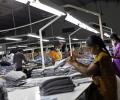
In the shadows of a sliding rupee, India's knitwear hub Tiruppur is weaving a success story. While the domestic currency edges closer to the 86 mark against the US dollar, triggering concerns for many sectors, this textile town in Tamil Nadu is finding opportunity in adversity: Between April and December alone, Tiruppur's exports reached Rs 26,000 crore, almost eclipsing last financial year's total of Rs 30,690 crore.

A Delhi court has granted Lok Sabha MP Engineer Rashid, currently jailed on terror funding charges, permission to vote in the upcoming Vice Presidential election.

BCCI vice-president Rajeev Shukla also spoke on how domestic cricketers have seen a rise in their pay and scale over the years to an unprecedented level.
The Indian Cricketers' Association will introduce a one-time benefit of Rs 1 lakh for the spouses of deceased members after the BCCI approved its disbursal.

'It was like rigorously preparing for a solid, good exam...' 'I don't know what marks I will get, but I felt the rigorous preparation of an exam.' 'You may sweat, but I feel rejuvenated.'

'Why don't I organise an auction of cinematic memorabilia?' recalls Dinesh Raheja. 'There are sure to be legions of film buffs who will cherish the chance to own souvenirs intimately associated with their favourite stars onscreen.'

The Indian rupee is likely to depreciate further against the US dollar through the end of 2024. This is due to the continued strengthening of the greenback, combined with the weakening of the Chinese yuan, which is expected to keep pressure on the Indian currency.

Mumbai's Mount Mary basilica reopens after two years.

The Enforcement Directorate has summoned Shikhar Dhawan on Thursday for questioning in an alleged illegal betting app-linked money laundering case.

Actor Sonu Sood was questioned by the Enforcement Directorate (ED) in connection with a money-laundering case linked to the online betting app 1xBet. The investigation involves several celebrities and focuses on alleged tax evasion and the duping of individuals.

The 25 per cent US tariffs, plus a penalty for Russian imports, could dent India's GDP growth by 30 basis points in the current fiscal, but the higher duty is unlikely to significantly affect India's domestic demand-driven economy, Barclays said on Thursday. If the 25 per cent tariff, announced by US President Donald Trump on Wednesday, is implemented from August 1, the effective average US import tariff on Indian goods will rise to 20.6 per cent in trade-weighted terms, as per Barclays estimates.

Tamil Nadu Industries Minister TRB Rajaa claims Uttar Pradesh's development is funded by Tamil Nadu's tax contributions to the central government, sparking a political debate over regional economic disparities.

The decision to hike US H-1B visa application fee to $100,000, trade talks and the GST rate cut will be the key drivers for stock market movement this week, analysts said.

The Enforcement Directorate questioned Robin Uthappa for over eight hours and recorded his statement in a money laundering case linked to online betting app.

Unexpected rains across North India have devastated the Ravana effigy market, leaving artisans facing significant financial losses as their creations are damaged beyond repair. They appeal for government assistance.

After depreciating 0.32 per cent against the dollar in October so far, the rupee is expected to hold ground against the greenback in the current quarter on the back of robust inflows. According to the median of a Business Standard poll of 10 respondents, the rupee is seen trading around 84 per dollar till the end of December. "In India's case, at least the bond and cash related inflows will continue.

Murders disguised as accidents. In one horrifying case, a man insured his father, mother, and wife -- then allegedly killed them all. He claimed Rs 54 crore in insurance.

Former India cricketer Suresh Raina is expected to appear before the Enforcement Directorate (ED) in New Delhi on Wednesday for questioning in an alleged illegal betting app-linked money laundering case, official sources said.

'High taxes have kept away art collectors who will now embrace the new GST.'

Owing to uncertainties on higher inflation and muted growth in the United States (US), coupled with concerns around America's rising debt and tariffs imposed by President Donald Trump, the world's largest economy has become the epicentre of an unabated record rally in prices of precious metals.

Yuvraj Singh on Tuesday appeared before the Enforcement Directorate (ED) for questioning in a money laundering case linked to an online betting app named 1xBet.

The arrest of Swami Chaitanyananda Saraswati in Agra has brought relief to his alleged victims, but concerns remain about the long road to justice and the possibility of his influence affecting the case.

BCCI's vice-president Rajiv Shukla said the Indian cricket team's new jersey sponsor will be finalised in the next two to three weeks.

Following the government's recent Promotion and Regulation of Online Gaming Act, 2025, the BCCI promptly cancelled the contract of the Indian team's lead sponsor, Dream11.
Despite a strong 7.8 per cent growth in the first quarter, the Indian economy is expected to grow at 6.5 per cent in the current financial year as the impact of US tariffs on Indian exports will reduce prospects, particularly in the second half, ADB said on Tuesday.

Prime Minister Narendra Modi on Wednesday asked the Congress to tell the nation who prevented India's military response after the 26/11 Mumbai terror attacks linked to Pakistan, and accused the party of weakening the fight against terrorism when in power.

India, the land that gave the world Darjeeling and Assam tea, risks losing its place at the global tea table, not because of its leaves, but because of its lost opportunities, notes Kanika Datta.

'This is not a case of tax evasion but the result of long-standing ambiguities in GST rules and unawareness.'

'Financially we are sound and we have always broken even. 'It is just we don't have the personnel and that is why we have to close down.'

Vijay, who spoke on the fishermen issues in nearby Nagapattinam, sported a green headgear and addressed farmers' grievances and sought an answer from CM Stalin.
