

Murders disguised as accidents.
In one horrifying case, a man insured his father, mother, and wife -- then allegedly killed them all. He claimed Rs 54 crore in insurance.
They didn't carry guns.
They didn't march under a colonial flag.
But they looted India in a way eerily similar to the British East India Company -- slow, methodical, and devastating.
Their business empire was built on fake death certificates, terminally ill villagers, and cold-blooded murder. Their weapon of choice: insurance.
At the centre of this shocking scandal is a small town in western Uttar Pradesh, Sambhal, where an insurance firm -- named East India Company -- turned itself into a money-minting machine by insuring people who were already dying, faking the deaths of those who were still alive, and even orchestrating murders when money was on the line.
The scam, spanning across Uttar Pradesh, Delhi and Haryana, has rocked the insurance world. And it all began with a routine night patrol.
The accidental discovery
It was around 10 pm in January 2025, and a routine check in Rajpura in Sambhal, should have been just that. Routine.
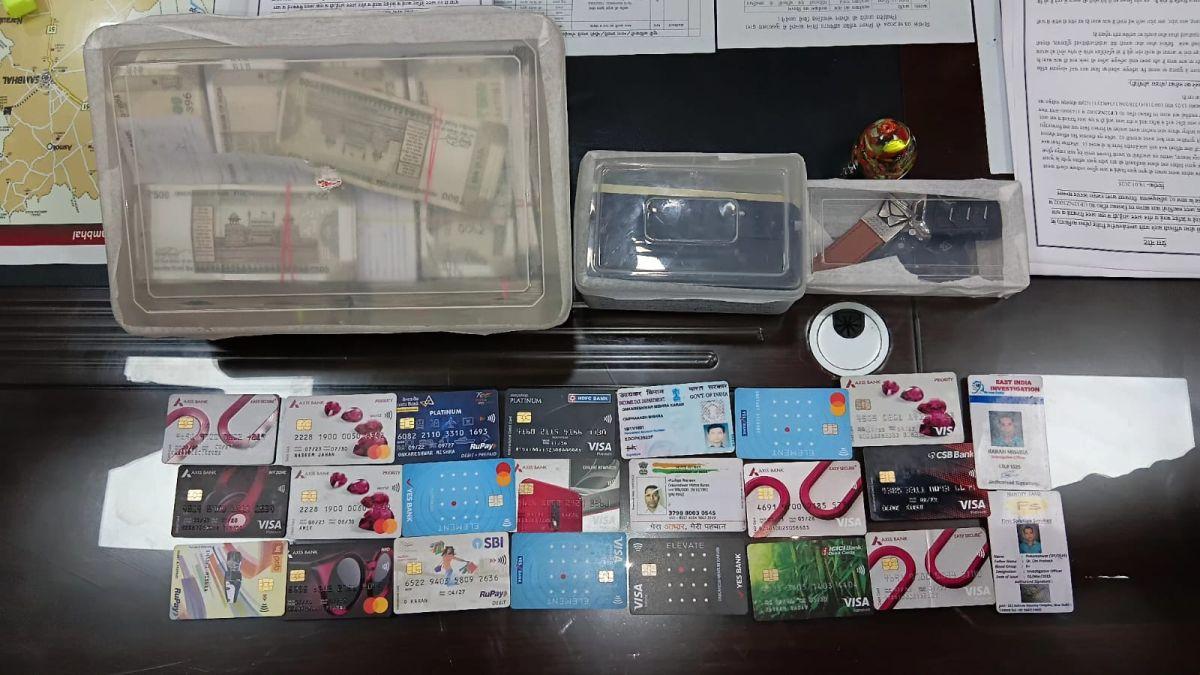
Officers were tracing credit card misuse when they noticed something unusual. Several cards were issued in the names of people who had been declared dead.
That single discovery unraveled a whole web.
"I knew there was something off. There were gaps, things not adding up," Krishan Bishnoi, superintendent of police, Sambhal, tells Rediff.
"We dug deeper, recovered mobile phones, and sent them for forensic analysis. What we found was shocking," recalls Bishnoi.
Chat logs revealed meticulous planning. Names, addresses, premium details, hospital information, and even fake death certificates.
The fraud wasn't the work of one or two individuals. It was an entire ecosystem.
The modus operandi: Profiting from death
It all began with data. The fraudsters collected medical records from small villages, targeting people who were terminally ill -- those with barely six months or so to live.
Instead of helping out, they saw an opportunity.
The fraudsters then paid the insurance premiums themselves -- knowing the payout would be huge once the person died.
Legally, a terminally ill person cannot be granted a new insurance policy.
But here, agents, hospitals, banks, and even families were complicit.
Once the person passed away, they would file claims. The insurance company would release lakhs.
The grieving family would receive only a small share -- around two to three lakh rupees.
The rest, often Rs 40 lakhs to Rs 50 lakhs, was pocketed by the fraud ring.
But there were darker stories. Some people didn't die of illness. They were helped along.
In at least six to seven cases, the deaths were orchestrated.
Murders disguised as accidents. In one horrifying case, a man insured his father, mother, and wife -- then allegedly killed them all. He claimed Rs 54 crore in insurance.
"The crime wasn't just fraud. It was murder for profit," added Bishnoi.
The company that investigated fraud was the fraudster
As investigators dug deeper, a shocking truth emerged. The insurance company supposed to monitor and prevent frauds was itself running the operation.
This wasn't just negligence. This was a system built on crime.
The CEO of the company took a cut of 20 to 30 percent from each fraudulent claim.
Bank managers facilitated the process, helping release funds and forge paperwork.
Agents on the ground scouted for sick villagers. Even doctors and hospitals looked the other way.
It was like a new East India Company -- looting not with ships and swords, but spreadsheets and signatures.
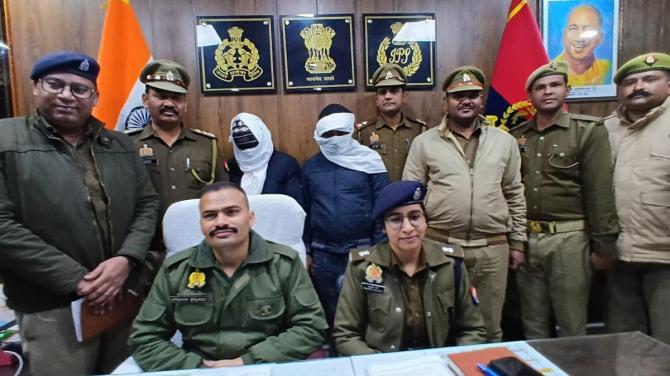
The kingpin was identified as Omkareshwar Karan Mishra, who has since been arrested.
"At last count 68 people have now been sent to jail. We are hunting for more," added Bishnoi.
The loopholes that made it all possible
Forged Aadhaar cards, fake medical documents, and false accident reports all altered the age to fit insurance eligibility criteria.
They took out multiple policies from different insurers -- HDFC Ergo, ICICI Lombard, and others.
Even tractor insurance was claimed after the policyholder's death.
In some cases, they manipulated hospital records from Delhi.
Each case was methodically planned.
Some people were declared dead when they were still alive.
Others were buried quietly, with documents saying they died in an accident.
There was no central system. No data sharing. No red flags.
That's what made the scam possible.
The bigger picture
India's insurance sector is growing at breakneck speed. But only seven percent of Indians currently have insurance in rural areas.
This low penetration, combined with loose regulations and rural vulnerability, created the perfect breeding ground for exploitation.
The investigators recovered evidence of over Rs 100 crore worth of fraud. But they believe the real number is far higher.
The scam spread across Uttar Pradesh, Haryana, Delhi -- and it's still being uncovered.
The network was wide, and the greed was deeper than anyone expected.
What must change?
It's all about data.
"Insurance companies need to share information, create centralised databases, and set strict benchmarks for hiring staff. Agents must go through background checks. Fraud detection systems need to be powered by real-time analytics, not old spreadsheets," said Bishnoi.
"Most importantly, ethics must return to the core of the system," he added.
The Sambhal case is a wake-up call.
It showed not just what criminals are capable of -- but what happens when an entire system looks the other way.
The ghosts of this scam are real
They aren't just numbers on a spreadsheet.
They were fathers, mothers, brothers, daughters -- some already dying, others pushed to death.
And behind each forged certificate, each fake signature, there was someone watching the clock -- not praying for survival, but waiting for death to cash in.
The East India Company once looted India under the guise of trade. Today, its modern shadow emerged through an insurance company in Sambhal.
But this time, the empire unravelled quickly.






 © 2026