
'While the meeting on December 6th was perfectly legal, was it ethical?' asks Colonel Anil A Athale (retd).

'China has refused to act upon the threat posed by Pakistan using terrorism as an instrument of its foreign policy.' says Rajeev Sharma.

China's closer and enhanced relationship with Pakistan is putting considerable strain in India-China relations, says former RA&W officer Jayadeva Ranade.
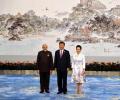
'By crudely dragging the topic into the bazaar to flog it for momentary pleasure, we turned it into a dead carcass by the time Modi even got back from Xiamen,' says Ambassador M K Bhadrakumar.

How will the Modi Sarkar's likely return affect other nations?

For one, the prime minister's residence will go vegetarian for the first time; Amitabh Bachchan, deservingly, will be conferred the Bharat Ratna; and the people can expect a lot of emotion-loaded communication from the prime minister, feels Sheela Bhatt/Rediff.com

"Relevant cooperation is in strict accordance with the two countries' international responsibility and is for peaceful aim. We also receive the supervision of the International Atomic Energy Agency (IAEA)," Chinese Foreign Ministry spokesperson Hua Chunying said.
The CPEC poses a clear and imminent danger to Indian security interests, says Kulbir Krishan.

Hometown diplomacy mixed with a Silk Road touch is expected be part of Chinese President Xi Jinping's reciprocal gesture when Prime Minister Narendra Modi visits China before end of May.

With Shanghai Cooperation Organisation set to admit India and Pakistan amid growing rancour over their Nuclear Supplies Group membership bid, a Chinese state-run daily expressed concern on Friday that the hostility between them may have a "negative effect" on the security grouping.

Ties with Pakistan and China which were on the centre stage of Indian diplomacy saw a "deterioration" in the year gone by, according to foreign policy experts who feel that the relationships are unlikely to see any forward movement in the new year.
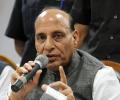
Rajnath Singh, under whose stewardship the Bharatiya Janata Party has stormed to power with its highest-ever tally, took charge as the Union home minister.
Chinese President Xi Jinping arrived in Islamabad on Monday on his first visit to Pakistan where he is expected to sign a deal for an economic corridor worth $46 billion and other agreement.
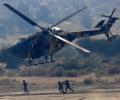
'Given the present force levels, India cannot fight and win.' 'India can't hope to terminate the conflict on India's terms and impose the nation's will upon the adversaries,' says Brigadier Gurmeet Kanwal (retd).

Pakistan should also be accorded the same 'privilege', the Global Times said.
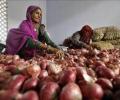
Govt floated import tender, allowed import without fumigation.

'China knows the best way of twisting the knife in its dealings with India: By launching a major incursion into Indian territory,' says Rajeev Sharma.

'Our prime minister manifests a vision for India to be great and powerful, but the modernity required -- of thinking, attitudes, behaviour -- seems alien, if not abhorrent, to his constituency and associates,' says Ambassador K Shankar Bajpai.
The Sino-Pakistan relationship remains fundamentally asymmetrical: Pakistan wants more out of its ties with China than China is willing to offer. Today, when Pakistan's domestic problems are gargantuan, China would be very cautious in involving itself even more, says Harsh V Pant.

'Breaking out of the corner into which China has painted itself would be a feat.' 'Whether Xi is able to pull it off will be known in the coming days,' says B S Raghavan, the distinguished civil servant and member of the Joint Intelligence Committee at the time of China's invasion of India.

India's new policy commission has received a makeover and a dream team has been formed to head the Think Tank, NITI Aayog.
Softening its stand on the controversial Armed Forces Special Powers Act in Jammu and Kashmir, the Bharatiya Janata Party on Monday said that if voted to power, the party will create an atmosphere where such a 'stringent' law would not be required.

New Delhi and Beijing are the only two regional capitals that have commented on US President Donald Trump's speech on August 21 outlining the way forward in Afghanistan. The Indian foreign ministry statement was effusive in praise, while the Chinese statement has been one of cautious and guarded hope. Delhi has identified itself with Trump's Afghan strategy, whereas the Chinese stance is calibrated -- observant and objective, keeping a distance, says Ambassador M K Bhadrakumar.

The expulsion is likely to cloud India-China ties as Narendra Modi visits China for the G-20 Leaders Summit on September 4-5 and Xi Jinping is scheduled to be in Goa for the BRICS meeting on October 15-16.

The first half of War Chhod Na Yaar has the pitch-perfect tone of a war comedy with some real gems that bind the narrative, writes Nishi Tiwari.

After days of speculation, Prime Minister Manmohan Singh confirmed he would meet his Pakistan counterpart Nawaz Sharif in New York, when he is expected to convey concerns over "barbaric" incidents on the LoC and continued terrorism emanating from Pakistan.

'Previous governments in India had reservations about working with Israel.' 'Modi has shed this tag.' 'Disengaging itself from its traditional and ideological foreign policy approach in the Middle East shall serve India's long-term interests.' Rajaram Panda explains why the significance of Modi's visit to the Jewish nation goes beyond markers like the first-ever visit to Israel by an Indian PM and 25 years of diplomatic ties.

Brushing aside India's concerns, China on Monday cemented its "all-weather ties" with Pakistan by agreeing to build a strategic $46 billion (Rs 2.9 lakh crore) economic corridor through Pakistan-occupied Kashmir as part of 51 deals signed, expanding the communist giant's influence in the region.

China's intended role for AIIB is not so different from the existing Western lenders like the World Bank.
Stephen P Cohen pays tribute to strategic expert B Raman, who passed away recently.

New Delhi must indicate to Afghan President Ashraf Ghani that it has a long-term strategy for his country. It should point out that Pakistan's present Afgan policy will destabilise Afghanistan and help Islamic State, says Gautam Sen.

'If ever India loses its patience after repeated terror attacks and decides to retaliate against the terrorist camps, Pakistan may term that a conventional military attack and invoke the nuclear option. This is a way to continue with terrorism without retaliation.'

Do Modi's foreign visits actually serve India or they nothing more than expensive tools for domestic positioning and image-building, asks Shehzad Poonawalla.

'I believe Modi mentioned Balochistan only to embarrass Pakistan and also divert attention toward the situation in Kashmir.' 'I think from now on, India intends to raise Balochistan whenever Pakistan brings up Kashmir or upsets them on the issue of terrorism.' 'Balochistan is the least developed of Pakistan's four provinces. It is the least educated and least economically developed. People are agitated that a region so rich in mineral resources and a sea-port is still so poor.' Baloch political analyst Malik Siraj Akbar on why the province wants freedom from Pakistan.

Rahul Gandhi's press conference showed how cocooned he may be, that he does not brainstorm with a large enough group of party colleagues and senior leaders. But it also showed how difficult it is going to be to reform an entrenched organisation like the Congress from within, says Neerja Chowdhury.

'How can Kashmir be demilitarised if the terrorist threat remains and Pakistan continues to incite elements in Kashmir to keep the internal situation unstable?' asks former foreign secretary Kanwal Sibal.
'The Modi government's lurch toward America has not brought it any dividends so far. The Western world is simply not in a position to make big investments in India... India needs to take a leap of faith vis-a-vis China.'

'China's excessive military aid to Pakistan is the real elephant in the room as far as Sino-Indian relations are concerned. India should be confident enough to accept a degree of closeness between China and Pakistan, since China may wish to use this link for its foray into the Muslim world.' 'But the Chinese must be realistic enough to know that as time passes, the tactic of using Pakistan as a proxy to check India will yield diminishing returns. The US tried it for 60 years but failed, so will China,' says Colonel Anil A Athale (retd).

'India was in no position to wage another war in 1965, having suffered a morale-shattering defeat in 1962. The three services were in the middle of a modernisation and expansion phase and therefore not fully trained or battle-ready.'
