
The United States conducted retaliatory strikes against Iran, targeting over 80 sites, after accusing Tehran of attacking commercial vessels in the Strait of Hormuz, while Iran condemned the US decision to revoke a temporary suspension of sanctions on Iranian oil sales.

Cognizant reported a 1.4 per cent year-on-year dip in net profit for the April-June quarter to $636 million, while revenue grew 4.5 per cent to $5.5 billion. The company has also cut the top end of its annual guidance, citing a slowdown in macroeconomic conditions and rising uncertainty.

Aviation stocks experienced a significant surge following the announcement of a two-week ceasefire between the US and Iran, which led to a sharp decline in crude oil prices. This development has positively impacted stock markets and the broader economic outlook for India.

Indian benchmark indices Sensex and Nifty experienced a significant slump in early trade, driven by a sharp surge in crude oil prices above USD 120 per barrel, weak global market trends, and continued foreign fund outflows.

Indian benchmark indices, Sensex and Nifty, opened lower on Tuesday, driven by a surge in global crude oil prices and continued outflows by Foreign Institutional Investors (FIIs), reflecting fragile market sentiment influenced by external factors.

Indian benchmark indices, Sensex and Nifty, bounced back significantly after two days of losses, with the Sensex climbing 443.97 points to settle at 76,922.64, driven by positive global market trends and a drop in crude oil prices.

Former US President Donald Trump has issued a stern warning to Iran, stating that "nothing will get through" unless a deal or "total surrender" is achieved, amid escalating tensions and conflicting reports on direct negotiations.
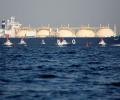
The government has withdrawn most provisions of the emergency natural gas supply regulation order imposed during the West Asia conflict after liquefied natural gas (LNG) shipments through the Strait of Hormuz resumed following a ceasefire.

A fire broke out among several oil tankers in Jammu, India, but was quickly brought under control by fire services, preventing a major disaster. No casualties were reported.

Iran's state broadcaster IRIB reported that the Qatari oil tanker "Al-Raqayat" was targeted in the Strait of Hormuz after allegedly ignoring Iranian warnings and attempting to transit with US Navy support. This incident follows the expiry of a US-Iran agreement to halt strikes and comes amidst escalating tit-for-tat attacks in the vital waterway, raising concerns about maritime security.

ITC reported a 16.2 per cent year-on-year drop in consolidated net profit to 4,394.13 crore in Q1 FY27, primarily due to a significant increase in taxes on its cigarette business. Consolidated net revenues also declined by 11.1 per cent to 19,114 crore, missing analyst estimates.
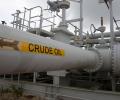
Crude oil prices experienced a significant drop following the announcement of a US-Iran ceasefire and the reopening of the Strait of Hormuz, leading to heavy selling by traders.

Indian stock markets extended their gains for a third consecutive day, with the Sensex climbing 753 points and the Nifty closing above 24,550, driven by a drop in crude oil prices and optimism surrounding potential peace talks between Iran and the US.

Crude oil prices have surged to record highs due to escalating tensions between the US and Iran, raising concerns about supply disruptions and market volatility.

'Control your A, B, C and D.' 'A is A1C, keep your A1C below 7 per cent.' 'B is blood pressure, so keep your blood pressure at 130/ 80 or at least below 140/ 90.' 'C is cholesterol. The bad cholesterol is the LDL cholesterol, and it should be kept below 100, preferably below 70 or 50.' 'D is discipline like diet, exercise, sleep, no smoking, etc.' 'People with diabetes who follow A, B, C and D can live up to even 100 years of age without any complications.'

India's gold demand saw a 6 per cent year-on-year decline in the April-June quarter of 2026, reaching 131.4 tonnes, primarily due to subdued seasonal sales, increased Customs duty, and Prime Minister Narendra Modi's call to reduce gold purchases, according to a World Gold Council report.
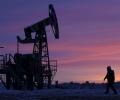
The Reserve Bank of India (RBI) has projected that crude oil prices will average USD 85 per barrel and the rupee will weaken to 94 against the dollar by FY27, according to its bi-annual Monetary Policy report.

A US-sanctioned tanker carrying Iranian crude oil is heading to India, marking the resumption of oil imports from Iran after seven years.

Indian stock markets experienced a second consecutive day of losses, with the Sensex tumbling 852 points, as crude oil prices surpassed USD 100 per barrel due to stalled US-Iran negotiations and escalating geopolitical tensions in West Asia.

Applying random products on your skin, just because they are trending, may damage or weaken your skin barrier, warns Dr Rupika Singh, dermatologist and founder of Akiya Aesthetics.

The Indian rupee depreciated by 34 paise to close at 93.78 against the US dollar, marking its third consecutive session of decline. This fall is attributed to escalating crude oil prices driven by uncertainty surrounding US-Iran peace talks and fresh attacks in the Strait of Hormuz, alongside significant foreign institutional investor outflows from domestic equity markets.

Global oil prices fell on Thursday to their lowest levels since before the outbreak of the Iran conflict, offering a significant economic tailwind for India, the world's third-largest crude importer, by easing inflation risks, reducing the import bill and improving the government's fiscal position.

Indian benchmark indices Sensex and Nifty rallied in early trade, driven by a significant decline in Brent crude oil prices, which fell below the USD 73 per barrel level, and positive trends observed across most Asian equities.

Not a single retail outlet ran dry. Every household that wanted a cylinder got one. India faced neither a 1991 moment nor a 2013 one. Macroeconomic stability held. This was not an accident, and it was not luck alone. It was the work of a government that chose to act as it had during the pandemic -- deliberately and gradually, building one measure upon another rather than reaching for a single dramatic lever, explains V Anantha Nageswaran, chief economic advisor to the Government of India.

The flood situation in Assam is showing signs of improvement with receding water levels, though over 6.5 lakh people across six districts remain affected and the death toll has risen to 66. Relief operations are being intensified, with central and state leaders reviewing measures and a central team assessing damages.

Indian benchmark indices, Sensex and Nifty, saw a significant rebound in early trade, driven by a decline in crude oil prices. This drop followed US President Donald Trump's announcement of progress in negotiations with Iran towards an agreement to end the war, leading to a temporary pause in 'Project Freedom' to escort ships through the Strait of Hormuz. Track Nifty 50 and BSE Sensex performance and key global triggers.

'I don't see fear becoming a dominant factor for retail investors.'

Indian benchmark indices Sensex and Nifty saw a significant rebound in early trade, driven by softer-than-expected US inflation data which has reinforced expectations of a less aggressive monetary policy stance from the Federal Reserve, providing relief to global risk assets.

The International Monetary Fund (IMF) has reduced India's growth forecast for FY27 to 6.4 per cent, citing the potential impact of higher energy prices offsetting the country's economic resilience. Despite this, India remains among the fastest-growing major economies.

That means making it easier to invest, protecting investors through predictable rules, and avoiding policy reversals after investments have been made, notes Rajeswari Sengupta.
Indian benchmark indices Sensex and Nifty experienced a significant tumble in early trade, driven by surging global oil prices, continuous outflows by Foreign Institutional Investors (FIIs), and persistent geopolitical uncertainties, particularly in West Asia.

The Delhi High Court has dismissed a lawsuit by news agency ANI against OpenAI, ruling that ChatGPT's use of copyrighted material for training large language models (LLMs) constitutes fair dealing under the Copyrights Act. The court emphasised that restraining AI development would be detrimental to India's growth in the field and public interest.

'The real shock is going to be from a deficient monsoon.'

Following a Memorandum of Understanding between the US and Iran to resolve the West Asia conflict, eleven India-bound vessels have successfully transited the Strait of Hormuz. This development signals a positive shift for maritime trade, with more Indian-flagged ships expected to pass through the crucial waterway soon.

India's outward foreign direct investment (FDI) plummeted by 47.9 per cent year-on-year to $3 billion in June 2026, according to the Reserve Bank of India (RBI), with declines across equity, debt, and guarantee commitments.

Colourful and bursting with yumminess are these Mediterranean flatbreads which bring together the best of fresh produce.

Indian benchmark stock indices, Sensex and Nifty, declined for a second consecutive day, primarily due to selling pressure in IT, oil & gas, and select banking shares. Concerns over the US-Iran negotiations and a sluggish monsoon further dampened market sentiment.

Air India Group anticipates the delivery of 50-60 new aircraft within the next 18 months, with its ambitious transformation programme progressing despite global challenges like supply chain issues and geopolitical tensions, according to Chief Commercial Officer Nipun Aggarwal.
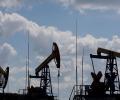
Global energy markets saw a significant correction as oil prices nosedived following Iran's announcement that the Strait of Hormuz has been fully reopened, dismantling the 'war-risk' premium that had gripped the market.
Indian benchmark indices Sensex and Nifty rallied in early trade, primarily driven by strong buying in IT stocks after Tech Mahindra reported a significant 28.4 per cent rise in its consolidated net profit for the June quarter.
