
Villagers protest against the Koodankulam nuclear power project.

India has commissioned its new indigenously-built nuclear-powered ballistic missile submarine INS Aridaman into service, further strengthening the naval component of its nuclear triad. Defence Minister Rajnath Singh also highlighted the Indian Navy's role in securing maritime trade routes.

Nayara Energy, a private fuel retailer in India, has increased petrol and diesel prices following a surge in global oil prices due to Middle East tensions. This move contrasts with state-owned retailers who continue to freeze prices.

Iran blames the US for 'maximalism' and 'shifting goalposts' leading to the collapse of the Islamabad talks.

The US blockade on Iranian ports is aimed to curb Iranian energy exports, thereby crippling its economy to force Iran back to the negotiating table, points out Commodore Venugopal Menon (retd).

The core issues to be settled -- access to Hormuz, Israel's aggression in Lebanon, the question of Iran's nuclear programme, sanctions relief and compensation -- are thorny enough to require weeks of patient negotiation. The most likely outcome of the opening sessions is that both sides take the measure of each other, establish what is and is not negotiable, and return home without having broken anything. That would count as progress.

Pakistan is set to host face-to-face talks between the United States and Iran, aiming to solidify a fragile ceasefire and prevent further conflict in West Asia. The discussions will focus on a long-term peace arrangement, including sanctions relief, regional security, and Iran's nuclear program.

The delegations from the US and Iran head to Islamabad on Friday, carrying a ceasefire that is already fraying, a Strait that is technically open and practically closed, and a negotiating agenda that would challenge even parties actually negotiating in good faith, which these groups are not. Prem Panicker continues his must read blog on the Iran War.

The Indian government has reduced excise duty on petrol and diesel to mitigate the impact of rising global crude prices, triggered by geopolitical tensions in the Middle East. This move aims to provide relief to consumers and oil companies amidst volatile international oil markets.

'The next two to three weeks will not be decided in Washington.' 'They will be decided in Tehran, in whatever calculation Iran makes about the costs of continued resistance against the costs of appearing to have yielded.'
Following a joint attack by the US and Israel on Iran, India is calling for restraint and de-escalation to avoid further military confrontation in the Middle East.

'To suddenly give the impression of taking a position that is hostile to Iran, or, at least, not friendly to Iran, is not a good thing.'

The United States, which entered this war in expectation of a short, sharp win along the Venezuela model, is now preparing for deeper involvement in a conflict it does not fully control, without the allies it typically relies on, against an adversary that is not behaving as expected, in a global environment that is already absorbing economic shock. Prem Panicker continues his must read daily blog on the Gulf War.

A nationwide strike called by central trade unions saw a mixed response across India, impacting various sectors and states differently, with some areas experiencing disruptions while others remained largely unaffected.

India and Russia have solidified a five-year plan to enhance their economic and trade partnership, while also addressing the ongoing conflict in Ukraine and the threat of terrorism.

"After all, you are the only leader who has taken a bold and courageous stand against the Haripur nuclear project in Purba Medhinipur district in West Bengal," People's Movement Against Nuclear Energy (PMANE), sprearheading the stir said in a letter to Banerjee.
The People's Movement Against Nuclear Energy, leading the protest against the Koodankulam Nuclear Power Plant, on Saturday threatened to sue the Prime Minister's Office for linking the stir to foreign funding.
A Criminal court in Valliyoor, Tirunelveli district of Tamil Nadu has issued a non-bailable warrant against Peoples Movement Against Nuclear Energy leader S P Udaykumar, who has been leading a year-long struggle to stop the Kudankulam Nuclear Power Project.
Acting tough against anti-nuclear activists demanding closure of Kudankulam nuclear power plant, five key functionaries of a body spearheading the movement against KNPP were arrested at the plant site on Monday.
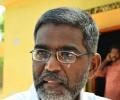
Anti-nuclear activist S P Udayakumar has sent a legal notice to the Union home ministry seeking action against an official for allegedly defaming him by "leaking" a secret report recently.

'Our problem is not a budget deficit but a trust deficit. We need to trust our institutions and industries to innovate and lead. That is the way forward for India.'
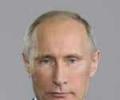
The People's Movement Against Nuclear Energy, which spearheaded the movement against the Kudankulam Nuclear Plant, has strongly objected to the visit of Russian President Vladimir Putin, who is arriving in India on Monday.
Intensifying their campaign against the Kudankulam Nuclear Power Plant, activists on Wednesday sought the support of the international community for scrapping the project and making the world 'nuclear free'.

Expressing unhappiness over the Supreme Court order which gave the green signal for commissioning of the Kudankulam Nuclear Power Plant, anti-nuclear activists on Monday termed the decision as "unjust" and said protests will continue.
An uneasy calm prevailed in Kudankulam on Tuesday with police tightening vigil as anti-nuclear protesters continued with their relay fast at Idinthakari, epicentre of protests against the Kudankulam Nuclear plant, condemning the action against anti-KNPP activists.
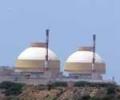
Prohibitory orders have been clamped in a seven-km radius around the controversial Kundankulam Nuclear Power Plant as anti-nuclear activists have threatened to picket it on Monday.
S P Udayakumar, who is fasting along with his associate M Pushparaya, gives us a first-person account from Idinthakarai, Ground Zero of the protests against the nuclear power plant in Tamil Nadu.
Anti-nuclear movement leader S P Udayakumar on Tuesday gave up his plan to surrender to the police after making a dramatic appearance to do so and was whisked away by his supporters.
Suspense prevailed over the surrender of anti-nuclear movement leader S P Udayakumar as his whereabouts were unknown on Tuesday night after his dramatic appearance and announcement that he would turn up before police.
Hundreds of anti-nuclear activists and leaders of different political outfits were detained in Chennai on Monday when they attempted to lay siege to the Tamil Nadu assembly demanding scrapping of the Kudankulam Nuclear Power Plant. S Saraswathi reports.
A tense situation prevailed as over 1,000 anti nuclear protesters made a vain bid to lay a siege to the controversial Kudankulam Nuclear Power Plant, protesting against the proposed loading of fuel.
Stepping up their protest against the Kudankulam Nuclear Power Plant, anti-nuclear activists have now decided to go in for 'jal satyagraha' throughout the Tamil Nadu coast on September 22.
Three persons from Australia were on Thursday prevented from entering Idinthakarai, the epicentre of protests by People's Movement Against Nuclear Energy leading the stir against Kudankulam Nuclear Power Plant in Tirunelveli district, the police said.
Stepping up their protest against the Kudankulam Nuclear Power Plant, People's Movement Against Nuclear Energy, spearheading the stir, would lay siege to the sea at about 500 meters away from the KNPP on Monday.
The Centre's announcement of setting up of an expert group to allay fears over Koodankulam nuclear plant has not been received favourably by anti-nuclear activists who have resumed their protests against the project.
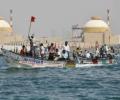
Reviving their anti-nuclear stir, leaders of People's Movement Against Nuclear Energy on Friday began an indefinite fast at Idinthakarai to press for implementation of some of their demands including scrapping plans to set up units 3 and 4 of Kudankulam Nuclear Power Plant.
Reviving their protests against the commissioning of Koodankulam Nuclear Power Plant, activists of People's Movement Against Nuclear Energy on Monday said they would go ahead with their indefinite fast from Tuesday.
In a volte-face, Peoples Movement Against Nuclear Energy leader S P Udayakumar on Wednesday decided not to surrender, a day after he made a dramatic appearance and announced he would turn up before the police. Amid continuing protests against the Kudankulam Nuclear Power Project, Udayakumar's change of plans was announced by anti-corruption activist Arvind Kejriwal, who has extended his support for the anti-nuclear stir.
The People's Movement Against Nuclear Energy, which is spearheading the stir against the Koodankulam Nuclear Power plant, on Friday rejected as "baseless" Prime Minister Manmohan Singh's remarks that foreign NGOs are behind its protest. "It is unfortunate that the prime minister has made the allegations without any documentary proof. We strongly deny his observation that the agitation is being funded by other countries," PMANE convener S P Udayakumar told reporters.
Women and men would stand in the sea waters for two hours in turns, Pushparayan, leader of the Peoples Movement Against Nuclear Energy, spearheading the year-long agitation, told media persons in Kudankulam.
 © 2026 Rediff.com - Advertise with us - Disclaimer - Privacy Policy - Sitemap - Feedback - About us - Terms of use - Grievances