
The National Investigation Agency (NIA) has started interviewing eyewitnesses, including tourists, in connection with the deadly terrorist attack in Pahalgam, south Kashmir. The attack, carried out by terrorists from the Pakistan-based Lashkar-e-Taiba (LeT), claimed the lives of 26 people on April 22. Initial investigations suggest that five to seven terrorists were involved, aided by local militants trained in Pakistan. Security forces are conducting massive operations to hunt down the terrorists in the dense jungles of the Pir Panjal range.

Three Lashkar-e-Tayiba (LeT) terrorists were killed in an encounter with security forces in Jammu and Kashmir's Budgam district on Wednesday, the police said.
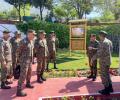
'Surgical strikes or air strikes, or both, are likely on the table.'
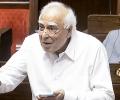
Rajya Sabha MP Kapil Sibal has congratulated both the previous UPA government and the current dispensation for the extradition of Tahawwur Hussain Rana, the mastermind behind the 2008 Mumbai attacks. Sibal expressed confidence that the extradition will shed light on the involvement of individuals within Pakistan's establishment in the attacks. Rana is being questioned by the National Investigation Agency (NIA) to uncover the full extent of the conspiracy behind the deadly 2008 terror strikes. Sibal highlighted the efforts of the UPA government in establishing the NIA and pursuing Rana's extradition, and also acknowledged the current government's success in bringing him back to India. The interrogation is expected to focus on Rana's potential ties to the Lashkar-e-Taiba (LeT) and his role in the Mumbai attacks.

China supplied more than $20 billion worth of arms to Pakistan. These include 20 J-10CE and JF-17 Block III fighter aircraft, Wing Loong drones, frigates, submarines, Hongqi HQ-9P surface-to-air missiles, 240 PL-15E air-to-air missiles, LY-80 air defence systems, ZDK early warning aircraft and other weapons.
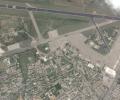
India's strikes on Pakistan damaged runways and structures across at least six airfields, according to a visual analysis by The Washington Post, which experts said were the most significant attacks of their kind in decades of simmering conflict between the two nations.

Tahawwur Hussain Rana, a Pakistan-born Canadian national and close associate of David Coleman Headley, is set to be extradited to India from the US. Rana was involved in the planning and execution of the 2008 Mumbai terror attacks, which killed 166 people, including six Americans. He assisted Headley in obtaining a visa for India, established a front company in Mumbai, and helped in reconnaissance of targets in Mumbai and New Delhi. Rana was convicted in the US for providing material support to Lashkar-e-Taiba (LeT) and sentenced to 14 years in prison. His extradition to India will allow authorities to question him about his involvement in the Mumbai attacks and potentially uncover new information about the role of Pakistani state actors.

The accused PFI leaders also conspired to establish Islamic rule in India by committing terrorist acts as a part of violent jihad, as per the report.
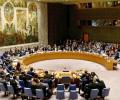
The United Nations Security Council held closed-door consultations on rising tensions between India and Pakistan, with envoys calling for restraint and dialogue. The consultations, requested by Pakistan, lasted for about an hour and a half. UN Secretary-General Antonio Guterres expressed concern over the tensions, urging both countries to avoid a military confrontation. India's former Permanent Representative to the UN, Syed Akbaruddin, said that no consequential outcome could be expected from the discussion.
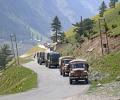
The vehicles came under attack in the Savni area on the Rajouri-Thanamandi-Surankote road around 3.30 pm.
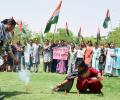
Opposition parties in India, including the Congress, Left parties, Samajwadi Party, Bahujan Samaj Party, Trinamool Congress, Dravida Munnetra Kazhagam, Rashtriya Janata Dal, Shiv Sena (UBT), and NCP (SP), have unanimously hailed the armed forces' "Operation Sindoor", a retaliatory strike against terrorist infrastructure in Pakistan and Pakistan-occupied Kashmir (PoK). The operation, which involved missile and drone strikes, was conducted in response to the April 22 Pahalgam terror attack. Despite political differences, all parties expressed support for the government and the armed forces, stressing the importance of national unity and integrity in the face of terrorism. While emphasizing the need for diplomatic avenues to prevent further escalation, some parties also called for caution in attributing political credit for the strikes.
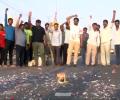
Arathy, daughter of N Ramachandran who was killed in a terror attack in Kashmir's Pahalgam, welcomed the Indian Army's "Operation Sindoor" and said it was a reply from the women of India. She said the loss cannot be compensated, but the operation is a kind of relief from the government and the army. Arathy's father was killed by terrorists in front of her while holidaying in Kashmir's Pahalgam on April 22.

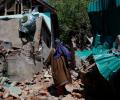
Authorities in Kashmir have launched a massive crackdown on terrorists and their sympathisers in the aftermath of the Pahalgam terror attack, razing homes of the ultras, raiding their safe havens and detaining hundreds of overground workers for questioning, officials said on Saturday.

The story of two Adils, one a Lashkar-e-Taiba terrorist and the other a pony 'wallah' who died protecting tourists, highlights the contrasting realities of life in Kashmir. While the terrorist, Aadil Thokar, is accused of the deadly attack on tourists in Baisaran, the heroic pony 'wallah', Syed Adil Hussain Shah, sacrificed his life to save them. Their stories, though separated by a tragic event, reveal the deep-rooted conflict and the enduring spirit of compassion in Kashmir.

The Pahalgam massacre highlights the evolution of terrorism into a multi-domain challenge. India's response must similarly evolve -- from tactical retaliation to comprehensive strategic deterrence. To establish a credible and sustained deterrent, India must also carry out continuous kinetic operations, both overt and covert, suggest Sakshit Raina and Rahul Mishra. To establish a credible and sustained deterrent, India must also carry out continuous kinetic operations, both overt and covert, suggest Sakshit Raina & Rahul Mishra.
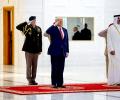
'He is intrigued by the intractability of Kashmir issue. With his interest in dealmaking and peacebrokering, he sees it as an exciting challenge to tackle.'
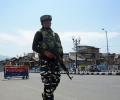
Top Lashkar-e-Tayiba (LeT) commander Nadeem Abrar, who was involved in several attacks on security forces and civilians in Kashmir, was arrested, officials said.
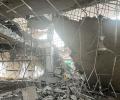
'India won't take anything from Pakistan lying down.'

World leaders, including US President Donald Trump, Russian President Vladimir Putin and Israeli Prime Minister Benjamin Netanyahu, condemned the terror attack in Jammu and Kashmir that killed 26 people, expressing solidarity with India. The attack was claimed by The Resistance Front (TRF), a proxy of the Pakistan-based Lashkar-e-Taiba (LeT) terrorist group. The attack came during US Vice President J D Vance's maiden visit to India. Prime Minister Modi, who had arrived in Saudi Arabia on a two-day visit earlier in the day, cut short his visit and departed for New Delhi on Tuesday night following the attack.

Tahawwur Hussain Rana, a Canadian national convicted in the United States for his role in the 2008 Mumbai terror attacks, has been extradited to India. Rana, a close associate of Pakistani-American terrorist David Coleman Headley, was involved in the conspiracy from 2005 onwards and assisted Headley in obtaining a visa for India. He is the third person to be sent on trial in India for the 26/11 attacks after Ajmal Kasab and Zabiuddin Ansari alias Abu Jundal. Rana's extradition comes after US President Donald Trump approved the request.
'It is typical of China's strategic deception of making virtue out of necessity,' observes Rup Narayan Das.
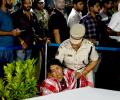
The ISI strategy has been to use its proxies to target Hindus in India. They want an outrage and counter-targeting of India's minorities. Further, even the whiff of it restores the Pakistan army's popularity, especially when it's in the dumps, like now, points out Shekhar Gupta.
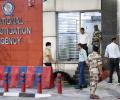
Tahawwur Hussain Rana, the mastermind behind the 2008 Mumbai terror attacks, has been taken into 18-day custody by the National Investigation Agency (NIA) in India. Rana was extradited from the United States after years of legal battles and will be questioned to unravel the complete conspiracy behind the attacks.
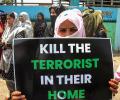
Amid rising tensions between India and Pakistan, the US has called on both countries "not to escalate" the conflict. Secretary of State Marco Rubio is expected to speak with the foreign ministers of Pakistan and India as early as today or tomorrow. The US State Department said Washington is reaching out to both India and Pakistan "regarding the Kashmir situation" and telling them "not to escalate the situation."

'Fears in Washington began to intensify when it was realised that subsequent Pakistani and Indian attacks on major military facilities -- which were significant in terms of geographic scope and intensity -- could rapidly take both sides to where neither actually wanted to go.' 'The US objective was to stop the fighting as soon as possible. Everything else was secondary.'
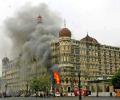
Tahawwur Rana, accused of involvement in the 2008 Mumbai terror attacks, is expected to be extradited to India from the United States soon. The US Supreme Court denied his last-ditch effort to stop his extradition, moving him closer to being handed over to Indian authorities. Rana's extradition is expected to help probe agencies expose the role of Pakistani state actors behind the attacks and shed new light on the investigation. He is associated with Pakistani-American terrorist David Coleman Headley, one of the main conspirators of the 26/11 attacks.
'Had Haji Pir and/or Skardu been taken, the message would have gone out not just to General Asim Munir and his cohort in the Pakistan army but to the Pakistani people that every terrorist incident in India would lead to substantial loss of territory in PoK.'

Three Jaish-e-Mohammed militants were killed in the Drach area of Shopian, while a Lashkar-e-Tayiba militant was killed in the Moolu area of the south Kashmir district, the police said.

The judge said the prosecution failed to prove that the accused were members of a terrorist organisation.

Imran Bashir Ganai was arrested for his alleged involvement in the killing of two labourers at Harmain in Shopian district in the early hours of Tuesday.

'Pakistan's only concern has been while they were on the FATF watch list was to distance their State institutions and organs from any direct connection with the actual execution of militancy inside Kashmir.'
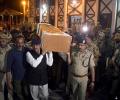
Late Jammu and Kashmir Police deputy superintendent Humayun Bhat, who died in a 2023 encounter with terrorists, was posthumously awarded the President's Police Medal for Gallantry for his courageous actions during a 2021 gunfight. Bhat was earlier honored with the Kirti Chakra, the nation's second-highest peacetime gallantry award, for his role in neutralizing a top local commander of the banned Lashkar-e-Taiba (LeT) and a Pakistani terrorist.
He was arrested and during questioning, he confessed to his involvement in the labourer's killing.
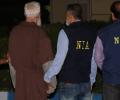
Tahawwur Hussain Rana, a key accused in the 26/11 Mumbai terror attacks, was brought to India on Thursday after being "successfully extradited " from the US, the National Investigation Agency (NIA) said. The 64-year-old Canadian citizen of Pakistani origin landed in Delhi in a special plane on Thursday evening, ending days of speculation of when and how he will be extradited, officials said. The NIA said in a statement that it had secured the successful extradition after years of sustained and concerted efforts to bring to justice the key conspirator behind the 2008 mayhem that claimed 166 lives. Rana is accused of conspiring with David Coleman Headley alias Daood Gilani, and operatives of designated terrorist organisations Lashkar-e-Taiba (LeT) and Harkat-ul-Jihadi Islami (HUJI) along with other Pakistan-based co-conspirators, to carry out the the three-day terror siege of India's financial capital.

A government employee belonging to the Kashmir Pandit community was shot dead by suspected militants at his office in the Chadoora area of Budgam district of Jammu and Kashmir on Thursday, officials said in Srinagar.
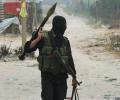
The Lashkar poses a huge threat to India and its nexus with the Islamic State of Syria and Iraq is worrying, warn intelligence sources. Vicky Nanjappa reports
Tahawwur Rana, accused in the 2008 Mumbai terror attacks, has renewed his application to the US Supreme Court seeking a stay of his extradition to India. The Supreme Court will hear the application next month. Rana, currently detained in Los Angeles, claims his extradition would violate US law and expose him to torture in India due to his health and Muslim background. The US government has denied these claims and authorized his surrender to India, citing the Extradition Treaty between the two countries. The Supreme Court's decision will determine if Rana will face justice in India or remain in the United States.

One Pakistan terrorist belonging to the Lashkar-e-Taiba has been gunned down in the ongoing encounter.
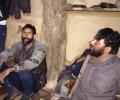
The incident took place in Tuksan Dhok village and the captured terrorists included the most wanted LeT commander Talib Hussain, a resident of Rajouri district and the mastermind of the recent IED blasts in the district, the officials said.
