
The 30-member committee, chaired by senior Bharatiya Janata Party leader and former Union minister Jual Oram and of which Rahul Gandhi is also a member,wishes to visit the eastern Ladakh region in the last week of May or in June.

Addressing party MPs at the general body meeting of the Congress Parliamentary Party in the central hall of Parliament, she said when facing a significant national challenge, it has been the tradition in our country to bring Parliament into confidence.
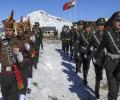
The two militaries are set to hold extensive talks on finalising modalities for restoring normalcy and bringing back peace and tranquillity in the region after the verification of the disengagement exercise is completed.
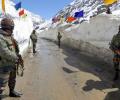
The clear assertion by New Delhi came ahead of a fresh round of Lt General-level talks between the Indian army and the Chinese PLA which government sources said is set to take place within the next two days.
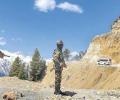
'India is not going to accept whatever the Chinese say. That is not going to happen.'
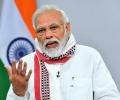
The military brass is learnt to have apprised Modi about the evolving situation in eastern Ladakh, though officials maintained that the agenda of the pre-scheduled meeting was to discuss the ambitious military reforms and ways to boost India's combat prowess.

'If the Chinese military gets hold of some western sectors on the India-China boundary, it will give them added military advantage.'
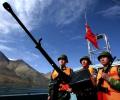
The Chinese side has particularly bolstered its presence in the Galwan Valley, erecting around 100 tents in the last two weeks and bringing in heavy equipment for construction of bunkers, notwithstanding the stiff protest by Indian troops. There have been reports of multiple incidents of transgressions by Chinese troops in several areas in Eastern Ladakh.

Anil Rego, CEO, Right Horizons, answers your personal income tax queries.

This is the first time that a retired officer has been appointed at this position for which a gazette notification was issued to announce the change in rules for the appointment.

Narrowing of differences on competing territorial claims along the un-demarcated LAC might take weeks, if not months, of hard-nosed negotiations. Without some give and take on both sides, the impasse will be hard to resolve, observes Virendra Kapoor.
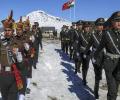
There was no breakthrough on the disengagement of troops from the friction points in eastern Ladakh during the seventh round of military talks on October 12. "The eighth round of military talks is likely to take place this week," said a source on Tuesday.

China and Pakistan are coordinating effectively with each other to keep India engaged in South Asia, believes former national security advisor Brajesh Mishra."There seems to be some coordination between China and Pakistan in order to keep India engaged in South Asia so that India does not play a role in the rest of Asia," Mishra said."China's positioning on the Line of Actual Control has become very aggressive," he added.
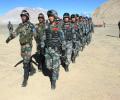
During the course of the intense and complex negotiations between senior commanders of the two armies that ended at 2 am on Wednesday, the Indian delegation also apprised the Chinese PLA about the "red lines" and conveyed that the onus was largely on China to improve the overall situation in the region, the sources said.

Jaishankar said the last few years have been a "period of serious challenge", both for the relationship and for the prospects of Asia, noting that continuation of the current impasse will not benefit either India or China.

New Delhi must clearly demonstrate to Beijing that China will pay a price for its relentless strategic undermining of India, says Ajai Shukla.
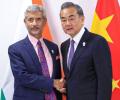
The joint statement said Jaishankar and Wang agreed that both sides should take guidance from the series of consensus reached between leaders of the two countries on developing India-China relations, including not allowing differences to become disputes.
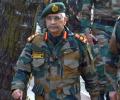
On the first day of his two-day visit to Ladakh, Gen Naravane held a series of meetings with top commanders about the evolving situation in the region as well as on India's overall combat readiness to deal with any eventualities, military sources said.
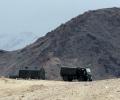
'When the adversary has tasted what you can do, he is going to be more experienced in countering how the Indians think.' 'He will go back, rework and come back.'

The two sides have also agreed for a joint mechanism to verify the progress in the disengagement process through delegation meetings as well as using unmanned aerial vehicles.

It is the first highest level face-to-face meeting between the two sides after the border row escalated in eastern Ladakh in early May.

The Army has also further bolstered overall surveillance mechanisms in all areas along the Line of Actual Control (LAC) in eastern Ladakh after foiling China's fresh attempt to occupy an area on the southern bank of Pangong lake, they said.

'They will try more rounds of military level talks and move it to the diplomatic and political domain to see if there is a possibility of a solution -- and like the CDS said if that does not happen, we are prepared.'
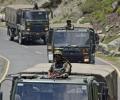
'The one aspect which no Indian military thinker would wish to see emerge is a LoC type of posture at the LAC.' 'The LoC is manned for 750 km and terrorist infiltration has led to the creation of a virtual fortress along its entire length.' 'Something mirroring this at the LAC is going to be expensive although deployment everywhere is not warranted there.' 'However, given the complete trust deficit, there appear few alternatives,' notes Lieutenant General Syed Ata Hasnain (retd).
Singh said a meeting between senior Indian and Chinese military leaders has been scheduled for June 6 even as he asserted that India is not going to back off from its position. Asked about the current situation in sensitive areas in eastern Ladakh, he said Chinese have come up to what they claim is their territory while Indians believed it is theirs.
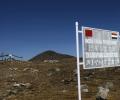
India on Thursday strongly rejected China renaming 15 places in Arunachal Pradesh and asserted that the state has 'always been' and will 'always be' an integral part of India and that assigning 'invented' names does not alter this fact.
Indian Air Force chief P V Naik said on Tuesday that the upgradation of the air-field infrastructure along the Line of Actual Control with China was not "adversary specific". "We should have done it earlier. Now that we have got the go-ahead, we are going ahead with that," Naik told NDTV.
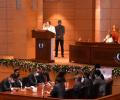
China routinely objects to Indian leaders' visits to Arunachal Pradesh to buttress its stand.

The US president previously offered to mediate between India and Pakistan, a proposal rejected by New Delhi which maintains that there is no role for any third party in bilateral issues.

Omkeshwar Singh, Head, Rank MF, a mutual fund investment platform, answers your queries.

The project will be rolled out by government-owned company ITI within three years, they said, adding that the contract for its implementation was signed with the telecom entity on Thursday.

'Our villagers used to go up to Finger 4 and Finger 6, but today the Chinese are there.' 'Since April 2020, Chinese troops have blocked Indian troops from reaching at least ten patrolling points running from the Depsang plains in the north to Pangong Tso lake in the south.'
Talks between the two sides were held on June 6 at the military commanders' level, including the 14 Corps Commander Lt Gen Harinder Singh from the Indian side while the Chinese side was represented by its South Xinjiang Military District commander Major General Liu Lin at Moldo opposite Chushul in Ladakh.
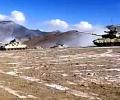
Once the tanks roll back, a zero-based assessment of future equations with China is necessary. Given the conflict situations that China is imposing on India time and again, the red, amber and green lines of interactions with China need to be laid down and communicated in no uncertain terms, asserts Srikanth Kondapalli, the leading China expert.
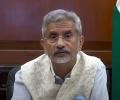
"Discussions are on; what is going on is something confidential between us and the Chinese," he said when the moderator at the Bloomberg India Economic Forum pressed the minister to give a clear status of the border situation.

The heightened state of alert was only relaxed after Wang met his Jaishankar in Moscow on Friday on the sidelines of the Shanghai Cooperation Organisation summit, a second source said.

Para, perhaps, has become the first person to benefit from the Supreme Court putting on hold trial of cases under section 124 A (sedition).
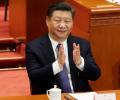
Xi ordered the military to think about worst-case scenarios, scale up training and battle preparedness, promptly and effectively deal with all sorts of complex situations and resolutely safeguard national sovereignty, security and development interests, state-run Xinhua news agency reported, without mentioning any specific issues that posed a threat to the country.
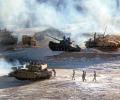
The actions on the ground would be confirmed and are expected to be followed up soon.
With regard to where relations between New Delhi and Beijing stand, the Union minister said that he does not have a definite answer to offer at "this moment".
