
Rating agencies Crisil and Icra on Monday revised down their India growth projections for the current fiscal and the second quarter mainly due to the ripple effect of slowdown in global growth and mixed crop output. Crisil downgraded the India growth forecast by 30 bps to 7 per cent while Icra pegged the economic expansion at 6.5 per cent for the second quarter of FY2022-23. "We have revised down our forecast for real gross domestic product growth to 7 per cent for fiscal 2023 from 7.3 per cent, primarily because of the slowdown in global growth that has started to impact our exports and industrial activity.

Prices started rising again beyond Rs 30 per kg in the last one week and are now ruling at Rs 32 per kg at Lasalgaon

Monsoon revival over weekend likely, but second-half rainfall may be muted. If the rains become scarce after mid-August, the standing kharif crops might be impacted

The latest official numbers on the price of agricultural produce gives an idea of what's fueling the farmers' protest in Delhi.

In twin blows to Indian economic revival, higher food prices drove retail inflation to a five-month high of 7.4 per cent while factory output fell for the first time in 18 months. The second consecutive month of rise in consumer price index (CPI)-based inflation will add to the pressure on the Reserve Bank of India (RBI) to again raise interest rates to tame high prices. Inflation has been above the targeted zone for the ninth month in a row and as per statute, the RBI will now have to explain to the government in writing why it failed to keep prices below 6 per cent.

Supply chain constraints will keep plaguing automobile companies even though demand significantly improved resulting in a 13 per cent year-on-year (YoY) increase in sales in financial year 2021-22 (FY22). Executives at auto firms fear that the Russia-Ukraine war will further dent the sector's prospects of recovery as supply chains face more disruptions. "The visibility in the supply side is so hazy that it is difficult to give even one quarter projection. But all the parameters of demand like pending bookings and enquiries are increasing.

Foodgrain output stood at 129.94 million tonnes (mt) in last year's Kharif season.
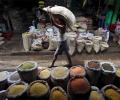
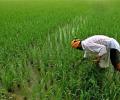
However, the areas under paddy - the biggest cereal grown during the kharif season - continue to be less than last year, mainly due to delayed onset of rains and also on account of shift towards the more lucrative maize.

The festival season has already begun in the west and south of India with Ganesh Chaturthi and Onam, respectively, and consumer companies are witnessing a pick-up in sales compared to pre-Covid levels. Retailers, fast-moving consumer goods (FMCG) and consumer durables companies expect their sales to grow in double digits this festival season compared to pre-pandemic times, as there are no curbs on movement now. Adani Wilmar expects sales volume to be higher by 15-20 per cent as rural India has largely witnessed good monsoon rains, and employment has picked up in urban areas.

This year, the monsoon was above normal in almost all parts, except in North-West India, which comprises the major grain producing states of Uttar Pradesh, Punjab, Haryana, Rajasthan, along with states such as Himachal Pradesh, the NCR, Uttarakhand, and J&K.

'The decision to supply free food grains is not an economically sound decision because the government will find it very difficult in future to charge anything for food grains.'

DroughtThe Centre is expected to discuss issues related to drought management and also review the progress of major central schemes like soil health cards, irrigation programmes

Labour seems to have found employment as maids, cooks, gardeners, security guards and the like -- a transition that could be described as from farms to the kitchen sink, instead of farms to factories, observes Mahesh Vyas.

India's current account deficit is expected to deteriorate in the current fiscal on account of costlier imports and tepid merchandise exports, according to the Finance Ministry's monthly economic review. The review released on Thursday by the ministry also said that global headwinds would continue to pose a downside risk to growth as crude oil and edibles, which have driven inflation in India, remain major imported components in the consumption basket. For the present, it said, "their global prices have softened, as fears of recession have dampened prices somewhat. This would weaken inflationary pressures in India and rein in inflation."
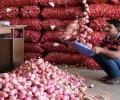
Despite onion prices hitting Rs 130 a kg in the wholesale market, farmers have not gained enough to make a profit this season. Farmers and other stakeholders in the value chain estimate that 30 per cent crop damage this kharif season would result in a decline of about 2 million tonnes in output from Lasalgaon district alone. Similar crop damage across the country could lead to an onion shortage of nearly 7 million tonnes this year.
It has decided not to levy the 2 per cent tax deducted at source (TDS) on cash payments above Rs 1 crore made through Agricultural Produce Market Committees.
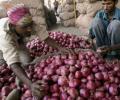
The crop is currently trading at Rs 22 a kg compared to Rs 12.50 one month ago.
As the growth figures relate to pre-Covid lockdown period it does not reflect the real picture of distress which unfolded from April onwards in the sector, when acute supply disruption led to sharp drop in prices of many commodities largely perishables impacting farmers.
The government has made its flagship crop insurance schemes voluntary for farmers with existing crop loans or those willing to take new ones, as it seeks to address the concerns raised by farmers' body and states in implementation of these programmes. "The Union Cabinet has approved the revamping of 'Pradhan Mantri Fasal Bima Yojana (PMFBY)' and 'Restructured Weather Based Crop Insurance Scheme (RWBCIS)' to address the existing challenges in implementation of crop insurance schemes," an official statement said.

'Akhilesh did politics like Rabi and Kharif crop which come once a year. Politics is not seasonal, you have to harvest your field all through the year and only then you get a good crop' Political analyst lists 12 reasons why Akhilesh Yadav lost the UP elections.
Onion is currently trading between Rs 70 and Rs 80 in retail markets across the country.
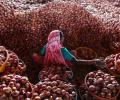
At the benchmark Lasalgaon Agricultural Produce Market Committee (APMC) mandi, the model onion price shot up to Rs 21.50 a kg on Thursday, as against Rs 16.50 a kg on Wednesday. This was the highest since February 11.
'Obviously, MSP hike raises chances of a reduction in exports. Even without an MSP hike, India's exports of a number of agri-commodities, like sugar, were unviable in the overseas markets.'
Because of the reluctance to intervene structurally in the political economy of onion trade, the BJP is paying the price till today and might continue to do so in the forthcoming election to the Delhi assembly.

India is expected to harvest bumper crop this year based on estimates of higher food grains production in Kharif (summer sown) and hopes of better Rabi (winter) crop with enough water in reservoirs, Finance Minister P Chidambaram said.
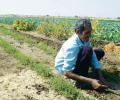
Crops including fruit, vegetables account for 60% of GDP in agriculture, forestry, fishing sector.
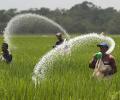
Enthused by rising potato prices after a prolonged slump, Pradeep Sharma was planning to sow the crop on his 15-acre farm near Agra slightly earlier than usual. The delayed departure of the southwest monsoon also prompted his decision, since the good soil moisture would have saved at least one initial irrigation. But the acute shortage of diammonium phosphate (DAP), a crucial nutrient ahead of the sowing season for potatoes, nipped those hopes in the bud. DAP is the second-most used fertiliser in the country after urea.

So far, Andhra Pradesh, Kerala, Telangana, Uttar Pradesh and West Bengal governments have taken the imported onions.
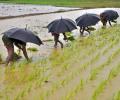
Sowing had started on a sluggish note in several parts of the country because of delay in the onset of the monsoon but has picked up pace subsequently as the rains progressed and performed appreciably well in August.
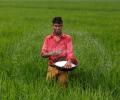
Almost 30% or a third of the agriculture ministry's budget, is spent on premium for the PMFBY every year

The Russia-Ukraine crisis, along with general bullishness in agricultural commodities, has ensured that after a fairly long time, most of the 24 commodities for which the Centre declares the minimum support price (MSP) are trading above it. The exceptions here are chana or gram and a few varieties of pulses. This might gladden the farmers, especially those who are still holding on to their stocks from the previous kharif harvest or are harvesting the latest rabi crop. But this could stoke retail and wholesale inflation.
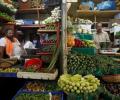
Not just onion, retail prices of potato and other vegetables have also shot up in the national capital on Monday as recent winter rainfall has damaged some of the crops. Milk and butter prices have also gone up. Even cooking oil prices, especially of mustard oil, have increased by Rs 15/kg litre.
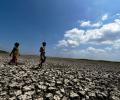
With monsoon rainfall 16% below the long-period average, total sowing area is down by 7% at 56.7 million hectares so far this season.
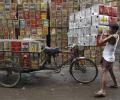
In order to check the abnormal surge in edible oil prices during Diwali festivities, as many as 18 states are in the process of imposing stock holding limits on oilseeds and edible oils after being empowered by the Centre for doing so. Of the 18 states that are in the process of imposing stock limit on my edible oils apart from UP, include Rajasthan, Gujarat, Maharashtra, Odisha, Kerala, Jharkhand, Chhattisgarh, Andhra Pradesh, Tamil Nadu, Tripura and the Union Territory of Chandigarh. Of the 18, Uttar Pradesh, has already imposed stock limits on edible oils, the Centre was informed with as many as 23 states to discuss ways and means to ensure further easing of edible oil prices.
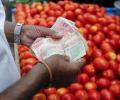
Trade sources believe that tomato supply from Maharashtra has slumped due to incessant rain in the state towards the fag end of the monsoon season, reports Dilip Kumar Jha.

However, onion arrivals have been normal with farmers bringing in 1,400 tonnes of the bulb to Lasalgaon on Friday, substantially lower than 2,429 tonnes on Thursday, but there is no dearth of supply to mandis.

Flood victims have been fighting for survival and living in temporary shelters nearby railway tracks with lack of food items. They are yet to get any help from the government, reports M I Khan.

Maintaining a rapid pace of the vaccination drive and quickly bridging healthcare infrastructure gaps across both urban and rural areas would emerge as the most sustainable stimulus for durable recovery of the Indian economy, says a report by the department of economic affairs.

This should augur well for the rabi crops as delayed withdrawal will leave enough moisture in the soil for early sowing.

Reports said that in Telangana and Karnataka, excessive rains the past 10 days has threatened the standing green gram and maize crops and could negatively impact yields if the skies don't open up. But in the north-west and central parts of India, the resurgence of monsoon could not have come at a better time as oilseeds and pulses crops would otherwise had weathered if the rains didn't revive in August.
