
The Announcement of Opportunity (AO) is for space experiments by institutions in the country, and the last date for receiving the proposals is May 19, 2017, the Bengaluru-headquartered ISRO said.
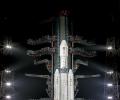
The Indian Space Research Organisation on Thursday launched its first experimental suborbital flight. Here are five things you need to know about the GSLV Mark III mission.
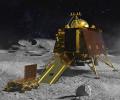
Asked if the lander was 'damaged' during the 'hard landing", Sivan said: "That we do not know".
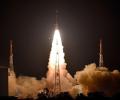
"I am really grateful to the entire ISRO family for having worked this hard and making IRNSS-1I a success," said the space centre's chief K Sivan.

Vikram and Pragyan payloads are now in a power-off mode until the south pole of the lunar surface is back in the range of the Sun again.
If it becomes a reality, the Chennai-based company will become the first private player from India to conduct such a mission to the lunar surface.

Weighing about 5,854 kg, GSAT-11 would play a vital role in providing broadband services across the country, and also provide a platform to demonstrate new generation applications.

The landing on the moon near the South Pole, an uncharted territory so far, would be on September 6 or 7, Sivan told reporters, as the Indian space agency is all set to embark on its most complex mission.

ISRO Chairman K Sivan said the Indian Air Force and other agencies will play a major role during the selection of astronauts for the human space mission project.

The Supreme Court Thursday ordered that the report of a high-level committee on the role of erring police officials in the 1994 espionage case relating to Indian Space Research Organisation scientist Nambi Narayanan be given to the Central Bureau of Investigation and directed the agency to conduct further investigation on the issue.

A key feature of the satellite is providing mobile communication to India through multi beam coverage facility.

A mysterious shooting incident at a ISRO facility in the early hours near Bangalore threw up conflicting versions with a CISF guard claiming that two unidentified persons shot at him while the police raised serious doubts.

Her comments came amid the ongoing war of words between India and Pakistan ever since India withdrew Jammu and Kashmir's special status and bifurcated it into two union territories on August 5.

Since Pakistan has 'opted out' of the project, it is now being called South Asian satellite.

Aditya-L1 is meant to observe the corona, which are the outer layers of the Sun, extending to thousands of kilometres.

The feat is the second one for the Indian Space Research Organisation scientists in using the indigenously made cryogenic stage after the January 5, 2014 launch of GSLV-D5.
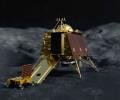
A complaint was lodged against the accused Mitul Trivedi, after he was seen giving interviews to the local media since the Vikram lander successfully made soft landing on August 24, claiming to have designed the lander module of Chandrayaan-3, the official said.

Out of its 47 operational satellites, India currently has six to eight satellites which are used entirely for military purposes.

The ISRO lost communication with the satellite when it attempted to ignite the engine in a third and final move to its desired location.
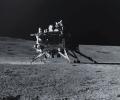
The cryogenic upper stage of the LVM3 M4 launch vehicle, which successfully injected the Chandrayaan-3 spacecraft into the intended orbit on July 14 this year, made an uncontrolled re-entry into the Earth's atmosphere, the ISRO said.

Training modules also cover academic courses, Gaganyaan flight systems, nicro-gravity familiarisation through parabolic flights, recovery training, mastering of flight procedures and training on crew training simulators, according to ISRO sources.

India performed yet another space feat on Wednesday when the Indian Space Research Organisation launched a record 104 satellites into orbit from Sriharikota, Andhra Pradesh, something no other country has done before.

The next operation - reduction of orbit- will be done at 11 PM on Sunday, ISRO added.

The tableau also showcased the participation of women scientists in various missions of the Indian Space Research Organisation (ISRO), which is now planning to carry out India's maiden human space flight next year.
On Thursday, scientists sent the 1,380 kg spacecraft to its next destination -- highly elliptical orbit of 300 km perigee and 1.6 lakh km apogee respectively. This will be followed by three more orbit-transfer exercises.

The primary goal of HysIS, whose mission life is five years, is to study the earth's surface in visible near infrared and shortwave infrared regions of the electromagnetic spectrum.

Indian Space Research Organisation's plan to soft land Chandrayaan-2's Vikram module on the Lunar surface did not go as per script in the early hours of Saturday, with the lander losing communication with ground stations during its final descent.

"Chandrayaan-2 is not the end of story. Our plans on Aditya L1 solar mission, human spaceflight programme are on track. A large number of advance satellite launches are planned in the coming months. SSLV will make its maiden flight sometimes in December or January. Testing of 200 ton semi-cryo engine is expected to begin shortly. Work is on to provide NAVIC signals on mobile phones, which will open the path to develop large number of applications for societal needs," he added.
The ISRO had said it would attempt softlanding on the lunar surface on August 23.

ISRO launched 12 Indian, 22 foreign satellites and successfully flight-tested India's first winged-body aerospace vehicle.

ISRO needs next generation launchers and new facilities to manufacture and launch them.
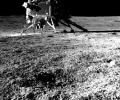
Chandrayaan-3 mission's Pragyan rover on Wednesday clicked an image of the Vikram lander, ISRO said.

GSLV-MK III, which uses a homegrown cryogenic engine, has to do at least two more launches before it begins commercial operations, report Raghu Krishnan and T E Narasimhan.

ISRO chief's comments came after NASA said that it had found the remains of the Vikram lander by its Lunar Reconnaissance Orbiter and credited the discovery to Chennai-based amateur astronomer and engineer Shanmuga Subramanium.

After the successful landing of Chandrayaan-3 on the Moon on Wednesday, August 23, Bollywood has joined India to laud ISRO (Indian Space Research Organisation) and its team for the historic mission.
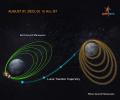
The Propulsion Module (PM) of Chandrayaan-3 has been moved from an orbit around the Moon to an orbit around Earth, the Indian Space Research Organisation (ISRO) has said, terming the operation a unique experiment.
Sachin Tendulkar, Sania, Mirza, Anil Kumble and Virat Kohli hailed Moon mission Chandrayaan-3's successful landing

The website of Indian Space Research Organisation's commercial arm Antrix Corporation Limited was reportedly hacked on Sunday and the space agency said efforts are on to set it right.
The ISRO said that 90 to 95 per cent of the mission objectives have been accomplished, notwithstanding the loss of communication with the lander.

ISRO on Monday said a two-way communication between the Chandrayaan-2 orbiter and Chandrayaan-3's Lunar Module has been established.
