
Iranian Foreign Ministry spokesperson Esmail Baghaei stated that Iran is instead working with Oman to establish a mechanism for the safe passage of ships through the Strait.

Iranian media reported an exchange of fire between Iranian and US forces near the Strait of Hormuz, amidst a shaky ceasefire between the two countries.

The United States on Saturday (local time) launched a third round of strikes against Iran after alleging that Iran's Islamic Revolutionary Guard Corps (IRGC) attacked the Cyprus-flagged container vessel M/V GFS Galaxy in the Strait of Hormuz.

Is the current rally telegraphing a durable peace plan in West Asia, boosted by United States (US) President Donald Trump's incoherent and contradictory posts on social media?

Tensions escalate between Iran and the US over control of the Strait of Hormuz, a crucial shipping lane for global oil supplies, as both sides discuss extending a fragile ceasefire.

A new report suggests China's maritime vulnerability lies in the Strait of Hormuz, not Malacca, creating strategic competition in the Indian Ocean.

The US forces conducted strikes against Iran, on Friday, as a powerful response to Thursday's attack on a commercial ship that was transiting the Strait of Hormuz, said Central Command (CENTCOM) in a statement.

Indian stock markets experienced a significant downturn, with the Sensex plunging 1,124 points to a six-month low and the Nifty closing below 22,800, driven by surging crude oil prices, escalating geopolitical uncertainties, and weak global market trends.

Iranian Foreign Minister Seyyed Abbas Araghchi stated that the Strait of Hormuz remains open to all commercial vessels, requiring ships to coordinate with Iranian naval forces due to regional tensions and a US blockade.
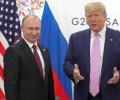
US President Donald Trump on Saturday suggested that Ukraine should elect a "new President" capable of negotiating a deal to end the conflict with Russia, while warning Ukrainian President Volodymyr Zelenskyy against targeting Russian oil refineries, a day after announcing a diesel fuel supply agreement with Moscow.

US President Donald Trump claimed on Tuesday that Tehran has consented to long-term, comprehensive monitoring of its nuclear infrastructure. Concurrently, Washington will ease shipping constraints in the Strait of Hormuz and release bound financial concessions, subject to stringent American oversight.

'India should not trade away its energy security for temporary tariff relief. Neither signing a trade agreement nor stopping Russian oil purchases can protect it from future US action.'
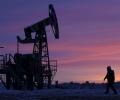
Oil prices are expected to remain elevated due to disruptions in the Strait of Hormuz, with both the US Energy Information Administration (EIA) and Rabobank International forecasting firm prices and a potential surge above $100 a barrel if disruptions worsen.

US President Donald Trump indicated that American military operations targeting Iran might not have concluded, while firmly rejecting immediate talks with Tehran. He asserted that Iran is facing severe military and economic difficulties and possesses limited capabilities, despite the reopening of the Strait of Hormuz.

A Liquefied Natural Gas (LNG) carrier, chartered by an Indian firm, safely transited through the Strait of Hormuz -- the first Indian LNG tanker to cross the war-hit narrow shipping lane since the war in West Asia broke out more than three and a half months back.

Iran has conveyed seven conditions to the United States through Qatari mediators for starting negotiations to end the ongoing war, while warning that Tehran is prepared for a "decisive war" if Washington rejects its demands.

Fighting in Yemen has intensified as Houthi rebels advance on strategic government-held areas like Marib and Taiz, putting pressure on Saudi Arabia to respond. The conflict is also linked to wider US-Iran tensions affecting shipping in the Strait of Hormuz, with former US President Trump commenting on the situation.

Two members of Iran's delegation to the United Nations General Assembly in New York were "kicked out" of the United States on Saturday after allegedly failing to comply with a US State Department order to leave the country, Axios reported, citing a US official, as tensions between Washington and Tehran continue to rise amid the West Asia crisis, particularly the Strait of Hormuz.

Navigating this geopolitical minefield requires a cold-blooded blend of immediate tactical pleading, structural domestic diversification, and aggressive collective resistance, suggests Ambassador Rajasekhar.

Indian equity benchmark indices Sensex and Nifty experienced a significant tumble in early trade, primarily driven by elevated crude oil prices due to ongoing West Asia uncertainty and substantial foreign fund outflows. Track Sensex, Nifty on September 29.
Former President Donald Trump's recent deal with Russia to supply diesel to the US and global markets has ignited a political firestorm, drawing sharp criticism from Ukraine's President Volodymyr Zelenskyy, Democratic leaders, and a segment of Republicans, despite the US Treasury lifting sanctions on Russian diesel supplies.

Foreign Portfolio Investors (FPIs) became net sellers in September, withdrawing Rs 35,860 crore from Indian equities due to global uncertainties, high US interest rates, and elevated crude oil prices, with outflows continuing into October.

A vessel carrying 20,000 metric tonnes of Liquefied Petroleum Gas (LPG) arrived at Deendayal Port Authority in Kandla, Gujarat, after crossing the Strait of Hormuz amid the West Asia crisis.

The Strait of Hormuz crisis is impacting lifestyles worldwide, from reduced gold purchases in India to energy conservation in Europe and Japan, as governments urge citizens to adapt to the global energy shock.

US President Donald Trump asserted that Iran is attempting to remove him from office, believing a Democratic administration would permit them to develop nuclear weapons. Trump vowed to prevent Iran from acquiring nuclear capabilities and stated he has no regrets about his confrontational approach, claiming he would act the same way again. He also linked the ongoing conflict to rising stock markets and oil prices, and controversially suggested renaming the Strait of Hormuz.
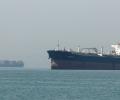
As tensions in the Middle East approach a critical juncture, reports have surfaced regarding a draft memorandum of understanding between the United States and Iran aimed at de-escalating the ongoing conflict, Iranian state media reported on Wednesday.
Indian benchmark indices Sensex and Nifty experienced a significant downturn in early trade, with the Sensex tanking 730 points, driven by surging crude oil prices, escalating geopolitical uncertainties, and a weak trend observed across Asian markets.

India's wholesale price-based inflation (WPI) increased to 9.92 per cent in August, up from 9.78 per cent in July, primarily due to rising prices across food, manufactured items, and fuel and power sectors.

India summoned the Iranian envoy after two Indian vessels had to reverse course in the Strait of Hormuz following an incident of firing by Iran's Revolutionary Guards.

Indian equities, particularly the Nifty 50, have significantly underperformed their Asian and global counterparts over the past year, with the index down 10.6 per cent. This lag is attributed to factors like rising global oil prices, rupee depreciation, and a lack of participation in the global chipmaker rally that boosted markets like South Korea and Taiwan.

Iran's Islamic Revolutionary Guard Corps (IRGC) Aerospace Force claimed to have fired several ballistic missiles at a US aircraft carrier and a destroyer, alleging the warships were harassing Iranian ships and participating in a naval blockade.
Amid ongoing tensions with the US, Iran's IRGC Navy has issued new directives restricting maritime movement through the Strait of Hormuz, allowing only civilian vessels on Iranian-designated routes and barring all military ships.

Iran's Islamic Revolutionary Guard Corps (IRGC) claims to have captured a US unmanned submersible near the Strait of Hormuz and launched ballistic missile strikes against a US airbase in Jordan and two US Navy destroyers. These actions are stated as retaliation for recent US attacks on Iranian oil tankers. The US Central Command (CENTCOM) had previously reported destroying Iranian crude oil carriers after IRGC missile attacks on US warships. The escalating tensions have led to regional air defence activations and warnings to tanker crews.

An Indian seafarer from Uttar Pradesh, Wiper Suraj Yadav, was killed after sustaining head injuries in a missile attack on the Antigua and Barbuda-flagged bulk carrier MV Cape Dao off the coast of Oman. The vessel was carrying 20 Indian seafarers, 19 of whom were safely evacuated.

Iran has announced the reinstatement of strict military control over the Strait of Hormuz, citing US violations of previous agreements regarding maritime passage. This decision follows claims of continued American blockade of Iranian ports and a statement from former US President Trump regarding the persistence of the naval blockade until a comprehensive peace agreement is reached.

India on Tuesday reiterated the call for free and safe navigation in international waters and the unhindered flow of commerce through international waterways in the region after the Panama-flagged commercial vessel MT El Gaia came under attack off the coast of Oman, with 13 of the 14 Indian nationals on board rescued while search operations are underway for one missing seafarer.

A tanker carrying liquefied petroleum gas (LPG) for India has successfully navigated the Strait of Hormuz and is en route to Visakhapatnam, India, carrying enough cargo to meet half a day's requirement for the country.

Analysts predict that developments in the West Asia conflict, crude oil prices, and upcoming US inflation data will be the primary factors influencing the Indian stock market next week, alongside foreign investor activity and global market trends.

India's current account deficit could widen to 1.7 per cent of GDP, or about $71 billion, if crude oil prices stay above $90 a barrel for a significant part of the second half of FY27.

Iranian President Masoud Pezeshkian delivered a strong address at the UN General Assembly, rejecting US allegations against Iran and accusing Washington and Israel of aggression and terrorism. He criticised US sanctions, defended Iran's peaceful nuclear programme, and highlighted the Palestinian issue.
