
Goldman Sachs has materially lowered its earnings growth forecast for Indian companies by a cumulative 9 percentage points over the next two years.

External Affairs Minister S Jaishankar discussed the West Asia conflict's impact on the global economy, particularly energy security, with US Secretary of State Marco Rubio. He also engaged with GCC ambassadors and his Sri Lankan and German counterparts on the same issue.

The OECD projects India's GDP to grow at 7.6% in the current fiscal year and 6.1% in 2026-27, despite global economic challenges stemming from the Middle East conflict and energy price volatility.

S&P Global Ratings has increased India's GDP growth forecast for the next fiscal year to 7.1 per cent, citing private consumption, investment, and exports as key drivers. However, the agency also cautioned that the conflict in the Middle East could strain India's fiscal position due to higher energy prices.
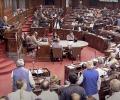
Opposition MPs in the Rajya Sabha criticised the Modi government's economic policies, citing the LPG crisis, lack of energy security, and concerns over the Economic Stabilisation Fund.

India's economy is projected to maintain growth above 7 per cent in 2026-27 (FY27), supported by strong domestic consumption and investment, even as global growth faces risks from geopolitical tensions, according to industry body Assocham.

If the conflict continues for a prolonged period, State-run oil companies may have to review retail fuel prices accordingly.

Analysts say long-term investors may still benefit, but recommend limiting bullion exposure to around 10 per cent.

For weeks, the war skirted the edge of catastrophe without tipping over. Missiles flew, there was much destruction, commanders were assassinated, cities across the Gulf and even in Israel struggled to absorb the shock. But one line held: Energy infrastructure, the arteries of the global economy, remained largely untouched. That is no longer true. Prem Panicker continues his must read daily blog on the Gulf War.

A foreign brokerage warns that sustained crude oil prices above USD 100 per barrel could push India's inflation above the RBI's tolerance level, potentially triggering interest rate hikes.

A new report suggests that prolonged conflict in the Middle East could significantly impact India's GDP growth and inflation.

A senior Russian official has stated that Russia is prepared to supply fertilisers and other agricultural products to countries in the Global South and East, following concerns about the closure of the Strait of Hormuz impacting global fertiliser exports and food security.

Analysts warn that global markets are significantly underpricing the risk of an oil price shock, with Brent crude potentially soaring to $150 per barrel if the West Asia conflict escalates or damages critical oil and gas infrastructure. This could lead to severe inflation and economic repercussions, particularly for import-dependent nations like India.

It may now be time to question the price India is paying for Israel's disregard of the serious undermining of India's energy security, asserts former foreign secretary Shyam Saran.
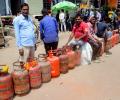
The Indian government has implemented several measures to mitigate external risks, support the balance of payments, and maintain macroeconomic stability amidst the ongoing West Asia crisis, according to Minister of State for Finance Pankaj Chaudhary.
Fitch Ratings on Friday said persistently higher oil prices could cause India's retail inflation to rise faster than the expected gradual pace, and lead to a slowdown in economic growth in the first half of financial year 2026-27 (FY27).

Asian Development Bank (ADB) on Friday warned that India's limited crude oil reserves of about 100 million barrels - sufficient for only 40-45 days of consumption - leave the country particularly vulnerable to supply disruptions through the Strait of Hormuz amid the ongoing war in West Asia.

The Indian government is considering additional relief packages for vulnerable sectors like MSMEs to mitigate the impact of the ongoing West Asia crisis on the economy and inflation.

The Trump administration has announced a temporary authorisation for countries to purchase Russian oil stranded at sea, aiming to stabilise global energy markets amid rising oil prices and tensions with Iran.

The International Energy Agency (IEA) has proposed immediate demand-side measures, including remote work, lower speed limits, and reduced air travel, to mitigate the impact of a global oil supply shock caused by Middle East disruptions.

In the present hyper-connected world, there are many domestic and global factors that affect financial markets. Of them, the most powerful and often least predictable are geopolitical events, which often boil down to one diplomatic headline.

Alliances fight wars effectively only when they share an endgame. If Israel acted without US knowledge, then the military alliance is operating without real coordination at the level of strategic targeting. Neither picture is reassuring in a war that is no longer regional in its consequences. Prem Panicker continues his must read daily blog on the Gulf War.

India will maintain multiple sources for crude oil purchases and diversify them to ensure stability in the supply chain with national interests remaining the "guiding factor" for the procurement, Foreign Secretary Vikram Misri said.

The big question is whether Trump is any longer in command of the situation. For all practical purposes, the war seems set to cascade as the US is preparing for a potential ground operation in Iran and threatens to destroy 'bridges next, then electric power plants', points out Ambassador M K Bhadrakumar.

Srivastava warned that continued bombing of Iran by the US and Israel could severely undermine any prospects of reopening critical maritime routes through negotiation with Tehran.

Markets will look for clear guidance on how the MPC interprets the uncertainty and what it implies for the future course of monetary policy, points out Rajeswari Sengupta.

Egypt, Pakistan, Saudi Arabia and Turkey met in Islamabad in what analysts say is the formal opening of a new diplomatic formation that could reshape the post-war regional order. Their immediate goal is a ceasefire; their larger ambition is to ensure that neither Iran nor Israel emerges from this war in a dominant position. Pakistan's foreign minister then flew directly to Beijing and mooted a Chinese role as guarantor of any eventual agreement. Prem Panicker continues his must read daily blog on the Gulf War.

Sensex and Nifty post steepest weekly loss in over a year, falling nearly 3 per cent.

This weekend, Donald Trump has begun to say the quiet part out loud -- that he wants to take control of Iran's oil, a formulation more in line with his robber-baron style of international relations.
Former Maldives President Mohamed Nasheed advocates for building democratic institutions over military intervention in resolving international conflicts, particularly in the context of the escalating West Asia crisis. He also discusses the impact of the conflict on the Maldives' tourism-dependent economy and calls for a stronger, more understanding India in the Indian Ocean Region.

'India's ties with Israel have to do with defence and general technology.' 'The war changes nothing in what India and Israel hope to get from the relationship.' 'It's not as though India will get significantly more benefits from Iran if India abandons Israel at this time.'

'The next two to three weeks will not be decided in Washington.' 'They will be decided in Tehran, in whatever calculation Iran makes about the costs of continued resistance against the costs of appearing to have yielded.'

Israel wishes to continue its bombing campaign until Iran's military and industrial infrastructure are degraded to a point where it ceases to pose a threat to Israel. Iran, for its part, has learnt from its experience in the 12-day war of last June. Any ceasefire, it believes, will only be a prelude to another attack on itself. It is determined to convey that any attack on Iran will impose heavy costs on Israel, the US, America's allies in the Gulf -- and on the world at large, points out T T Ram Mohan.
'The immediate impact for India will be very minimal as the share of Venezuela in our total overseas production is very low.'

The United States, which entered this war in expectation of a short, sharp win along the Venezuela model, is now preparing for deeper involvement in a conflict it does not fully control, without the allies it typically relies on, against an adversary that is not behaving as expected, in a global environment that is already absorbing economic shock. Prem Panicker continues his must read daily blog on the Gulf War.

Lavrov said that the US has set itself the objective of 'achieving economic domination', adding further to it that Americans want to control the routes to leading countries to provide its energy sources to them.

Finance Minister Nirmala Sitharaman's biggest challenge will be to find a new growth driver, particularly against the backdrop of a global economy ravaged by heightened uncertainty and fragmentation, financial markets on a precipice, and global commodity prices on a continued uptrend.

Taking Kharg would give the US control over virtually all of Iran's oil exports and thus provide significant leverage, notes Prem Panicker in his must read daily blog on the Gulf War. It would also put American troops within range of Iran's remaining missiles, drones, and artillery on a piece of real estate that is just eight square miles in size, and just 15 miles from the Iranian mainland.

The reduction in the goods and services tax (GST) rates has increased the momentum in India's economic activity both on the supply and demand sides, while robust agricultural activity - reflected in the strong onset of rabi sowing and adequate reservoir levels - has reinforced the outlook for food supply and rural incomes, the finance ministry said on Thursday.

The pause gives the US time to breathe, to regroup, to move its expeditionary force into position without risk of interception along the way. It gives Iran nothing -- on the ground, attacks against its infrastructure continue apace. Prem Panicker in his must read daily blog on the Gulf War.
 © 2026 Rediff.com - Advertise with us - Disclaimer - Privacy Policy - Sitemap - Feedback - About us - Terms of use - Grievances