
The Delhi High Court has ruled that a private company's provision of email services does not, by itself, make it amenable to writ jurisdiction, even if the account is crucial for a user's business. This decision came as the court dismissed a petition by a media company seeking restoration of access to its Gmail account.

Indian benchmark stock indices, Sensex and Nifty, rallied significantly, with Sensex jumping over 1,500 points and Nifty reaching a nearly three-week high, driven by strong buying in banking, IT, and Reliance Industries stocks, alongside easing crude oil prices.

The National Payments Corporation of India (NPCI) has deferred the implementation of a 0.4 per cent Merchant Discount Rate (MDR) on Person-to-Merchant (P2M) UPI payments above Rs 2,000, originally set for October 15, until after Diwali.

India's GST Council has approved changes allowing small online sellers to register in states without physical premises by using an e-commerce operator's warehouse as their principal place of business, aiming to boost national sales for small businesses.

Mercedes-Benz India's Managing Director & CEO Santosh Iyer stated that demand continues to outstrip supply, particularly for the CLA electric vehicle, with over 1,000 orders and deliveries extending to March-April 2027. The company could have sold an additional 1,000 vehicles if supply had been adequate.

An IIT Madras study reveals that financial cybercrime victims in India are often highly educated professionals, challenging the notion that only careless or financially unaware individuals are targeted. The research highlights that digital literacy doesn't guarantee protection, as fraudsters exploit stress and emotional vulnerabilities.

India has secured a spot among the top 10 leading emerging-market performers in artificial intelligence (AI) readiness, with private investment in AI more than tripling to USD 4.1 billion in 2025, according to a new World Bank report.

The Kerala Legislative Assembly has passed a motion urging the central government to completely withdraw the proposed Merchant Discount Rate (MDR) on UPI transactions exceeding Rs 2,000. Chief Minister V D Satheesan and CPI MLA K Rajan highlighted concerns that the MDR would increase business costs, harm small businesses, and reduce the appeal of digital payments, while the BJP argued it would not affect general public or small merchants.

A new digital political phenomenon, the 'E20 Janta Party', is gaining traction on Instagram, mobilising Gen Z against the government's mandatory 20% ethanol-blended petrol (E20) and demanding Union Minister Nitin Gadkari's resignation.

Cathy Li, Head of the Centre for AI Excellence at the World Economic Forum, advocates for integrating AI literacy into India's education curriculum and incentivising AI companies to prioritise child safety. She stresses the need for localised solutions that account for India's linguistic and cultural diversity, as well as varying levels of connectivity and digital literacy, to ensure AI systems are safe and beneficial for children.

The Supreme Court has directed the Centre to explore a statutory framework to ensure social media intermediaries comply with Indian laws regarding minors, particularly concerning their inability to independently enter into contracts. The court highlighted the need for safeguards to protect children from potential harms on digital platforms, including exploitation and misuse of data, and asked the Solicitor General to examine incorporating these requirements into intermediary rules.
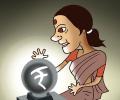
The All India Mobile Retailers Association (AIMRA) has announced a nationwide 'No UPI Day' protest on October 2 against the proposed 0.4 per cent Merchant Discount Rate (MDR) on UPI transactions exceeding Rs 2,000. Retailers argue that this charge will burden small businesses and impact their already thin profit margins, urging policymakers to withdraw the proposal.
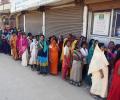
Meghalaya has shown significant progress in digital transactions and financial inclusion, recording 32.76 crore digital transactions and nearly 10 lakh Jan Dhan accounts by 2025-26. Efforts like the JAM Trinity and financial literacy programmes have expanded banking access, with a high percentage of bank account holders adopting digital modes. The next phase focuses on enhancing financial literacy and cyber resilience, especially in rural areas.

IIT Madras is hosting the 3rd Digital India RISC-V (DIR-V) Symposium 2026 in partnership with the Ministry of Electronics and Information Technology and RISC-V International. The symposium aims to unite stakeholders from government, industry, and academia to advance India's semiconductor innovation, focusing on indigenous processor technologies, secure computing, hardware innovation, and AI, aligning with the government's vision for India as a global semiconductor hub.

A new report by TeamLease Digital highlights a significant AI-ready talent gap in India's technology industry, with shortages of 53-60 per cent in Generative AI and cloud skills. The report indicates that only 16 per cent of IT professionals possess AI skills, leading to rising salary premiums for AI-core roles and a projected demand for over 10 lakh GenAI roles by 2026.
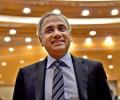
Infosys CEO Salil Parekh stated on Tuesday that the company's AI services, currently contributing over 8% of revenue, are growing rapidly and could account for almost half of its work within two to three years. He highlighted the strong demand for AI services, the company's hiring and training efforts for graduates in AI, and discussed potential risks like infrastructure challenges and societal backlash.
The National Payments Corporation of India (NPCI) has deferred the implementation of a 0.4 per cent Merchant Discount Rate (MDR) on Person-to-Merchant UPI transactions above Rs 2,000. Originally set for October 15, the new date will be announced after Diwali, providing relief to users and merchants, especially during the festive season. The decision came amidst opposition concerns about the levy burdening consumers.

Bandhan Bank has launched a new digital Provident Fund (PF) payment service, integrated with EPFO, allowing business customers to make statutory PF payments via the bank's internet banking platform. This service aims to streamline payments, optimise cash flows, and ensure timely compliance for businesses.

A two-day weekend would help employees recover physically and mentally. They would return better prepared for branch work that demands patience, judgment, and accuracy, asserts Tamal Bandyopadhyay.

India is developing a 'Gross Domestic Knowledge Product' (GDKP) to identify and define its knowledge assets, a move aimed at safeguarding them amidst global efforts to monetise and 'weaponise' knowledge, according to NITI Aayog member R Balasubramaniam.
The National Company Law Tribunal (NCLT) approved a record 107 resolution plans in the second quarter of financial year 2026-27 (Q2FY27), its highest quarterly performance, despite ongoing challenges such as member vacancies and infrastructure constraints.

India's Para Asian Games contingent received a formal send-off in New Delhi, with Sports Minister Mansukh Mandaviya launching the new Team India jersey. Prominent para-athletes, including flag bearer Pramod Bhagat, attended the ceremony. Mandaviya encouraged the athletes to win medals, assuring them of government support. Head coach Satyanarayana expressed confidence in medal prospects despite a reduced quota, while athletes like Suvarna Raj and Pramod Bhagat voiced their determination to secure medals.
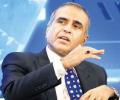
'The Rs 35,000 crore of capex every year, I don't get to sign 35 paise out of this.'

Mobile phone retailers across India, represented by AIMRA, are protesting the 0.4% Merchant Discount Rate (MDR) on UPI transactions exceeding Rs 2,000 for merchants. They plan to observe 'No UPI Day' on October 2, 2026, arguing that this fee will significantly impact their income and burden small businesses, advocating for a continued Zero MDR structure for UPI merchant payments.

Apple has officially launched its Apple Pay service in India, initially partnering with Axis Bank for Visa and Mastercard credit card users. The service allows secure, cashless transactions via iPhone, iPad, and Apple Watch using NFC technology, without requiring PINs or OTPs. This move is set to intensify competition in India's digital payments market, currently dominated by UPI and local players, with Apple planning to onboard more banks and expand merchant networks.

On the third day of the Ranji Trophy Elite Group C matches, Delhi trailed Bengal by 88 runs, with Bengal having posted 429. Kerala faced a significant deficit against Jharkhand, while Gujarat took a first-innings lead against Odisha, who now hold a slender four-run lead in their second innings. Maharashtra led Services by 172 runs despite a shaky start to their second innings.

Google Cloud India's Managing Director, Sashikumar Sreedharan, has resigned to pursue a new opportunity. Amit Kumar, previously MD for Digital Natives, has been appointed as the interim head of India operations. The transition was announced by Karan Bajwa, President of Google Cloud Asia Pacific, who highlighted the company's strong momentum in India.

Bajaj Finance reported a strong Q1 FY27 performance with 24 per cent year-on-year AUM growth and a 28 per cent rise in consolidated profit after tax, driven by significant increases in consumer financing, gold loans, and commercial vehicle loans, alongside a strategic focus on digital transformation and AI.

'We see a lot of cases of bank deposits getting lost, especially when people die, so this will help address that because you have one consolidated view.'

The Indian Super League 2026-27 season is set to begin with renewed optimism after a turbulent previous season.
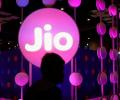
Digital services major Jio Platforms is anticipated to list on the stock exchange by the end of October, with an estimated enterprise valuation of USD 143-146 billion, making it India's largest public offer at around USD 3.8 billion.
UPI transactions saw a 27% volume increase and 20% value increase in the first half of the current fiscal year. Despite a slight moderation in September, the digital payment system is set to implement a 0.4% merchant discount rate on transactions over Rs 2,000, aiming for a sustainable revenue model. Small merchants and person-to-person payments remain exempt, and UPI's global presence continues to expand.

The CBI has filed a charge sheet in the NEET-UG 2026 paper leak case, relying heavily on digital forensic evidence including an access control app and call data records. The investigation revealed that three NTA subject experts allegedly exploited procedural gaps to leak confidential questions for money, involving a beautician and a coaching centre owner in the distribution of the leaked material to aspirants.

Punjab & Sind Bank MD and CEO Swarup Kumar Saha clarified that merchants cannot pass on Merchant Discount Rate (MDR) charges to customers for UPI payments, ensuring consumers only pay the displayed price. The new MDR structure, effective October 15, applies a 0.4% charge on P2M transactions above Rs 2,000, with specific flat rates for certain sectors, but small-value transactions remain free.

India's retail inflation surged to 5.54 per cent in September, primarily due to a significant increase in onion and other food prices, remaining just within the Reserve Bank of India's tolerance band. This marks the highest inflation since the new series with base year 2024 took effect in January.

IBM India and South Asia MD Sandip Patel states that technology, especially AI, should not be "artificially paused." He advocates for vigilance and proactive governance to foster innovation while addressing potential risks. Patel also highlights IBM's India-specific initiatives like Bharat Core and a sovereign AI stack, and discusses the impact of AI on jobs and global supply chains.

Jammu Police arrested three individuals, including a police follower, in two separate operations, recovering heroin and country-made pistols. The arrests highlight the ongoing efforts to combat drug trafficking and illegal arms in the region.
Arunachal Pradesh Chief Minister Pema Khandu lauded the state's first 10-day artificial intelligence boot camp and hackathon at IIT-Guwahati. The programme aims to build AI skills, promote innovation, and create a future-ready digital workforce, offering hands-on training in AI/ML, Python, and NLP to 40 young participants.

India-Pakistan clashes in cricket and hockey drew big audiences at the Aichi-Nagoya Asian Games, helping fuel stronger viewership and a 20% revenue rise.
Union Minister Mansukh Mandaviya inaugurated the BRICS Traditional and Indigenous Sports Demonstration Games 2026 in Ahmedabad, emphasising the role of traditional sports in reflecting cultural identity and fostering international cooperation. The one-day event, hosted by the Ministry of Youth Affairs and Sports, brought together delegations from BRICS and partner countries to showcase indigenous sporting practices like Mallakhamb, Yogasana, and Kalaripayattu from India, alongside Wushu from China and Sambo from Russia. Gujarat Deputy Chief Minister Harsh Sanghavi also highlighted India's rich sporting heritage and proposed initiatives for global promotion and preservation of traditional sports.
