
Supreme Court Justice Prashant Kumar Mishra has recused himself from hearing Bollywood actor Jacqueline Fernandez's plea against a Delhi court order framing charges in a Rs 200-crore money laundering case, citing a conflict of interest.

The Supreme Court is set to hear Congress leader Meenakshi Natarajan's challenge against the rejection of her Rajya Sabha nomination from Madhya Pradesh, which was dismissed due to alleged concealment of information in her election affidavit.

The Supreme Court, using its extraordinary powers under Article 142, has quashed the conviction of a man sentenced under the POCSO Act. This decision came after the victim, who was a minor at the time of the offence, married the accused upon reaching adulthood. The court emphasised that this ruling is based on the peculiar facts of the case and should not be considered a precedent.

The Supreme Court has declared the right to walk on demarcated footpaths a fundamental right, prioritising it over motorised vehicle movement, and has called for the establishment of a regulatory body to ensure its enforcement and provide restitutionary remedies for violations.

The Supreme Court has granted bail to Shubham Saxena, accused of siphoning off Rs 22 crore from a real estate company, primarily due to his prolonged pre-trial detention of over four and a half years. This decision overturns a Delhi High Court ruling that had denied bail citing the gravity of the economic offence.
The Supreme Court has expressed serious concern over the Allahabad High Court's extraordinary 40-year delay in deciding a criminal appeal filed by a murder accused. The case involves Vijay Singh, who was convicted in 1985 and whose appeal was only dismissed in February this year, after four decades. The top court questioned measures to address mounting pendency and rejected a suggestion to dismiss old cases solely due to delay.

A former principal secretary of the Madhya Pradesh assembly, Bhagwandev Israni, has claimed that Congress nominee Meenakshi Natarajan's Rajya Sabha poll nomination was wrongly rejected, arguing she was not required to disclose information as no FIR or chargesheet had been filed against her.

Three BJP candidates have been declared elected unopposed in the biennial Rajya Sabha elections in Madhya Pradesh, while the Congress party has moved the Supreme Court against the rejection of its candidate Meenakshi Natarajan's nomination.

The Congress party has accused the BJP and the Election Commission of being "partners in crime" in what it terms "seat chori" (seat theft), following the rejection of its Rajya Sabha candidate Meenakshi Natarajan's nomination. The party claims the rejection was based on "flawed and unreasonable" logic, alleging non-disclosure of a criminal case against Natarajan, despite her stating only a legal notice exists.

The Supreme Court dismissed Congress leader Meenakshi Natarajan's challenge to her rejected Rajya Sabha nomination, reaffirming that the Election Commission is the sole recourse for such disputes and citing Article 329(b) of the Constitution which bars judicial interference in electoral matters.

The Supreme Court of India has directed all states and Union territories to operationalise a single helpline number '112' for emergency responses and establish a functional good samaritan grievance redressal system within three months, emphasising that the right to trauma care is an integral part of the right to life.

The Supreme Court has reserved its order on Congress leader Pawan Khera's plea for anticipatory bail in a case related to allegations against Assam Chief Minister Himanta Biswa Sarma's wife.

The Supreme Court of India has issued a series of nationwide guidelines aimed at improving road safety on national highways, addressing issues such as illegal parking and accident blackspots.

The Supreme Court has refused to entertain Congress leader Pawan Khera's plea seeking protection against possible coercive action until April 20 in a case lodged against him for levelling allegations against Assam Chief Minister Himanta Biswa Sarma's wife.
The Supreme Court has granted anticipatory bail to Congress leader Pawan Khera in a case registered against him for alleging that Assam Chief Minister Himanta Biswa Sarma's wife possessed multiple passports and undisclosed properties abroad.

The Supreme Court has granted anticipatory bail to folk singer Neha Singh Rathore in connection with a case filed against her over a social media post related to the Pahalgam terror attack. The court's decision comes after Rathore appeared before authorities and cooperated with the investigation.

The Supreme Court has sought Karisma Kapoor's response to a plea by Priya Sachdev Kapur for a certified copy of the 2016 divorce settlement between Kapoor and her late husband, Sunjay Kapur. The case is related to an ongoing legal battle in the Delhi High Court concerning Sunjay Kapur's assets.

The bench said, "Be that as it may, the subject area shall ordinarily remain open for the public, except to the extent any development or maintenance work in particular places is required."

The Supreme Court has ruled that non-disclosure of a conviction in a nomination form will lead to the disqualification of an elected candidate. The ruling came on an appeal filed by a former councillor who was unseated for failing to disclose her conviction in a case.

Justice Surya Kant, on his first day as Chief Justice of India, established a new procedural norm requiring written requests for urgent case listings, with oral requests reserved for extraordinary circumstances. He also addressed various cases, including those related to extrajudicial killings and the removal of a lawyer from a government post.

The ruling means no fresh elections will be held, a move vital for Indian football since a mid-term poll could have triggered FIFA's wrath and another suspension for "third-party interference."
The Supreme Court of India has ruled that no timelines can be imposed on governors and the president to grant assent to bills passed by state assemblies, clarifying the extent of their powers under Article 200 of the Constitution.

The Supreme Court on Thursday held that the Governor can reserve a bill for consideration of the President even in the second instance, when the bill is again sent by the state assembly to him whether in its amended or unamended form.
The Supreme Court on Thursday refused to accept the preliminary objections raised by opposition-ruled states like Tamil Nadu, West Bengal and Kerala to maintainability of Presidential Reference, saying the issues raised in it pertain to the very core and foundational modalities of the constitutional machinery.

The Supreme Court of India has ruled that a governor has discretion under Article 200 to refer a state bill to the President or return it to the legislature, and is not bound by the advice of the council of ministers. The court clarified that a governor cannot simply withhold a bill.
The Supreme Court collegium has recommended the appointment of Karnataka High Court Chief Justice N V Anjaria, Gauhati High Court Chief Justice Vijay Bishnoi, and Bombay High Court judge Justice A S Chandurkar as judges of the Supreme Court. The five-member collegium, headed by Chief Justice B R Gavai, decided to recommend the names to fill three existing vacancies in the top court. The appointments follow the superannuation of former Chief Justice Sanjiv Khanna, and Justices Abhay S Oka and Hrishikesh Roy. The Supreme Court, which has a sanctioned strength of 34 judges, is currently working with 31 judges.

Supreme Court judge Justice K Vinod Chandran on Monday recused from hearing a plea seeking directions to authorities to investigate allegations made by US short seller Viceroy Research that billionaire Anil Agarwal's mining conglomerate was "financially unsustainable" and posing severe risk to creditors.
Three judges, including two high court chief justices, were appointed to the Supreme Court on Thursday.

The Supreme Court on Monday agreed to hear on August 22 a matter involving a row between the All India Football Federation (AIFF) and Football Sports Development Limited (FSDL) over the fate of 11 Indian Super League (ISL) clubs due to the non-renewal of their contracts with the national federation and the tournament's organisers.

The Supreme Court has refused to entertain pleas against the Kerala High Court order dismissing petitions challenging the Travancore Devaswom Board's decision to conduct a global conclave of Ayyappa devotees.

'We have already said that our judgment is only in the interregnum till the Act comes into play. These small things could have been easily taken care of. Anyway, we will seek the views of Justice Rao and issue a clarification.'

The Centre has argued before the Supreme Court that state governments cannot use writ jurisdiction to challenge the actions of the President and Governor regarding bills passed by state assemblies, particularly concerning fundamental rights violations. The President seeks the Supreme Court's opinion on whether states can file writ petitions under Article 32 and the scope of Article 361.

The Supreme Court has temporarily halted a High Court order that would have sent a decades-old property dispute involving the Bhopal royal estate back to trial court. The case involves descendants of Nawab Hamidullah Khan and challenges the inheritance of Sajida Sultan and her heirs, including actor Saif Ali Khan.
Calling itself the "custodian of the Constitution", the Supreme Court on Thursday asked if it could "sit idle" if a constitutional functionary like governor failed to discharge duties, as it reserved its verdict on the presidential reference on grant of assent to bills.
The Supreme Court has scheduled hearings starting August 19 for the Presidential Reference concerning constitutional issues related to timelines for handling bills passed by state assemblies. The court has directed the Centre and states to submit written arguments by August 12.
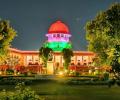
The Centre told the Supreme Court that governors are not indefinitely sitting on bills passed by state legislatures, and that barring a few exceptions, most have acted in a way which the apex court would have perhaps desired. Solicitor General Tushar Mehta argued that a Governor is "not a rubber stamp" and has a duty to preserve, protect, and defend the Constitution.
A Constitution bench comprising Chief Justice B R Gavai and Justices Surya Kant, Vikram Nath, P S Narasimha and A S Chandurkar, would fix the timelines on July 29 and commence hearing on the presidential reference in mid-August.
The Supreme Court is hearing arguments regarding a presidential reference on whether fixed timelines can be imposed on governors and the president for acting on bills passed by state legislatures. The court is considering objections to the maintainability of the reference under Article 143 of the Constitution.
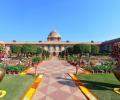
The Supreme Court has ruled that a Governor cannot send bills to the President for consideration if the state assembly has already cleared them for a second time. The court was questioning the Centre over the powers of the Governor when it comes to granting assent to bills.

BJP-ruled states argued in the Supreme Court that governors and the President have autonomy in assenting to bills passed by state assemblies, asserting that courts cannot mandate assent.
