A bench comprising Chief Justice B R Gavai and Justices Augustine George Masih and AS Chandurkar also directed that the offending video be immediately taken down and restrained the YouTube channel from republishing it or similar content.

The Supreme Court is examining the extent to which courts can intervene when governors delay or refuse to act on bills passed by state assemblies. The court questioned the Centre on whether judicial review is barred in cases of gubernatorial inaction, sparking debate on the balance of power between states and the central government.

The Centre has opposed the imposition of fixed timelines on governors and the President for decisions on bills passed by state legislatures, arguing that such constraints were intentionally omitted by the Constitution's framers.
The Centre has told the Supreme Court that imposing fixed timelines on governors and the president to act on bills passed by a state Assembly would amount to one organ of the government assuming powers not vested in it by the Constitution and lead to a "constitutional disorder".
The Supreme Court has questioned the practice of Governors withholding assent to bills indefinitely, stating that it renders the constitutional provision of 'as soon as possible' meaningless.
The Tamil Nadu government has urged the Supreme Court to dismiss the Presidential reference concerning the Governor's powers to assent to bills, arguing it is an 'appeal in disguise' to overturn settled law.
A five-judge Constitution bench of the Supreme Court is scheduled to consider the Presidential reference on whether timelines could be imposed by judicial orders for the exercise of discretion by the President while dealing with bills passed by state assemblies.
The court also directed YouTube and a Marathi news channel to forthwith remove the video of the press conference and also restrained them from uploading it in future.

On September 20, a single bench of Justice A S Chandurkar held that the amended rules being vague and broad had the potential of causing a chilling effect not only on an individual, but also on the social media intermediary.
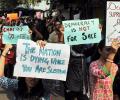
The Bombay High Court has upheld the suspension of a Dalit PhD student from the Tata Institute of Social Science (TISS) for allegedly participating in a politically motivated protest against the central government's policies. The court found that the student's participation in the protest, under the banner of TISS' student organization, brought disrepute to the institute.

The Bombay high court on Friday quashed the amended Information Technology rules aimed at identifying through a fact checking unit "fake and false" content against the government on social media platforms, holding it as unconstitutional.
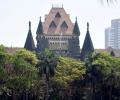
The Bombay high court on Monday refused to grant an interim stay on setting up a fact-checking unit (FCU) under the recently amended Information Technology (IT) Rules to identify fake and false content on social media against the government, noting that no grave and irreparable loss would be caused.

A division bench of Justices AS Chandurkar and Rajesh Patil stayed the government's September 19 circular, temporarily postponing the election.

The Bombay high court on Wednesday refused to interfere in a decision taken by a Mumbai-based college to impose a ban on hijab, burka and naqab in its premises.
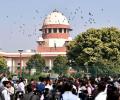
In a jolt to the Centre, the Supreme Court on Thursday stayed the notification setting up a fact-checking unit under the Press Information Bureau (PIB) to identify fake news about the Union government.

The 56-year-old has about 30 employees on the job who work to mass produce face masks, gloves and gowns for frontline workers. They manufacture about 1000 PPE gowns, which are supplied to his friend's company for wholesale distribution.

Aditi Swami became the youngest-ever senior world champion at 17 years when she secured India's first-ever individual title at the World Archery Championships with women's compound gold.

"I did not say that," Chandurkar told this correspondent during a brief conversation. "What I said was those supporting communal parties should be stripped of national awards given to them by the government. I respect Lata Mangeshkar."

India has been battling a second wave of the COVID-19 pandemic that has forced many countries to ban travellers from India.

The National Investigation Agency on Wednesday claimed before the Bombay high court that former police officer Pradeep Sharma was the main conspirator in the "cold-blooded murder" of Thane businessman Mansukh Hiran, who was considered a weak link in the "larger conspiracy of terrorising" the family of industrialist Mukesh Ambani.

The 47-year-old has developed swelling in both his legs after his injections could not be administered due to the ongoing nationwide lockdown to contain the COVID-19 pandemic.

One day, Jadhav's sports teacher at his Zilla Parishad School in Sarade, Vikas Bhujbal, found some promise in him and asked him to compete in athletics to earn a better living.
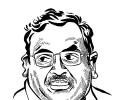
'Saibaba has 19 ailments, including severe heart and kidney problems.' 'Even healthy persons find their systems failing after Covid.' 'What will happen to someone like Saibaba?', Professor G N Saibaba's wife asks Jyoti Punwani.

All India Congress Committee General Secretary Sanjay Nirupam on Saturday threatened to immolate himself if his demand for reduction in power tariff in Mumbai was not accepted.

After political rivals, the Narendra Modi government has come under fire from Shiv Sena over the rail fare hike with its oldest ally terming the move as akin to the common man being run over by train.

The Bombay high court on Thursday granted four weeks time to the Union government to respond to a petition seeking amendments in law to enhance punishment for offenders in drunk driving cases and more compensation to the accident victims.

'There is one weapon in the government's armoury which impacts the independence of the judiciary, and which has not been affected by the collegium system.' 'It is post-retirement employment with the government. 'This is because some judges -- but not all -- are offered post-retirement employment by the government, and it has often been feared that judges close to retirement might decide cases so as to please the government in order to get a favourable post-retirement position,' says Abhinav Chandrachud.
