
New Delhi experienced its worst air quality in 287 days on Tuesday, with the Air Quality Index (AQI) reaching 350 and several monitoring stations reporting 'severe' pollution levels. PM2.5 was identified as the dominant pollutant, posing significant health risks. The city has been placed under Stage II of the Graded Response Action Plan, with stubble burning and transport emissions being major contributors to the deteriorating air quality.

A report by Envirocatalysts reveals that Delhi was the most polluted among 24 state and Union Territory capitals between Diwali 2025 and Diwali 2026, with annual average PM2.5 concentrations more than double the national standard. The analysis highlights that Diwali-day pollution contributes minimally to the overall annual exposure, with other sources like vehicles, dust, and industrial emissions being the primary culprits. The report calls for year-round clean-air action plans.

Delhi's air quality deteriorated to the 'Poor' category on October 22, 2026, with the Air Quality Index (AQI) recorded at 237-238 by the Central Pollution Control Board. A smog layer covered landmarks including India Gate, Kartavya Path, Akshardham Temple and Anand Vihar, while joggers carried on their morning routine and vehicles moved through the haze. Old Delhi's Jama Masjid also appeared hazy a day earlier.

As Delhi's winter wedding season coincides with severe air pollution, families and wedding planners are incorporating new measures like air purifiers, indoor venues, and even matching face masks into their celebrations to protect guests from poor air quality. This shift impacts venue choices, catering, and overall planning, with hotels being better equipped than farmhouses to manage air quality.

A new analysis by the Centre for Science and Environment (CSE) reveals that Delhi-NCR's early-winter air pollution has reached a three-year high in the week preceding Diwali. The average PM2.5 concentration significantly increased compared to previous years, driven primarily by vehicular emissions and regional pollution inflow. The report highlights the failure of year-round pollution control measures, with Diwali firecrackers exacerbating an already deteriorating situation, and notes the emergence of new pollution hotspots and the ineffectiveness of emergency traffic restrictions.

Delhi's air quality slipped into the 'very poor' category for the first time this season on Monday, with an AQI of 312. This triggers Stage 2 of the Graded Response Action Plan (GRAP), leading to stricter measures to control pollution. Minimum temperatures were also noted.

Delhi experienced its most polluted Diwali in five years with an average Air Quality Index (AQI) of 376, and the day after the festival saw only a marginal improvement, remaining in the 'very poor' category at 371, accompanied by a thick blanket of smog and fog.

Delhi's air quality plunged into the 'severe' category for the first time this season on Friday morning, with the average Air Quality Index (AQI) hitting 403. Several monitoring stations reported even higher levels, prompting the invocation of Stage III of the Graded Response Action Plan (GRAP) to curb pollution.

Delhi's air quality slightly deteriorated on Wednesday, moving into the 'poor' category with an AQI of 232, and is forecast to worsen to 'very poor' by Friday due to unfavourable meteorological conditions. PM2.5 remains the dominant pollutant, with vehicular emissions and biomass burning identified as major contributors. The city also experienced its coldest morning of the season.

Vedanta Ltd's aluminium plant in Jharsuguda, Odisha, is under regulatory scrutiny by the state's Water Resources department regarding its water sources and drawal history. This follows a complaint alleging unauthorised groundwater extraction and previous financial demands for illegal water use, with the National Green Tribunal also seeking responses on environmental concerns.

The Supreme Court has permitted the bursting of green firecrackers in Delhi-NCR for Diwali on November 7 and 8, 2026, with specific time restrictions. The court emphasized that the right to engage in practices with religious colour is qualified and cannot override constitutional restrictions on environmental pollution. It also issued detailed guidelines for manufacturers, traders, and authorities to ensure compliance and monitor air quality.

Delhi experienced its most polluted Diwali in five years, but the official air quality figures are under scrutiny. Several monitoring stations reportedly went offline during the peak firecracker period on Sunday night, leading to discrepancies between government and private agency data. Experts and opposition leaders have raised concerns about the reliability of the AQI tracking, with allegations of "data fraud" and calls for greater transparency and accountability.

The Supreme Court has expressed serious concerns over the non-implementation of Solid Waste Management rules, stating that despite India's economic growth, its sanitation performance remains poor. The court highlighted the need for unwavering implementation by authorities and adherence by citizens, noting that existing laws and rules are falling short of their objectives. It has tasked district collectors with reinventing strategies and assisting in the implementation of SWM rules, while also pointing out deficiencies in addressing unorganised sectors and leveraging public-private partnerships.
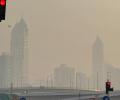
The Maharashtra Pollution Control Board (MPCB) has ordered the shutdown of 19 ready mix concrete plants in the Mumbai Metropolitan Region for violating environmental guidelines and contributing to deteriorating air quality levels.

Delhi is experiencing heavy rainfall and strong winds, prompting the India Meteorological Department (IMD) to issue a red alert, which is impacting ongoing preparations for the crucial BRICS Summit.

Heavy rainfall in Delhi led to widespread waterlogging, traffic disruptions, and a significant drop in minimum temperatures across the city. Key areas like Lutyens' Delhi, Supreme Court, and AIIMS were affected, while the air quality remained satisfactory.

Delhi's air quality deteriorated to the 'severe' category, prompting the implementation of Stage-IV GRAP measures and hybrid classes for schools.

Chief Justice of India considers shifting Supreme Court hearings to virtual mode due to severe air pollution in Delhi after experiencing its effects firsthand.
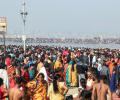
The National Green Tribunal on Wednesday slammed the Uttar Pradesh Pollution Control Board, asking whether it disputed the Central Pollution Control Board's finding on high levels of faecal coliform being found in the water at various locations in Prayagraj during the ongoing Mahakumbh.

Delhi's air quality deteriorates to 'very poor' levels, sparking a blame game between AAP and BJP over the causes and responsibility for the pollution.
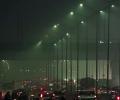
Delhi government mandates 50% work from home for offices and private establishments under GRAP stage three due to severe air pollution. Essential services are exempted.

Haryana is institutionalising drone technology as a key governance tool, deploying AI-powered surveillance and high-resolution geospatial mapping. This initiative aims to detect illegal constructions, monitor mining activities, map civic infrastructure, and track pollution across the state. The Chief Secretary reviewed progress on various projects, including an AI-powered Change Detection Application and digital mapping of municipal assets, highlighting the state's commitment to evidence-based governance and improved public service delivery.
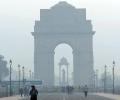
'Most pollution boards across the country have unused funds. There is practically no reason why pollution should not be a political priority.'

Uttar Pradesh Chief Minister Yogi Adityanath asserted that Uttar Pradesh enjoys a clean environment, unlike Delhi, which he likened to a 'gas chamber' due to its pollution levels.

Uttar Pradesh Chief Minister Yogi Adityanath on Wednesday dismissed concerns regarding faecal contamination in the waters at Triveni Sangam, stating that continuous monitoring and purification processes ensure its quality.

The Anti-Corruption Branch has sought judicial custody for former Delhi minister Satyendar Jain, ex-Delhi Jal Board CEO Udit Prakash Rai, and three others in a corruption case related to alleged irregularities in the tendering process for Delhi Jal Board's sewage treatment plant projects. The accused's counsels have challenged the arrests, with Jain's lawyer planning a bail plea.
Of 817 grossly polluting factories, 62 have not installed anti-pollution devices and in 84 units, the installed devices are non-functional.

The Indian government has announced staggered working hours for its employees in Delhi due to the severe air pollution in the city. The move comes after a week of 'severe' pollution levels, which have slightly improved but are still in the 'very poor' zone. The order also encourages employees to pool vehicles and use public transport to minimize vehicular pollution.

The Supreme Court issued interim directions permitting the sale and bursting of green firecrackers in Delhi and the National Capital Region (NCR) during Diwali, outlining specific rules and restrictions.

The waste disposal at the plant in Dhar district's Pithampur industrial area was undertaken following directives of the Madhya Pradesh high court.

The clinics are expected to operate for at least two hours daily, particularly between September and March -- the period when air pollution levels are typically high.
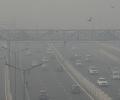
Delhiites continued to breathe toxic air on Tuesday as the air quality edged closer to the severe zone in some areas.

On the weather front, dense fog led to a sharp drop in visibility, with Palam recording 50 metres visibility under dense fog conditions with west-southwesterly winds at 5 kmph at 8 am, while Safdarjung reported 100 metres visibility with calm winds at the same time.

The Environment and Forest Ministry has decided to seek bank guarantee for revocation of its orders for closure of industrial units and projects on ground of causing environment pollution.
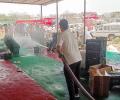
An explosion at a firecracker factory in Madhya Pradesh's Dewas district resulted in multiple fatalities and injuries, prompting investigations and government action.

With the Air Quality Index remaining in the severe category, the government has directed schools to switch to online mode for these grades until further notice.

The Supreme Court of India has directed the NHAI and MCD to consider relocating or temporarily closing toll plazas at Delhi's borders to alleviate traffic congestion and reduce air pollution. The court also addressed school closures and financial aid for construction workers affected by pollution control measures.

The Supreme Court on Wednesday asked the Commission for Air Quality Management (CAQM) to consider directing schools in Delhi-NCR to postpone open air sports competitions planned in November and December to 'safer months' keeping in mind air pollution levels.
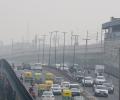
'The pollution has increased. We are facing breathing problems and irritation in the eyes'
The survey was conducted in 88 major industrial clusters in the country.
