
Union Home Minister Amit Shah addressed rallies in West Bengal, promising to address infiltration issues, resolve the Gorkha issue, and tackle corruption if the BJP wins the upcoming elections.

'If the Opposition associates itself too much with the minorities, then it becomes easy for the BJP to get Hindu consolidation votes.'

What lessons opposition parties need to learn post defeat of Mamata Banerjee in West Bengal elections? The election saw spectacular victor of BJP which rose from 3 seats in 2016 to 206 seats in 2026 assembly elections.
A political controversy has erupted in West Bengal following the emergence of an alleged video purportedly showing Humayun Kabir claiming links with senior BJP leaders and efforts to defeat Chief Minister Mamata Banerjee in the upcoming Assembly elections.

The high-pitched campaign for the first phase of West Bengal assembly elections concluded with the BJP and TMC focusing on electoral rolls and dietary habits, while making promises to voters. Voting is scheduled in 152 constituencies across north Bengal and southern districts, with over 3.60 crore electors eligible to vote. A record number of Central paramilitary forces have been deployed, and several districts have been identified as highly sensitive.
The Trinamool Congress (TMC) has shared a purported video of Humayun Kabir, alleging a BJP conspiracy to influence the West Bengal elections. The video claims Kabir discussed strategies to divert minority votes and received funds for the plan. The BJP has denied the allegations, while Kabir claims the video is AI-generated and threatens legal action.

'Narendra Modi -- a man with deep and vital experience of Indian politics -- has seen the BJP lose many elections between 1975 and 2015, and with every defeat, he learned lessons that made sure he would never allow his party to be defeated so easily again.'
A political controversy has erupted in West Bengal following the emergence of an alleged video of Humayun Kabir, purportedly claiming links with senior BJP leaders and efforts to defeat Chief Minister Mamata Banerjee in the upcoming Assembly elections.
Union Home Minister Amit Shah addressed poll rallies in West Bengal, promising to tackle corruption and illegal immigration if the BJP comes to power. He criticised the current TMC government and outlined the BJP's plans for the state.

Union Home Minister Amit Shah launched the BJP's manifesto for West Bengal, promising a Uniform Civil Code, a Bengali chief minister, and improved governance.

The alliance between Aam Janata Unnayan Party (AJUP) and AIMIM in West Bengal has collapsed following allegations of a multi-crore deal with the BJP, leading to AIMIM's withdrawal and both parties planning to contest the elections independently.
Suspended TMC MLA Humayun Kabir, known for building a mosque modelled on the Babri Masjid, has been granted Y-Plus category security cover by the central government following perceived threats to his life.
Officials reveal details of a foiled Jaish-e-Mohammed terror plot involving a doctor who planned a bomb blast near the Red Fort, timed around the Babri Masjid demolition anniversary. Arrests and investigations uncovered the interstate network.
A 20-year-old man who was kidnapped in Jhansi has been rescued, and four suspects, including two juveniles, have been arrested following a police encounter. The kidnappers had demanded a ransom of 2 lakh for the victim's release.
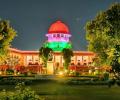
The Supreme Court has agreed to list for final hearing the pleas challenging the validity of certain provisions of the Places of Worship (Special Provisions) Act, 1991.

'She was not a yes person. She would tell the truth and her feelings to Indira Gandhi, and Indira Gandhi would value her opinion. The same was the case with Rajiv Gandhi who would value her opinion.'

O'Romeo is an ordinary plot about a man's obsession, but Vishal Bhardwaj lays it out like a lavish spread, with stylish and very violent action set pieces, effectively used music (Bhardwaj composes Gulzar's delectable lyrics), and a romance that has moments that are tender as well as bitter, observes Deepa Gahlot.

Humayun Kabir, recently suspended from the TMC, has launched a new political party, Janata Unnayan Party, and announced candidates for the 2026 assembly elections.

'Mark had such a profound understanding of India, which was, of course, the land of his birth as well as of his death... He loved India, and lived two-thirds of his life here.'

Governor C V Ananda Bose, meanwhile, urged citizens not to be swayed by "provocative statements and rumours" and asked the state to ensure there was 'no disturbance anywhere'.
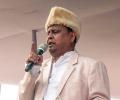
Suspended Trinamool Congress MLA Humayun Kabir asserts he will be a 'kingmaker' after the 2026 West Bengal assembly elections, claiming no government can be formed without his support. He plans to announce a new political party on December 22 and contest in 135 seats.
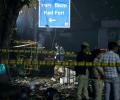
Investigations into the 'white collar' terror module busted after the recent car bombing near Red Fort showed that the mastermind Dr Umar-un Nabi had attempted to recruit a second suicide bomber but could not succeed as he backed out of the terror plot citing the need to help his family during the apple harvest, officials said on Sunday.
A court in Mumbai acquitted a 53-year-old man in a 1993 riots case, citing the prosecution's failure to prove his participation in the violence that followed the demolition of the Babri Masjid.

Mark Tully, the renowned journalist, author, and Indophile, has passed away at the age of 90. He spent a lifetime in India as a journalist, mingling with its people and telling their stories.
Humayun Kabir, a former TMC minister, has been suspended from the party after announcing plans to lay the foundation of a "Babri Masjid-style" mosque on December 6. This move has sparked controversy and raised concerns about communal tensions in West Bengal.

Ram Vilas Vedanti, a prominent leader in the Ram Janmabhoomi movement and former Bharatiya Janata Party MP, died of a heart attack at the age of 67 in Rewa, Madhya Pradesh. His last rites will be performed in Ayodhya.

The Samajwadi Party announced on Saturday that it would walk out of the opposition Maha Vikas Aghadi after Shiv Sena-Uddhav Balasaheb Thackeray chief Uddhav Thackeray's close aide hailed the demolition of Babri mosque and a related newspaper advertisement.
10 things you must know about the most famous foreign correspondent in India who made Bharat his home.
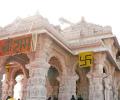
The BJP's Murshidabad unit in West Bengal announced plans to construct a Ram temple in Berhampore, days after TMC MLA Humayun Kabir proposed to set up a mosque modeled after the Babri Masjid in Beldanga. The temple construction, estimated to cost Rs 10 crore, is expected to begin on January 22, 2025, one year after the inauguration of the Ram temple in Ayodhya. Kabir's announcement sparked political controversy, with opposition parties accusing him of attempting to polarise communities for political gain. The BJP's counterproposal is seen as a strategic move to strengthen its presence among the Hindu community in Murshidabad.
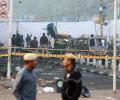
The National Medical Commission has removed several doctors from the National Medical Register following their implication in the Delhi blast investigation under the Unlawful Activities (Prevention) Act.
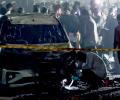
Data extracted from the mobile phone of the Red Fort suicide bomber, Dr. Umar-un-Nabi, reveals a video justifying the attack as a 'martyrdom operation'. The evidence was unearthed following the interrogation of Umar's brother, Zahoor Illahi.
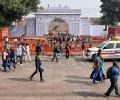
The sophisticated 'white-collar' terror module, spearheaded by a group of doctors recently busted by Jammu and Kashmir Police, had been actively scouting for a suicide bomber since last year, with key planner Dr Umar Nabi pushing the agenda, officials said on Sunday.
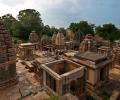
'If at all human beings require a religion, the future religion will be Hinduism.'

Amir Rashid Ali, a key accused in the Red Fort area car bomb blast case, has been remanded in 10 days' NIA custody. The agency seeks to unravel the conspiracy behind the inter-state "white collar" terror module.
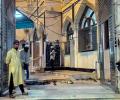
The Indian government has officially classified the car explosion outside the Red Fort as a terrorist incident, vowing to bring the perpetrators to justice swiftly. The Union Cabinet, led by Prime Minister Narendra Modi, has reaffirmed its zero-tolerance policy towards terrorism and expressed condolences for the victims.

A body representing the 'Khadims' of the Ajmer dargah has condemned a plea in a local court that seeks to declare the shrine of Khawaja Gharib Nawaz as a temple, saying right-wing forces were trying to "isolate" Muslims and "disrupt" communal harmony in the country.
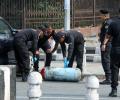
Indian authorities have uncovered a Jaish-e-Mohammad (JeM) terror plot involving doctors from south Kashmir, a Faridabad university, the recovery of 2,900 kg of explosives, and a car bomb near the Red Fort. Eight people have been arrested in connection with the plot.
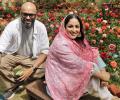
'I wanted to go for the heart, and at the same time, open the audience's mind.'
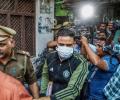
Radical Islamist networks are deliberately targeting Muslim youths embedded within the country's professional and academic ecosystems, leveraging their skills, mobility, and digital reach to quietly strengthen operational capabilities. This trend highlights a dangerous evolution in terror recruitment -- one that exploits ideological faultlines, online echo chambers and transnational radical Islamist influences to attract individuals who outwardly embody India's modern and aspirational narrative, points out Dr Kanchan Lakshman.
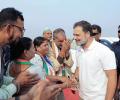
A seasoned politician and two-term Member of Parliament, Dr Shakeel Ahmad, who has served as a Union minister and senior Congress leader, resigned from the Congress party, marking the end of his decades-long association with an organisation that his family has been part of for three generations. In an interview with Syed Firdaus Ashraf/Rediff he speaks why he quit the party.
