'Only because of the absence of a dedication record in writing, how can such properties be treated as located on misappropriated government land?'

He also said that now everyone should listen to RSS chief Mohan Bhagwat's advice to shun habit of fighting on small disputes.

A bench comprising Chief Justice D Y Chandrachud and Justices J B Pardiwala and Manoj Misra asked the ASI not to take recourse to any invasive act during the survey.

A timeline of key events that shaped the RSS' journey, including the various highs and lows, as the organization approaches its 100th anniversary.

The deployment came on the day of the consecration of the new idol of Ram Lalla at the Ram temple in Ayodhya.
The prosecution had opposed the bail pleas saying it was not a case of spontaneous riots but a case where riots were "planned well in advance" with a "sinister motive" and "well-thought-out conspiracy".

From a modest start with baithaks of a handful of swayamsevaks in a small town in Nagpur, the RSS, which completes 100 years of its foundation on Thursday, has come a long way to become the world's biggest voluntary organisation with a pan-India presence, shaping the country's political and social discourse.

The invitation was delivered to him at his house located in Kotia Panjitola near the Ram Path,

Dropping references to the demolition of Babri Masjid in Ayodhya, the killing of Muslims in Gujarat riots and Hindutva, and tweaking the reference to Manipur's merger with India are among the latest set of revisions made public by the National Council of Educational Research and Training (NCERT) in its textbooks.

'Gandhi had given the call 'Do or Die'. And with all the leaders arrested, you had to be your own leader.'
A revealing excerpt from Mani Shankar Aiyar's fascinating new book, The Rajiv I Knew.

'Vijaya Raje Scindia had assured the prime minister that nothing would happen to the Babri Masjid'

Justice Agarwal retired from the high court on April 23, 2020.
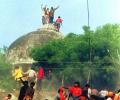
The CBI court had on September 30, 2020 acquitted the accused including former deputy prime minister L K Advani in the case after which two Ayodhya residents -- Haji Mahboob and Syed Akhlaq -- moved a revision petition before the Allahabad high court.

The former CM said his party's Hindutva is "nationalism" and the Bharatiya Janata Party should explain what is its Hindutva.

Prime Minister Narendra Modi on Tuesday said he wants the Bharatiya Janata Party-led National Democratic Alliance to win 400 seats in the ongoing Lok Sabha polls to ensure the Congress does not bring back Article 370 in Kashmir and put a 'Babri lock' on the Ram temple in Ayodhya.
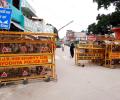
Unlike in the past, the Vishwa Hindu Parishad is not celebrating any "Shaurya Diwas" (Bravery Day) on Tuesday and there are no plans by the Muslim community to observe a "Black Day".
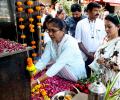
The 1993 Mumbai bombings were a series of 12 coordinated explosions across the city on March 12, 1993, killing 257 people and injuring hundreds.
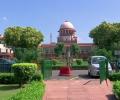
While closing the contempt proceedings, the bench observed that the matter ought to have come up for hearing earlier.
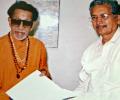
'In Independent India's politics you will not find any leader of a political party who has not contested elections or not held a powerful post.' 'It was only Balasaheb who never contested elections or held a post.' On the occasion of Balasaheb Thackeray's 99th birth anniversary, close aide Subhash Desai recalls vignettes about the Shiv Sena founder.
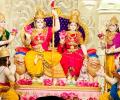
According to Hindu scriptures, Ganga Dussehra marks the day the holy river Ganga descended to Earth from Lord Shiva's locks, moved by King Bhagirath's penance. The day is considered highly auspicious and symbolises virtue, penance, and the collective well-being of humanity.

Das served as the head priest since he was 20 years old, including during the demolition of the Babri Masjid on December 6, 1992.

Chandrakant Patil also took a swipe at Uddhav for accusing Eknath Shinde of stealing the legacy of Bal Thackeray.
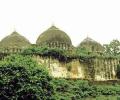
'Whenever the Government of India throws the debris, they will not take such care of the mosque's debris and Muslims may object to such a move at that time.'
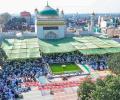
The law prohibits conversion of any place of worship and provides for the maintenance of the religious character of any place of worship as it existed on August 15, 1947.

All 32 accused in the 28-year-old Babri demolition case, including BJP's founder-members LK Advani and Murli Manohar Joshi, have been acquitted by a special CBI court in Lucknow.

'We were expecting at least they would be held guilty, but instead they have gone scot-free'

Can ordinary citizens counter this backward march? Can peace activists ensure that the two communities retain their bonds? Do they have a choice, asks Jyoti Punwani.

The Supreme Court of India has extended its stay on a court-monitored survey of the Shahi Idgah Mosque complex in Mathura, which is located adjacent to the Krishna Janmabhoomi temple. The court deferred the hearing on a plea against the survey to April 1, while the interim order staying the survey will continue to operate. The Hindu side claims that the mosque complex holds signs of a temple that once existed at the site, while the Muslim side contends that the lawsuits filed by the Hindu litigants violate the Places of Worship (Special Provisions) Act of 1991.

A Lucknow bench of justices Ramesh Sinha and Saroj Yadav passed the order on the appeal by two Ayodhya residents -- Haji Mahmood Ahmad and Syed Akhlaq Ahmad.

Patil revealed that CM Shinde called him on Tuesday morning after his remarks caused a row and asked him to clarify.

Asserting that he prays regularly, the CJI said, "Believe me, if you have faith, God will always find a way."
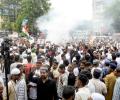
Congress MP Mohammad Jawed and AIMIM president Asaduddin Owaisi have challenged the validity of the Waqf (Amendment) Bill, 2025 in the Supreme Court, arguing that it violates constitutional provisions. The petitions claim the bill imposes arbitrary restrictions on Waqf properties and their management, undermining the religious autonomy of the Muslim community. They also allege that the bill discriminates against Muslims by imposing restrictions not present in the governance of other religious endowments. The bill was passed in the Rajya Sabha and Lok Sabha, with the petitioners arguing that it introduces limitations on the creation of Waqfs based on the duration of one's religious practice, mandates inclusion of non-Muslim members in Waqf administrative bodies, and shifts key administrative functions to government officials, thereby diluting the autonomy of Waqf management.
The verdict by a special court in the Babri Masjid demolition case comes 28 years after kar sevaks razed the 16th century mosque and almost a year after the Supreme Court settled the land case in favour of a Ram temple at the disputed Ayodhya site.

'Rather than assuaging the feelings of the Hindus accommodated in schools and hospitals, she calls a meeting of imams and tries to assuage them.'
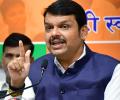
Addressing BJP's rally in Mumbai, Fadnavis also claimed that he was in Badaun jail for 18 days while doing 'kar seva' for the Ram temple construction purpose.

'The outrage that followed the destruction of the Babri Masjid was an inability to see the event for what it was: The rectification of a grave historical wrong, the restitution of a hurt of a people and the countering of moral injustice,' argues Vivek Gumaste.

Ayodhya Nagar Nigam corporator Haji Asad hoped that Kashi and Mathura issues will not be raked up after the CBI court ruling.
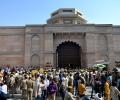
The Supreme Court of India is scheduled to hear a batch of petitions challenging the validity of certain provisions of the Places of Worship (Special Provisions) Act, 1991, which prohibits lawsuits to reclaim a place of worship or change its character from what prevailed on August 15, 1947. The pleas, including one filed by Ashwini Upadhyay, argue that these provisions violate the right to judicial remedy and create an arbitrary cut-off date. The matter will be heard in the backdrop of several ongoing cases related to places of worship, including the Gyanvapi Mosque in Varanasi and the Shahi Idgah Mosque in Mathura. The Muslim side has cited the 1991 law to argue that such suits are not maintainable. The Supreme Court had previously sought the Centre's response to Upadhyay's petition, which alleged that the law creates an "arbitrary and irrational retrospective cut-off date" for maintaining the character of places of worship.
Owaisi said the CBI should appeal against the judgment "to protect its independence."
