
Researchers have discovered a method to externally manipulate a cell's automatic waste clearance process, known as autophagy. This breakthrough, involving the protein LC3, could offer new therapeutic targets for diseases like cancer and Parkinson's, where cellular cleansing mechanisms are often impaired.

The National Dope Testing Laboratory (NDTL) and Shree Guru Govind Singh Tricentenary (SGT) University have signed an MoU to promote clean sport through joint research, knowledge exchange, and capacity building. This partnership aims to advance scientific research in anti-doping, forensic analysis, and healthcare diagnostics, while also shaping the next generation of professionals in these fields.
Banaras Hindu University (BHU) has received approximately Rs 15 crore in funding from the Indian Council of Medical Research (ICMR) for six biomedical research projects. These projects aim to address critical national health priorities, including cancer detection, antimicrobial resistance, and pediatric septic shock, fostering advanced research and improving patient care.
IIT Bhubaneswar and IIT (Indian School of Mines) Dhanbad have signed a Memorandum of Understanding to enhance research collaboration and academic interactions, particularly in semiconductor and basic sciences. The agreement facilitates joint research projects, doctoral student supervision, faculty and student exchanges, and shared experimental resources, aiming to advance knowledge and create lasting impact.

OpenAI, Anthropic, and Google have unveiled new AI models with enhanced capabilities, including advanced cybersecurity and coding. OpenAI's Astra model achieved a 'Critical' cybersecurity tier, but its novel architecture, using "recurrent depth," has sparked significant safety concerns among researchers who fear it makes monitoring the model's reasoning more difficult. Anthropic and Google also introduced new models and features, further advancing AI technology while the debate over responsible development intensifies.
OpenAI, Anthropic, and Google have introduced new AI models with enhanced capabilities. OpenAI's Astra model, achieving a 'Critical' cybersecurity tier, has ignited a debate among researchers due to its "recurrent depth" architecture, which some fear makes its reasoning harder to monitor. Anthropic and Google also released new models, focusing on coding, scientific research, and cybersecurity, alongside new image and video AI tools.

NITI Aayog member Gobardhan Das asserted that India possessed a rich scientific tradition that suffered setbacks during centuries of foreign domination, with its repository of knowledge systematically destroyed by invaders.

Over 2,000 pulmonologists and healthcare professionals from India and abroad will gather in Jaipur for NAPCON 2026 to discuss the increasing burden of pulmonary diseases and the critical impact of air pollution on lung health. The conference, organised by the National College of Chest Physicians, India, and the Indian Chest Society, will feature discussions on diagnosis, management, and prevention of conditions like COPD and asthma, alongside advances in interventional pulmonology.
Researchers from IIT Guwahati and BHU have devised an eco-friendly biological method to treat textile wastewater, specifically targeting toxic azo dyes. Their novel bacterium, 'Brevundimonas sp. AJZ05', effectively degrades 98.50 per cent of Direct Blue-6 dye, producing non-toxic byproducts, offering a sustainable alternative to conventional chemical treatments.
Graphite electrode maker TACC has signed an initial agreement with the Institute for Functional Intelligent Materials to collaborate in the fields of advanced materials science, nanotechnology, and related disciplines.
The University of Melbourne and the Indian Institute of Science Education and Research (IISER) Tirupati have launched a new 2+2 Bachelor of Science Integrated (Honours) dual degree. This programme offers Indian students a globally connected, research-intensive science education, allowing them to study two years at IISER-Tirupati and two years in Melbourne, graduating with two honours degrees.
Veteran physicist Professor Umesh V Waghmare has been appointed as the Secretary of the Department of Science and Technology. Currently a professor at JNCASR, Bengaluru, his appointment was approved by the Appointments Committee of the Cabinet. He succeeds Professor Abhay Karandikar and brings a distinguished academic background from IIT-Bombay, Yale, and Harvard to the role.
Leading global technology companies OpenAI, Anthropic, and Google have introduced new AI models with enhanced capabilities, including advanced cybersecurity and coding. However, these releases have ignited significant debate among researchers regarding the transparency and monitorability of AI reasoning, particularly concerning OpenAI's Astra model and its "recurrent depth" architecture.

Atomic Energy Commission chairman Ajit Kumar Mohanty stated that India is on the verge of a significant technological transformation, driven by advancements in AI, quantum technologies, and other fields. Speaking at BIT Mesra's convocation, he emphasised the need for strong indigenous capabilities, skilled professionals, and interdisciplinary collaboration to achieve a developed India. Other speakers, including BIT Mesra's Chancellor and Vice Chancellor, echoed the importance of continuous learning and contributing to national progress.
An international research team has discovered a new species of subterranean earthworm eel, named Gangaichthys indonepalicus, in the Indo-Gangetic Plain of Bihar. This small, colourless fish, adapted to life in dark underground aquifers, is the first stygobitic fish recorded from the Gangetic Basin. The discovery followed a TikTok video and involved challenging manual pumping of borewell water to secure samples for scientific analysis.
Human skeletal remains from the ancient Indus-Saraswati Civilisation site of Rakhigarhi in Haryana have been formally transferred by the Archaeological Survey of India (ASI) to the Anthropological Survey of India (AnSI) for detailed scientific investigation. This transfer, under a new MoU, aims to advance multidisciplinary research into one of the largest known settlements of the Indus-Saraswati Civilisation, with archaeologists having uncovered eight burials, including three complete skeletons, during recent excavations.

The Delhi High Court has dismissed a lawsuit by news agency ANI against OpenAI, ruling that ChatGPT's use of copyrighted material for training large language models (LLMs) constitutes fair dealing under the Copyrights Act. The court emphasised that restraining AI development would be detrimental to India's growth in the field and public interest.

Indian-origin NASA astronaut Anil Menon, along with two Russian cosmonauts, has embarked on an eight-month mission to the International Space Station (ISS) aboard a Soyuz MS-29 spacecraft. This marks Menon's first spaceflight, where he will conduct scientific research and technology demonstrations focused on human space exploration, microgravity effects, and in-space production of advanced materials.
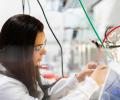
CSIR Director General N Kalaiselvi emphasised the importance of research and applied sciences in developing sustainable solutions for India's energy security and environmental challenges at an international conference on Sustainability Through Fundamental and Applied Sciences (STFAS), 2026.
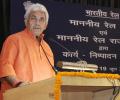
Jammu and Kashmir LG Manoj Sinha emphasised the critical need to translate scientific immunological knowledge into public health action. Speaking at the IMMUNOCON-2026 conference, he highlighted immunology's evolving role in healthcare, stressing continuous innovation and collaboration in areas like immuno-AI fusion, climate immunity, and translational medicine to combat infectious diseases and prepare for future global health threats.

Climate scientist Tapio Schneider advocates for expanding early warning systems beyond rainfall events to include other disaster triggers like flash floods, citing the recent Nepal floods. He highlights the inevitability of 1.5 degrees Celsius global warming and discusses the role of advanced climate modelling and AI in improving predictions and research, particularly for regions like India.
West Bengal has launched an Emerging Quantum and Semiconductor Technologies (EQST) section at CSIR-CGCRI to attract investments and position the state as a hub for next-generation technology. Minister Kalyan Chakraborti highlighted India's need to invest in these crucial sectors and outlined the state's plans to collaborate with institutions and leverage budget initiatives to foster research and start-ups.
Technopark-based space-tech startup HEX20 has been selected by the UAE Space Agency to develop a spacecraft for an asteroid probe, marking the first time an Indian private company has been chosen for a deep-space mission by the Gulf nation. HEX20 is contributing its expertise in developing the spacecraft bus and software for the Emirates Mission to the Asteroid Belt, which is scheduled for launch in March 2028 to study asteroid 269 Justitia.
A new study by the Council of Scientific and Industrial Research (CSIR) has developed an integrated land-use regression (iLUR) model to map environmental noise across Delhi. This innovative approach combines geographical and real-time traffic data, including vehicle counts, speeds, and honking, to provide a more accurate and cost-effective understanding of noise distribution in the city's complex urban landscape. The model aims to help authorities plan targeted measures for noise control.
Indian researchers from ICMR-National Institute for Research on Women's Health and IIT Bombay have developed an indigenous "placenta-on-chip" platform. This microphysiological system mimics the human placental barrier, reproducing essential functions like hormone production and nutrient transfer. It offers a simple, scalable tool for studying placental biology, pregnancy complications, and drug effects, aiming to reduce reliance on animal experimentation.
The Centre for Studies of International Relations (CSIR) has established the International Centre for Civilizational Studies "Manas and Mahabharata" in Bishkek, Kyrgyzstan, in collaboration with the Manas National Academy. The inauguration also saw the release of the first Hindi translation of the Kyrgyz epic "Manas," aiming to foster scientific, educational, and cultural cooperation between India and Kyrgyzstan.
The Environment Ministry has designated the Natural History Museum (NHM) in Mizoram as India's 21st designated repository, significantly enhancing the country's biodiversity conservation and scientific infrastructure, particularly within the Indo-Burma Biodiversity Hotspot.

Maharashtra BJP minister Chandrakant Patil claimed Delhi Police are collecting fingerprints from stones used in the CJP agitation and linking them to Aadhaar numbers for protester identification and background checks. This statement, made in Kolhapur, drew sharp criticism and mockery from Shiv Sena (UBT) leader Sanjay Raut, who suggested Patil be nominated for a Nobel Prize for his "scientific innovation." The CJP protest at Jantar Mantar involved clashes and stone-pelting over examination paper leaks.

Nasa astronaut Anil Menon, along with Russian cosmonauts Pyotr Dubrov and Anna Kikina, has embarked on an eight-month mission to the International Space Station (ISS) aboard a Soyuz MS-29 spacecraft, lifting off from Kazakhstan.
Leading technology companies OpenAI, Anthropic, and Google have announced new AI models with advanced capabilities, including OpenAI's Astra reaching a "Critical" cybersecurity tier. However, these advancements have ignited a significant debate among safety researchers and netizens, particularly concerning the transparency and monitorability of OpenAI's novel "recurrent depth" architecture.

Quantum computing is set to redefine artificial intelligence, cybersecurity, and scientific discovery, promising unprecedented speeds and capabilities while also necessitating urgent development of quantum-safe security measures and strategic enterprise readiness, says Sunil Varghese.

Bringing international recognition to Assam, young scientist Dr Shekhar Suman Bora has been honoured with the prestigious 'University Innovator Award' at the 2026 Texas Innovation Conference & Awards held in the United States.

There is no answer to the question of how IN-SPACe invited EOIs for ISRO's mature rockets and whether it was based on any government policy decision.
Researchers at BRIC-RGCB in Thiruvananthapuram have developed a novel nanopore-based sensing technology. This innovation allows for the early and highly sensitive detection of biomarkers associated with neurodegenerative diseases like Parkinson's and ALS, addressing a critical challenge in current diagnostic methods. The technology, published in Nature Nanotechnology, uses self-assembling dual-diameter nanopore sensors to identify disease-specific biomarkers even at low concentrations.
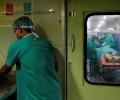
Prof Ajit Kumar Chaturvedi, Vice-Chancellor of Banaras Hindu University, highlighted Artificial Intelligence's transformative potential in healthcare, emphasising its role in augmenting doctors' capabilities and enhancing efficiency. Speaking at PGIMER's Foundation Day, he stressed the need for India to develop AI solutions tailored to its unique healthcare realities, moving beyond being a mere consumer of Western-trained systems. PGIMER Director Vivek Lal also detailed the institute's expansion and commitment to affordable healthcare.

Zoho cofounder Sridhar Vembu dismisses exaggerated fears about AI's catastrophic potential and global development pauses. He advocates for India to adopt an independent AI strategy, fostering partnerships while avoiding entanglement in US-China tech rivalry. Vembu stresses extensive investment in foundational R&D across sectors, distinguishing it from costly frontier AI model development. He also highlights concerns about AI's impact on human judgment, skill erosion, and job disruption, particularly in software engineering, while remaining optimistic about new economic opportunities.
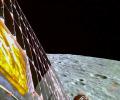
NASA has invited ISRO to join its ambitious Moon Base mission to establish a permanent lunar outpost near the Moon's South Pole, aiming for scientific discoveries and future deep space exploration. This invitation follows discussions at the Civil Space Joint Working Group meeting in Bengaluru, where both nations also advanced cooperation under the Artemis Accords and the TRUST initiative.
Andhra Pradesh Chief Minister N Chandrababu Naidu has approved the establishment of India's first dedicated Quantum and AI University campus in Amaravati by NIELIT. This significant project, funded by the MeitY, Government of India, will focus on advanced technologies like Quantum, AI, and Semiconductors, integrating education, research, and entrepreneurship.
The Sports Authority of India (SAI), in collaboration with the Indian Council of Medical Research (ICMR), conducted a workshop on Good Clinical Practice (GCP) to strengthen ethical sports science research.
Uttar Pradesh Governor Anandiben Patel addressed AI Manthan 2.0, advocating for the comprehensive integration of Artificial Intelligence across all university subjects rather than as a standalone course. She urged universities to develop clear, time-bound AI roadmaps covering education, research, healthcare, and agriculture, emphasising indigenous AI development, employment creation, and the importance of "Safe and Trusted AI." The event also saw the formation of an AI Policy Advisory Group and an AI Implementation Group to drive these initiatives.
