
Even if there is an early agreement on a cessation of hostilities in West Asia, the price shock will not go away easily, points out A K Bhattacharya.
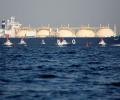
Iranian Deputy Foreign Minister Kazem Gharibabadi has urged India to take the lead in bringing peace to West Asia, highlighting the UAE's role in stalling BRICS consensus on the conflict. Gharibabadi also discussed a new framework with Oman for merchant vessels passing through the Strait of Hormuz.

US Central Command (CENTCOM) forces conducted additional strikes against multiple targets in Iran, on Saturday (local time), at the commander in chief, US President Donald Trump's direction.

Indian benchmark indices Sensex and Nifty experienced a significant slump in early trade, mirroring weak global trends, as escalating tensions in West Asia, particularly a drone attack on the UAE's Barakah nuclear facility, pushed crude oil prices higher. Track Sensex, Nifty50 movement and key market drivers for May 18, 2026.

Markets will look for clear guidance on how the MPC interprets the uncertainty and what it implies for the future course of monetary policy, points out Rajeswari Sengupta.

External Affairs Minister S Jaishankar spoke with his Portuguese counterpart Paulo Rangel to discuss the West Asia conflict and explore ways to enhance bilateral cooperation.
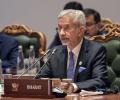
India has expressed serious concerns about the West Asia crisis and its potential impact on energy supplies and maritime stability, urging BRICS nations to find practical solutions to geopolitical challenges and unilateral sanctions.
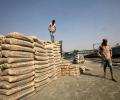
Indian cement manufacturers, despite a stable Q4FY26, are bracing for significant profitability pressures from Q1FY27 onwards due to escalating input costs, primarily driven by the West Asia conflict's impact on coal and petcoke prices.

The economic fallout of the West Asia crisis, the prevailing security situation in the Indo-Pacific and ways to boost cooperation in critical minerals and technology are expected to top the agenda at a crucial meeting of the Quad foreign ministers on Tuesday.

The escalating crisis in West Asia and its impact on the global energy supply chain are expected to dominate deliberations at a two-day meeting of BRICS foreign ministers to be hosted by India.

Reliance Industries Ltd (RIL) has expressed caution regarding 'extreme volatility' risks stemming from the West Asian conflict, which could impact global oil demand and the company's margins, while also noting that near-term retail consumption demand may remain sensitive to macro conditions. Chairman Mukesh Ambani, in the annual report, remained silent on the timeline for Jio Platforms' anticipated public listing, stating the group will 'continue to evaluate strategic pathways'.
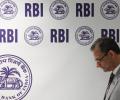
Uncertainties stemming from the West Asia crisis and its potential impact on inflation and economic growth were key factors in the Reserve Bank of India's Monetary Policy Committee (MPC) decision to maintain the status quo on interest rates, according to the recently released MPC meeting minutes.

Despite initial pressure from the West Asia conflict, analysts are optimistic about the Indian hospital sector's outlook, citing strong demand drivers and ongoing expansion plans that are expected to fuel significant revenue growth over the next few years.

India's pharmaceutical industry is experiencing increased bulk drug prices, particularly for APIs from China, following the escalation of the West Asia crisis in March. While current inventories provide a temporary buffer, concerns are mounting over the availability of key solvents and feedstocks, potentially leading to manufacturing disruptions and shortages in specific drug categories.

External Affairs Minister S Jaishankar discussed the West Asia conflict's impact on the global economy, particularly energy security, with US Secretary of State Marco Rubio. He also engaged with GCC ambassadors and his Sri Lankan and German counterparts on the same issue.

"There is a sharp jump that we have seen in bookings of EVs... The jump, at least in our case, in just two months, it is about 2 to 2.5 times of what it used to be"

Maharashtra Congress leader Naseem Khan met with the representative of Iran's Supreme Leader in India to express condolences for the deaths of Ayatollah Khamenei, soldiers, and civilians in the West Asia conflict.

An Indian national was killed in a missile attack on Riyadh, bringing the total number of Indian fatalities in the West Asia conflict to six. The Indian embassy in Riyadh has expressed condolences and is providing assistance to the family.

Gold and silver prices saw a significant decline in the national capital, with silver falling by Rs 7,800 to Rs 2.43 lakh per kilogram and gold by Rs 1,500 to Rs 1.54 lakh per 10 grams, as investors booked profits amid persistent doubts over the durability of the West Asia ceasefire.

Prime Minister Narendra Modi and US Secretary of State Marco Rubio discussed various aspects of India-US bilateral ties, focusing on defence, trade, energy, and technology. Rubio extended an invitation from President Donald Trump for PM Modi to visit the US.

Prime Minister Narendra Modi and French President Emmanuel Macron discussed the escalating situation in West Asia, emphasising the need for dialogue and diplomacy to restore peace and stability in the region.

External Affairs Minister S Jaishankar will address the Lok Sabha on the situation in West Asia, as Parliament reconvenes for the Budget session amidst ongoing regional tensions.

Prime Minister Narendra Modi convened a meeting with senior ministers to assess the impact of the evolving situation in West Asia on India's crude oil, gas, petroleum, power, and fertiliser sectors, focusing on ensuring uninterrupted supply and stable logistics.

The Asian Development Bank (ADB) has revised down India's GDP growth forecast for fiscal year 2026-27 (FY27) to 6.6 per cent from an earlier 6.9 per cent, primarily attributing the change to elevated energy prices stemming from the Middle East conflict. Despite this moderation, India is still expected to remain the world's fastest-growing major economy.

The Indian stock market is poised for a volatile week, influenced by the Reserve Bank of India's monetary policy decision, crucial global macroeconomic data, and the escalating geopolitical tensions in West Asia, according to market analysts.
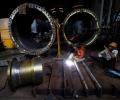
India's industrial production growth decelerated to a five-month low of 4.1 per cent in March, primarily due to the subdued performance of the manufacturing and power sectors, exacerbated by the West Asia crisis.

United States Central Command (CENTCOM) forces have conducted a 'heavy wave of strikes' against numerous Islamic Revolutionary Guard Corps (IRGC) targets in Iran. This action was a direct response to attempted Iranian missile strikes on US forces in West Asia, which were successfully intercepted. The strikes targeted IRGC military command centres, missile and drone facilities, coastal surveillance, and maritime capabilities, aiming to reduce threats posed by Iran and its proxies. US President Donald Trump also issued strong warnings to Tehran, linking the escalation to a recent drone strike on an LNG vessel in Egypt's Damietta Port.
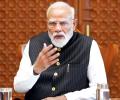
Prime Minister Narendra Modi will hold a video conference with chief ministers of most states to assess their preparedness and strategies in response to the ongoing conflict in West Asia.

Prime Minister Narendra Modi and French President Emmanuel Macron discussed the escalating situation in West Asia, emphasising the importance of dialogue and diplomacy to restore peace and stability in the region.

The Reserve Bank of India (RBI) Governor Sanjay Malhotra is now confronting the classic growth-inflation tradeoff, a situation exacerbated by the West Asia war, which threatens to end the 'goldilocks period' of low inflation and robust growth.
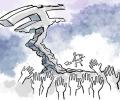
Bank of Baroda economists project India's GDP to grow 6.5-6.8 per cent in FY27 but warn that the fiscal deficit could overshoot the budgeted 4.3 per cent target, potentially reaching 4.7-4.8 per cent of GDP due to subsidy overruns, excise duty cuts, and oil marketing company losses.

Despite geopolitical tensions and FII outflows, Indian small and midcap stocks have not only recovered losses but are also outperforming largecap indices, driven by attractive valuations, domestic institutional support, and a rebound in earnings.

Indian stock markets experienced a significant sell-off, with the Sensex tumbling over 1,300 points, driven by escalating crude oil prices due to US-Iran tensions and Prime Minister Narendra Modi's call for austerity measures, which amplified investor concerns about India's economic outlook.

Russian President Vladimir Putin has offered his support to help bring peace to West Asia, praising the Iranian people for their resilience. This comes as Iran seeks to resolve the conflict with the US, following discussions with Pakistani and Omani leadership.

Iranian Foreign Minister Seyed Abbas Araghchi spoke with Indian counterpart S Jaishankar to discuss the West Asia crisis, following discussions with Russian President Vladimir Putin.
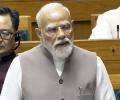
Modi said that the West Asia crisis has been going on now for more than three weeks and is having a very adverse impact on the global economy and on people's lives. He said the entire world is urging all parties for the earliest resolution of this crisis.

Russia's First Deputy Prime Minister Denis Manturov met with Indian leaders to discuss strengthening bilateral ties in key sectors amidst the escalating conflict in West Asia.

The ministry of external affairs on Monday said that a joint statement could not be issued following the BRICS deputy foreign ministers and special envoys on the Middle East and North Africa (MENA) meeting, which took place on April 24 in the national capital, as member countries were unable to reach a general consensus concerning the conflict in West Asia.

Pakistan's Punjab government has announced the reopening of all public and private educational institutions after implementing fuel-saving measures due to the conflict in West Asia. The decision comes as fuel supply stabilises and the government secures national fuel stocks.

The ongoing conflict in West Asia is severely disrupting Bikaner's food exports, causing delays, rising costs, and impacting the supply of popular snacks like bhujia and papad to Gulf and European markets.
