

Prime Minister Narendra Modi and French President Emmanuel Macron address escalating West Asia tensions, advocating for dialogue and diplomatic solutions to restore regional peace and stability amid ongoing conflict.
Key Points
- Prime Minister Modi and President Macron discussed the escalating crisis in West Asia and the urgent need for diplomatic solutions.
- Modi has spoken with eight West Asian leaders, condemning violations of sovereignty and emphasising dialogue.
- The conflict in West Asia has widened, with attacks and counter-attacks disrupting flight services and stranding Indians.
- Modi thanked West Asian leaders for ensuring the safety and well-being of the large Indian community in the region.
- Restoring peace and stability in West Asia through dialogue and diplomacy is crucial for regional security and the safety of Indian citizens.
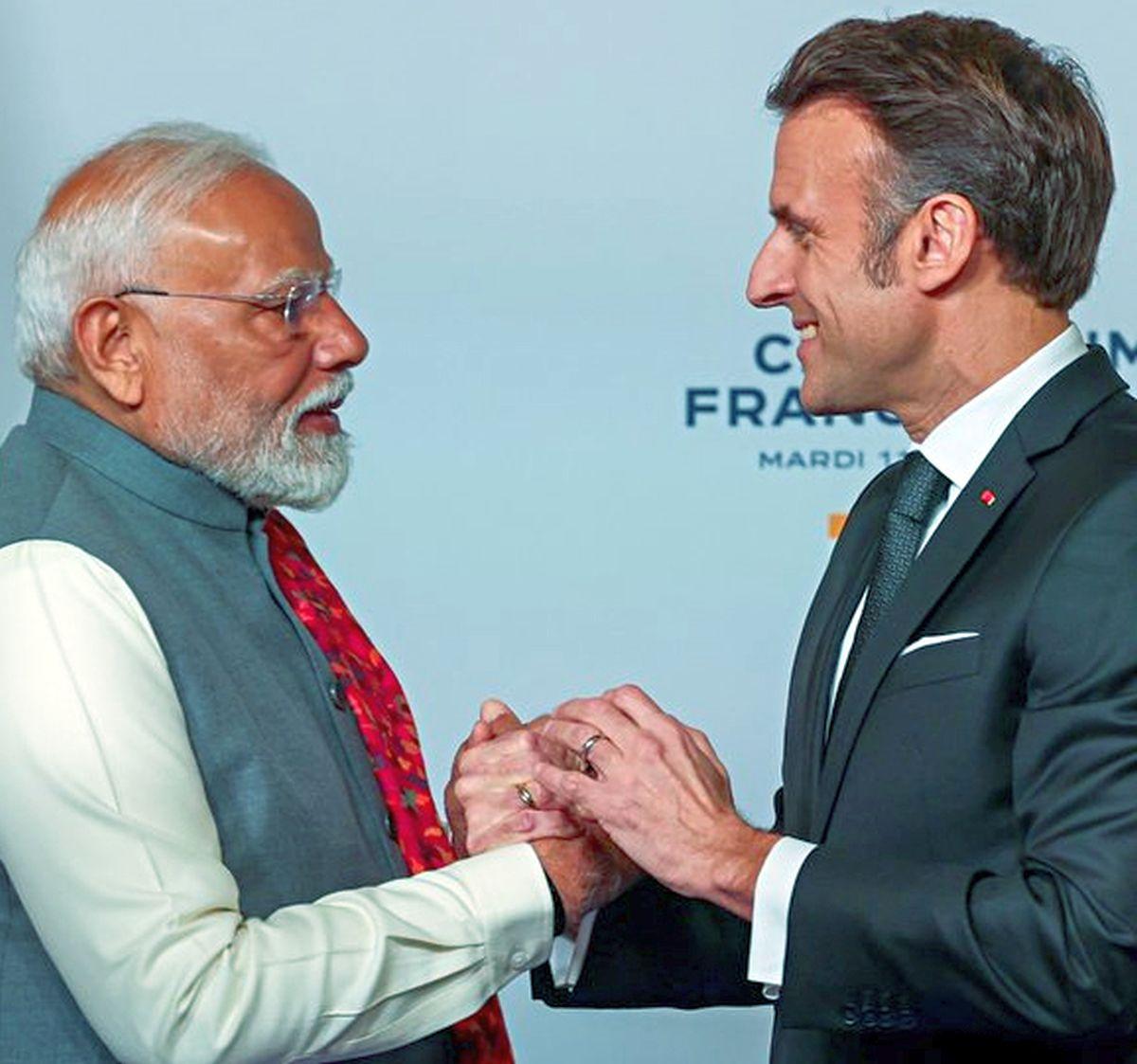
Prime Minister Narendra Modi on Thursday spoke to French President Emmanuel Macron and discussed shared concerns over the evolving situation in West Asia, and the need for a return to dialogue and diplomacy.
After his telephonic conversation with Macron, Modi said they will continue to engage closely and coordinate efforts towards the early restoration of peace and stability in the region.
"Spoke with my friend President Emmanuel Macron today. We discussed our shared concerns over the evolving situation in West Asia and the need for a return to dialogue and diplomacy.
"We will continue to engage closely and coordinate efforts towards the early restoration of peace and stability in the region," Modi said in a post on X.
Escalating Conflict in West Asia
The conflict in West Asia began after the US and Israel launched military strikes on Iran on February 28, killing Iran's Supreme Leader Ayatollah Ali Khamenei.
Following the military offensive, Iran has carried out a wave of attacks targeting Israeli and American military bases in several Gulf countries, including the UAE, Bahrain, Kuwait, Jordan and Saudi Arabia.
In the last few days, the conflict has widened significantly with attacks and counter-attacks by both sides.
Diplomatic Efforts and Indian Community Concerns
Prime Minister Modi spoke to eight leaders of West Asia since the beginning of the military conflict, before speaking to Macron on Thursday.
The prime minister has so far spoken to the Amir of Qatar, Sheikh Tamim bin Hamad Al Thani; Sultan Haitham bin Tarik of Oman; Crown Prince of Kuwait, Sheikh Sabah Al-Khaled Al-Hamad Al-Mubarak Al-Sabah; Bahrain King Hamad Bin Isa Al Khalifa; Crown Prince and Prime Minister of Saudi Arabia, Mohammed Bin Salman; King Abdullah II of Jordan; President of UAE Sheikh Mohamed bin Zayed Al Nahyan; and Israel Prime Minister Benjamin Netanyahu.
In his phone calls with the West Asian leaders, Modi condemned the violation of their sovereignty and territorial integrity, emphasised the urgent need to restore peace and stability in the region through dialogue and diplomacy, and thanked them for their continued support to ensure the safety and well-being of the Indian community living in their respective countries.
Around 10 million Indians live in the Gulf and West Asia; about 10,000 Indian citizens live, study and work in Iran, while more than 40,000 Indian nationals live in Israel.
Currently, the airspace of West Asia is almost closed. With flight services disrupted due to the military escalation, hundreds of Indians are stranded in Dubai, Doha and other key airports in the region.
A few flights have brought some of the stranded Indians back to the country in the last few days.


 © 2026