
The Union Cabinet on Friday approved Rs 11,718 crore for conducting the Census of India, 2027, which would include the caste enumeration for the first time.
Census exercise with caste enumeration will be carried out with the reference date of October 1, 2026, in snow-bound areas like Ladakh and of March 1, 2027, in the rest of the country, the Home Ministry announced on Wednesday.

The census will be carried out with a reference date of October 1, 2026 in snow-bound areas like Ladakh and March 1, 2027 in the rest of the country, the notification said.
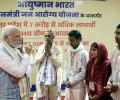
According to a parliamentary response by the Union health ministry in 2023, around 654,000 families in Delhi are eligible to enrol under the scheme.

In a significant move, the Centre on Wednesday announced that caste enumeration will be part of the next population census, with the inclusion of caste details for the first time since independence hailed by the Bharatiya Janata Party and its allies as a historic step to help design truly equitable and focused policies.

The government has to specify what it intends to do with caste census data. It will be closely tracked if the government would simultaneously move towards removing the present 50% bar on reservations using means which are permitted in law. If this is not done, the entire exercise will become meaningless and could boomerang on the BJP, observes Nilanjan Mukhopadhyay.

On Tuesday, Leader of Opposition Rahul Gandhi accused BJP MP Anurag Thakur of "abusing and insulting" him during the Lok Sabha discussion on the Union Budget.

While data can empower communities, it reinforces identities, making local politics more caste-centric, with decisions increasingly contested on the grounds of representation.
Such dynamics could lead to shifting alliances and, in the worst case, local governance getting paralysed as each group demands proportional power-sharing, explain Amitabh Kundu and Mehebub Rahaman.

Do we have enough trained oncologists and medical professionals in India to man these over 4,500 beds in the public sector?

The Congress on Monday promised that a government led by it will conduct a nationwide caste census and implement 33 per cent reservation for women in the Lok Sabha and state legislative assemblies at the earliest, including adequate representation for women belonging to the OBC community.
Union Minister of State for Home Nityanand Rai also said that the central government has not enumerated caste-wise population other than SCs and STs in census since Independence.

The Supreme Court, by a majority view of 3:2, upheld the validity of the 103rd Constitution amendment providing 10 per cent reservation to people belonging to economically weaker sections (EWS) in admissions and government jobs.

Congress leader Rahul Gandhi said that the underprivileged need economic and political power and not empty words as he again called for removing the 50 per cent ceiling on quota and demanded reservations for Dalits and tribals based on their population.

Right to apprenticeship, legal guarantee for MSP, passing a constitutional amendment to raise the 50 per cent cap on reservations for SCs, STs and OBCs, a nation-wide caste census and scrapping of Agnipath scheme are among the promises made by the Congress in its Lok Sabha polls manifesto released on Friday.
The government has no proposal at present to release the report of the caste census carried out in 2011, the Rajya Sabha was informed on Wednesday.

A nationwide socio-economic and caste census to identify people living below poverty line (BPL) was on Wednesday flagged off from Shankhola, a remote tribal hamlet in Tripura West district.
The Supreme Court on Wednesday dismissed a plea filed by the Maharashtra government seeking a direction to the Centre and other authorities to disclose to the state the Socio-Economic and Caste Census (SECC) 2011 raw caste data of the Other Backward Classes.
Just 4.6 per cent of all rural households in the country pay income tax while such households with salaried income are close to 10 per cent, the first socio economic and caste census released in eight decades said.

Senior NCP leader and Maharashtra minister Chhagan Bhujbal on Wednesday said the Supreme Court order on the Other Backward Classes (OBCs) quota was a setback to the state government and it should do everything it can to save the community's reservation.
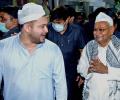
The JD-U and the Opposition RJD are united on a caste census in Bihar, which the BJP is opposed to.

Says govt is creating conditions for greater private investment

The socio-economic and caste census 2011 painted a grim picture of rural India, indicating that one out of three families living in villages is landless and depends on manual labour for livelihood.
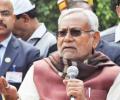
In yet another sign that not everything is fine between Bihar's ruling partners, Chief Minister Nitish Kumar opposes the BJP's demand for a population control law -- even while seeking a caste-based census, a red flag for the BJP. M I Khan reports.
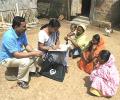
The NSSO had enumerated 79,306 households in rural areas and 45,374 in urban regions.
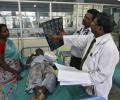
According to a senior government official, the plan is to do "collective bargaining" for certain medical devices and implants by assuring a bulk requirement to the manufacturers. "The requirement for these devices runs into millions. We assure them that the requirement is going to be in bulk. In return, they should offer us better rates," he said.

All the poor people identified by the Socio Economic and Caste Census 2011 will be eligible for the scheme, officials said, adding that it will be linked to Aadhar but will not be a mandatory condition for availing the benefit.

Under the scheme, the government proposes to provide electricity to all households by December 2018, ahead of the earlier target of March, 2019.

Experts believe that states will be in a predicament because of their tight fiscal position and reluctance to replace their own health schemes with this newly announced National Health Protection Scheme.
The government on Friday refrained from releasing the caste-based data in its first Socio Economic and Caste Census released in eight decades and maintained that it was concerned with economic data which will help in effective implementation of its programmes.
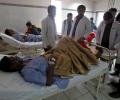
While Prime Minister Narendra Modi's Ayushman Bharat health care scheme is just a slogan for the moment, it is the state's Mukhyamantri Amrutum health assurance scheme which is a comforting reality for many.

Less than half of rural households are engaged in agriculture.
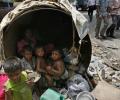
India's rising GDP may have propelled the middle class to become richer, buy new cars, travel around the world and build assets, but it further pushed the economically disadvantaged and poor into poverty and drudgery, says Devanik Saha.

Setting the stage for confrontation in Parliament, an all-party meeting called in New Delhi on the eve of the monsoon session on Monday ended in a deadlock over controversies related to the Lalit Modi and Vyapam scam even as Prime Minister Narendra Modi offered to discuss all issues. The government ruled out any resignations.

From coming up with the correct list of beneficiaries to finding enough people to work as Ayushman Mitras to generating awareness about the scheme - many things need to fall in place before it can be successfully launched in a few days.
 © 2026 Rediff.com - Investor Information - Advertise with us - Disclaimer - Privacy Policy - Sitemap - Feedback - About us - Terms of use - Grievances