
The Supreme Court allowed a pregnant woman and her child into India on humanitarian grounds after they were pushed into Bangladesh.
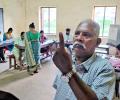
The Supreme Court has requested the Election Commission to consider extending the deadline for submitting enumeration forms for the Special Intensive Revision (SIR) of electoral rolls in Kerala, due to the ongoing local body elections.
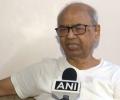
A lawyer, Rakesh Kishore, who previously attempted to throw a shoe at a former Chief Justice of India, was allegedly attacked inside the Karkardooma district court premises in Delhi. The incident, reportedly stemming from an auto fare dispute, was captured on video and circulated on social media.

Former India defender Ilyas Pasha dead, AIFF, East Bengal condole

The Supreme Court of India has affirmed the country's right to bring back offenders who are evading the law, dismissing a plea seeking withdrawal of an extradition request.

A video of IAS officer Tina Dabi during flag hoisting has gone viral. She explains how the mistake happened and clears the air.

The Supreme Court on Thursday held that the Governor can reserve a bill for consideration of the President even in the second instance, when the bill is again sent by the state assembly to him whether in its amended or unamended form.

Meanwhile, the Uttar Pradesh government has suspended Bareilly City Magistrate Alankar Agnihotri on charges of indiscipline after he resigned from service in protest against government policies.
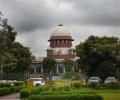
The Supreme Court has sought a response from the CBI on a former RAW official's plea seeking documents related to his trial under the Official Secrets Act. The case involves allegations of revealing secret information in a book written by the official.

A builder arrested in connection with the death of a software engineer in Greater Noida has been sent to judicial custody. An SIT is investigating the incident, questioning Noida Authority officials regarding alleged negligence.

Amid the race for mayoral posts across civic bodies in Maharashtra, a new political equation emerged in the Kalyan Dombivli Municipal Corporation on Wednesday with five corporators of Raj Thackeray-led Maharashtra Navnirman Sena offering support to Eknath Shinde's Shiv Sena, which is in alliance with the Bharatiya Janata Party.
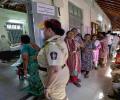
The Supreme Court has addressed the issue of reservation quotas in Maharashtra local body elections, stating that the final results of elections in 57 local bodies, where the 50% quota ceiling has been breached, will depend on its judgment in the case.

The Supreme Court expressed serious concern over custodial deaths, calling it a 'blot' on the system. The court is pushing for compliance with orders to install CCTV cameras in police stations and central investigation agencies to curb human rights abuses.
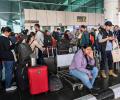
The Supreme Court declined to expedite a hearing regarding the widespread IndiGo flight cancellations, acknowledging the government's intervention in the matter.
The Supreme Court of India has struck down key provisions of the 2021 Tribunals Reforms law, citing violations of separation of powers and judicial independence. The court restored earlier directions on tenure for tribunal members.
The Supreme Court has sought responses from the Centre and others on a plea challenging the validity of a provision of the Income Tax Act that allows political parties to receive "anonymous" cash donations below Rs 2,000.
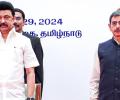
'It makes law-making on the part of the state governments much more difficult and throws up bottlenecks as governors are not acting on bills.'
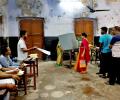
The Supreme Court has directed the Maharashtra government and its state election commission to conduct local body elections, clarifying that the results will be subject to the court's final verdict, especially concerning the 50% quota limit. The court will hear pleas regarding OBC reservation in local bodies in January 2026.

Jadavpur University has formed a committee to investigate a controversy involving a student wearing a hijab during an exam. Allegations of Islamophobia have been made, which faculty members deny.
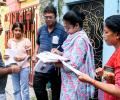
The Election Commission has defended its Special Intensive Revision of electoral rolls in West Bengal and Tamil Nadu in the Supreme Court, refuting allegations of mass deletion of genuine voters as exaggerated and politically motivated.

The Supreme Court has stated it will intervene to resolve the deadlock over the selection of vice chancellors for two technical universities in Kerala if the Chief Minister and Governor do not reach a consensus.
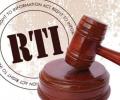
The Centre informed the Supreme Court that a panel led by Prime Minister Narendra Modi is likely to meet on December 10 to select and recommend names for the post of Chief Information Commissioner and information commissioners of the Central Information Commission (CIC).

The Supreme Court is examining the validity of the Election Commission's decision to conduct special intensive revisions of electoral rolls in several states, focusing on concerns about democratic participation and the burden on ordinary voters.

Supreme Court Justice B V Nagarathna dissented against the collegium's recommendation to elevate Patna High Court Chief Justice Vipul Manubhai Pancholi to the Supreme Court, citing concerns about seniority, regional representation, and the circumstances of his earlier transfer.
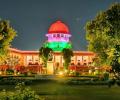
The Supreme Court of India has stated it will not monitor every instance of hate speech, citing existing legal and institutional mechanisms.
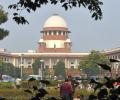
The Supreme Court of India has ruled that the actions of governors and the President in granting, withholding, or reserving assent to bills are not subject to judicial review, emphasizing the separation of powers.

Describing the act as the 'grossest kind of indiscipline', the Supreme Court on Tuesday dismissed a former Christian officer's plea challenging his termination from the armed forces, after he allegedly refused to participate in regimental religious activities at the sanctum sanctorum of a temple at a place of his posting.

The Supreme Court on Wednesday asked the Commission for Air Quality Management (CAQM) to consider directing schools in Delhi-NCR to postpone open air sports competitions planned in November and December to 'safer months' keeping in mind air pollution levels.
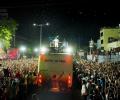
The Tamil Nadu government has informed the Supreme Court that the Karur stampede, which resulted in 41 deaths, was caused by the "reckless and uncoordinated actions" of the TVK party's organizers and workers. The government's affidavit alleges an intentional delay by party leader Vijay, contributing to the tragedy.

AIFF adopts SC-approved constitution, leaves out two clauses pending Apex court direction
The Supreme Court on Friday asked the Law Commission to consider a plea as a representation of a Buddhist group that certain sets of personal Hindu laws, which are applicable to Buddhists also, are against their fundamental rights, including freedom to practice religion.
The Supreme Court has ruled that non-disclosure of a conviction in a nomination form will lead to the disqualification of an elected candidate. The ruling came on an appeal filed by a former councillor who was unseated for failing to disclose her conviction in a case.
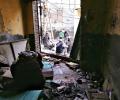
Delhi Police strongly opposes bail pleas of activists Umar Khalid, Sharjeel Imam, and others in the February 2020 riots case, claiming it was a pre-planned attack on the nation's sovereignty and an attempt to divide society on communal lines.

The Supreme Court is scheduled to hear a plea challenging the detention of climate activist Sonam Wangchuk under the National Security Act (NSA). The plea, filed by Wangchuk's wife, argues the detention is illegal and violates his fundamental rights.
The Supreme Court has agreed to hear a plea challenging the Election Commission's decision to conduct Special Intensive Revision (SIR) of electoral rolls in Tamil Nadu, Kerala and West Bengal. The court is also addressing concerns about disenfranchisement and citizenship issues related to the revision process.

The victim of the 2017 Unnao rape case, in which ex-BJP MLA Kuldeep Singh Sengar was convicted, has approached the CBI seeking the registration of an FIR against the then-investigating officer for allegedly colluding with the former legislator. The woman also claims to face threats.
The Supreme Court criticized the Haryana government for uprooting 40 trees to build a road to a BJP office in Karnal, demanding a remedial plan and warning of consequences.
The Supreme Court has agreed to examine whether a law banning married couples facing secondary infertility from using surrogacy to have a second child amounts to a restriction by the State on the reproductive choices of citizens.

The Congress party has released its initial list of 48 candidates for the upcoming Bihar Assembly elections, including key state leaders. The announcement precedes the finalization of seat-sharing arrangements with Mahagathbandhan allies.

The 68th Grammy Awards began at the Crypto.com Arena in Los Angeles.
