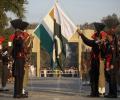
The Indian agenda for the talks has put extra stress on the "most important" issue of breach of ceasefire in Jammu and Kashmir

Rajmohan spoke with rediff.com, sharing his thoughts on what ails East Delhi, the future of AAP and his plans for strengthening the party.

Heads of state and big-name billionaires opened the Paris climate summit with a bang on Monday.

'Castro told us: "Give me a thousand Gurkhas and I shall keep my neighbour under control!"' 'We pretended that we did not know which neighbour he meant.'

'Today the PCB officials have brought embarrassment for Pakistan and its cricket. The government must order them to return home immediately' 'Nothing is to happen because this MoU is meaningless unless the PCB has got a clause inserted that if India does not play for whatever reason it can approach the international court for sports arbitration'

Atal Bihari Vajpayee would seek to placate the hawks in the RSS by stating that the writing of history should not be one-sided. At the same time, he would project a moderate 'Nehruvian' image of himself as the archetypal liberal politician who would strive to attain a balance between conflicting viewpoints. A fascinating profile of the former prime minister and Bharat Ratna by Paranjoy Guha Thakurta and Shankar Raghuraman.
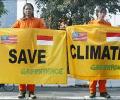
The minister echoed the consistent message of the Indian delegation as well as other developing countries that the Intended Nationally Determined Contributions of all countries should include elements of adaptation, finance, technology and capacity building.

Voting was held in Maldives on Saturday for the second multi-party presidential elections with long queues of people outside polling stations in this Indian Ocean archipelago, which has seen a series of unsettling political events in the last eighteen months.

India and Iraq are likely to sign two agreements in the energy sector and cooperation in water resource management.

Amid a spate of incursions by China in Ladakh, its troops are also resorting to tactics like preventing the Indian army from patrolling posts in this sector along the border, which is well within India's territory.

'Modi took to the dais and said he would like to step down as chief minister over the riots.' 'Immediately, people from several sides got up and said there was no need to do so.' 'Whether it was orchestrated or not, Shourie wasn't sure.' 'But, according to him, Vajpayee felt that it was a coup.'
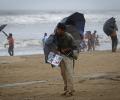
Developed nations have refused financial support for climate change to India, China and Brazil.

The United States is proceeding with the prosecution of senior Indian diplomat Devyani Khobragade and has no intention to withdraw the case of visa fraud against her.

Taking a strict action, the International Boxing Association (AIBA) has provisionally suspended India's woman boxer Laishram Sarita Devi for refusing to accept the bronze medal at the Asian Games podium ceremony.

Fali Nariman, one of India's best-known lawyers, tells Aditi Phadnis that plurality of political opinion is the only way to counter intolerance

Under pressure from India and other countries, Switzerland has made key changes in its local laws governing assistance to foreign nations in their pursuit of black money allegedly stashed in Swiss banks.

India's enemies be warned: The Rafale deal will bring a sea change in India's defence preparedness.

India has sought access to Lashkar-e-Tayiba operative David Headley, the Mumbai terror attack convict now lodged in a US prison, as it insisted on bringing to justice the perpetrators of the 26/11 assault.

Unlike in the past, Modi made candid, frank and direct remarks on his hosts by suggesting that the Chinese side is holding back on further improving relations, says Srikanth Kondapalli.
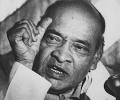
'If Rao had, in fact, given a word to President Clinton in 1994 that India would not test, he would not have encouraged Vajpayee to test. The note, said to have been handed over to Vajpayee by Rao with the words, 'Now is the time to accomplish my unfinished task' may not have been a reference to nuclear tests at all,' says T P Sreenivasan.

The average global temperature between January and October has been 0.68 degrees Celsius higher than the 20th century's average global temperature of 14.1 degree C.

The Turkmenistan event underscores the lengths to which China's oil-and-gas companies will go to curry favour in resource-rich locales.

Days before Narendra Modi arrives in the US to speak at the UN, meet Barack Obama, gupshup with the likes of Nadella, Pichai, Zuckerberg, and address desis in Silicon Valley, his ministers will help set the commercial and strategic tone for the prime minister's visit.

With the United States delivering an increasing share of India's arms imports, New Delhi must work with it to retain control of our regional waters
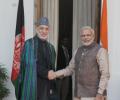
Security will be a consideration, as would protocol, but given Modi's penchant for the unconventional, it should not come as a surprise if he indeed decides to attend the ceremony in Kabul, says Ramesh Ramachandran.
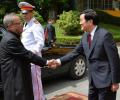
India and Vietnam on Monday inked seven pacts, including one to enhance cooperation in the strategic oil sector, as they called for "freedom" of navigation in the South China Sea, a remark which could irk China, which has been claiming territorial sovereignty over the high seas.

'A close look at the time-lines tells you that exactly as the back-channel negotiations were in their most crucial stage, "somebody" was planning the 26/11 attacks in Mumbai,' says Shekhar Gupta questioning Khurshid Mahmud Kasuri's account of a peace deal with India.

Prime Minister Narendra Modi, who will be the second Indian prime minister to visit Fiji after Indira Gandhi, comes at a time when the islands are moving to consolidate the new democratic system

'What should worry India and which needs to be expressed is Russia's simultaneous proximity to both China and Pakistan from a strategic angle. That hasn't happened ever before,' says Lieutenant General Syed Ata Hasnain (retd).
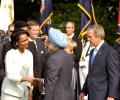
The night before Dr Singh was to meet President Bush, he said he could not sign the agreement.

The BRICS summit offers Modi an excellent platform to reach out to world leaders and conduct diplomacy on the very ticklish issue of reform of the world governance structure, and to exchange notes with his peers on international, regional and bilateral issues on the margins of the meeting, says Rup Narayan Das.

'Ne Win kept good relations with the Nehru family even though he did nothing to do business with India. When Indira Gandhi was assassinated, Ne Win took off to an undisclosed destination, leading to rumours that he had gone to India. But we had no knowledge of his visit and days later, we were told that he was so struck with grief that he went into meditation on an island.' Ambassador T P Sreenivasan delves into Rajiv Bhatia's new book on mysterious Myanmar.

'Narendra Modi knows how to calculate and remain pragmatic. Take the unexpected Rafale deal - perhaps the first time a PM has considered the country's defence procurement as a priority, over the considerations of the babus... and over his own pet project 'Make in India',' says Claude Arpi.

India's unusual tough stand on the arrest of its diplomat Devyani Khobragade has forced the United States to initiate an "inter-agency review" to look into the lapses that happened in the high-profile case that triggered an uproar in India and strained bilateral ties.

Rejecting the allegation of adopting "big brotherly" approach towards Nepal, India on said it respects its sovereignty and wants to see the crisis resolved through consensus.

'Under the present Defence Procurement Procedure, it would have been a nightmare, and a long, long one at that, to build 108 Rafales in India. Modi realised this and took the wise decision, though it is a definitive setback for his Make in India scheme.'

'Chinese leaders rarely receive their foreign guests in cities other than Beijing. Such respect for India!' 'Does it mean that Modi could replicate "the warmth and unconventional way" by sending Indian troops into Tibet, as Xi did in Chumur (Ladakh) when he arrived in India? Of course, Indians are far too polite to do so,' says Claude Arpi.

Abstaining from voting on a UNHRC resolution on Sri Lanka was dictated as much by necessity and self-preservation as by a desire to place bilateralism at the front and centre of New Delhi's ties with Colombo, says Ramesh Ramachandran.
 © 2026 Rediff.com - Advertise with us - Disclaimer - Privacy Policy - Sitemap - Feedback - About us - Terms of use - Grievances