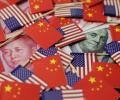
China on Friday said it is assessing whether to start trade talks with the US on tariff reductions following recent approaches by Washington, a move that would possibly ease the tit-for-tit tariff war between the world's two largest economies. "China is making assessments as the United States has recently reached out to convey messages to China through relevant parties many times, expressing hope to engage in talks with Beijing over tariff issues," the Chinese Commerce Ministry said in a statement in Beijing.

India is preparing to resume the Kailash Mansarovar Yatra, a pilgrimage to Mount Kailash in Tibet, after a three-year hiatus. The decision comes as part of efforts to improve relations between India and China, which have been strained since a military standoff in 2020. The two countries have also agreed in principle to resume flight services between them.
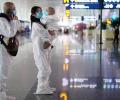
China has firmly denied that its Wuhan Institute of Virology conducted gain-of-function studies on coronavirus, rejecting allegations that the US Agency for International Development (USAID) funded such research at the lab. The Chinese Foreign Ministry spokesperson, Guo Jiakun, emphasized that the lab has never engaged in gain-of-function research, designed, made, or leaked COVID-19. China has also reiterated its stance on the origins-tracing of COVID-19, stating that the pandemic was "extremely unlikely" to have originated from a lab leak, as concluded by the WHO-China joint mission.
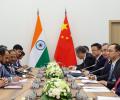
According to informed sources, Doval will arrive in Beijing on Tuesday to attend the crucial talks, which were expected to provide a way forward for the two countries to normalise the relations.
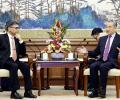
India and China have agreed to rebuild ties and resume people-to-people exchanges, including resuming direct flights and the Kailash Manasarovar Yatra this year. The two countries also discussed the resumption of dialogue mechanisms to address each other's concerns and move relations to a more stable path. The meeting comes after a period of strained relations following the Galwan Valley clashes in 2020.
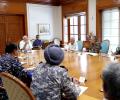
'One good outcome of Operation Sindoor -- perhaps, its best outcome -- could be that India has resumed meaningful contact directly with Pakistan at the military-to-military level,' observes Ambassador M K Bhadrakumar.

China has downplayed reports of a massive flu outbreak overwhelming hospitals, stating that cases of respiratory diseases this winter are less severe than last year. The Foreign Ministry assured foreigners that it is safe to travel to China.
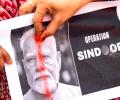
World leaders, including the UN Secretary-General and US President Donald Trump, have urged India and Pakistan to exercise restraint and seek peaceful solutions to the ongoing tensions. The calls for calm come after India conducted airstrikes in Pakistan-occupied Kashmir in response to a recent terrorist attack. Leaders from the US, Russia, UK, China, UAE, Qatar, and Japan have expressed concern over the escalating situation and emphasized the need for dialogue and de-escalation.
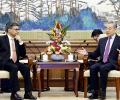
India and China held diplomatic talks in Beijing, focusing on effective border management and the resumption of cross-border cooperation and exchanges, including on trans-border rivers and the Kailash-Mansarovar Yatra. The meeting explored measures and proposals to implement decisions made during the Special Representatives (SR) dialogue in December. Both sides agreed to work together for the next SR meeting in India later this year.
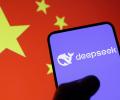
China has defended its newly-released AI tool DeepSeek, after several countries, including India, imposed restrictions on government officials accessing it. Beijing claims actions against DeepSeek amount to "politicisation" of trade and tech issues and vowed to protect the interests of its companies. India's Finance Ministry directed officials to avoid using DeepSeek on office devices, citing confidentiality risks. The tool has garnered global attention for its low-cost model and efficient use of resources, surpassing ChatGPT in popularity on Apple's Appstore.
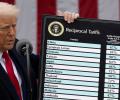
US President Donald Trump has proposed a deal to China that would see the sale of TikTok's US operations to an American buyer in exchange for a reduction in tariffs on Chinese exports to the US. The proposal comes amid a trade war between the two countries and follows China's retaliation of Trump's tariffs on Chinese goods. Trump has also said that tariffs are a powerful economic tool and that he is determined to ensure fair trade between the US and China.

A Chinese team of virologists has discovered a new bat coronavirus that can infect human cells, raising concerns about potential animal-to-human transmission. The virus, a new lineage of the HKU5 coronavirus, uses the same human receptor as the virus that causes COVID-19. The study, led by Shi Zhengli, a prominent virologist at the Wuhan Institute of Virology, was published in the journal Cell. The discovery comes amid ongoing scrutiny of the Wuhan lab, which was previously accused of being the source of the COVID-19 pandemic. The Chinese government has denied any involvement in the virus's origin and insists that the Wuhan lab never engaged in gain-of-function studies on coronaviruses.
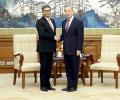
Foreign Secretary Vikram Misri on Monday called on Chinese Foreign Minister Wang Yi and discussed issues of bilateral interest.
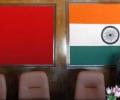
India and China have agreed to take measures to further ease the situation at the borders while continuing to implement the October agreement to resolve the standoff in eastern Ladakh comprehensively. The two sides held the 32nd meeting of the Working Mechanism for Consultation & Coordination on China-India Border Affairs (WMCC) in New Delhi, agreeing to maintain communication through diplomatic and military channels and safeguard sustainable peace and stability in the border areas. This meeting follows the October 21 agreement between the two countries to resolve the over four-year-long military standoff in eastern Ladakh.
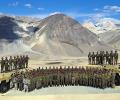
Her comments come a day after External Affairs Minister S Jaishankar said in Geneva that roughly 75 percent of the "disengagement problems" with China are sorted out but the bigger issue has been the increasing militarisation of the frontier.
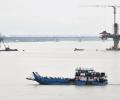
India has expressed concerns over China's plan to build a mega dam on the Brahmaputra River in Tibet, stating that it will continue to monitor and take necessary measures to protect its interests. New Delhi has urged Beijing to ensure that the interests of downstream states are not harmed by activities in upstream areas. The dam, estimated to cost USD 137 billion, has raised apprehensions about its impact on the ecological balance of Arunachal Pradesh and Assam, through which the Brahmaputra flows. India has repeatedly expressed its concerns to China through diplomatic channels, highlighting the need for transparency and consultation with downstream countries.
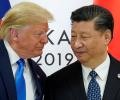
In a statement, the Chinese ministry of commerce said that it would file a lawsuit with the World Trade Organisation against the US for its "wrongful practice," the Global Times reported.
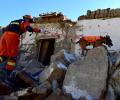
Local officials said no casualties have been reported due to Wednesday's quake that hit the Madoi County in Golog Tibetan Autonomous Prefecture of Qinghai province of northwest China at 3:44 pm (Beijing time), tremors for which were also felt in north-eastern Nepal.
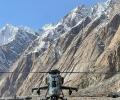
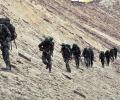
Defence sources stated that the disengagement involves removing infrastructure and withdrawing troops from both sides. The process is expected to be completed by Tuesday.

China on Wednesday said the Chinese and Indian militaries are implementing the resolutions concerning the disengagement in eastern Ladakh along the Line of Actual Control (LAC) in an 'orderly' manner.
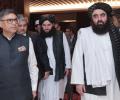
India's Foreign Secretary Vikram Misri has arrived in Beijing for a two-day visit during which he will hold talks with Chinese officials. The visit comes amid ongoing efforts to de-escalate tensions along the Line of Actual Control (LAC) in eastern Ladakh and to resume bilateral cooperation in various fields, including the Kailash Mansarovar Yatra.
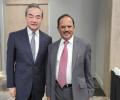
Doval is in Beijing for the 23rd round of the Special Representatives' talks being held after a gap of five years.
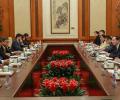
In the talks, China emphasised that the two sides should proceed from the fundamental interests of China, India and adhere to the strategic height and long-term perspective of China-India relations, the readout said.
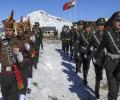
China and India were able to "reduce differences" and build "some consensus" on disengaging troops from friction points to end the standoff in eastern Ladakh and agreed to maintain dialogue to reach a resolution acceptable to both sides at an "early date", the Chinese defence ministry said on Thursday.

India and China have held their first diplomatic talks since withdrawing troops from two face-off points in eastern Ladakh, reflecting on the lessons learned from the border row to prevent future incidents. The two sides agreed to maintain peace and tranquillity in border areas, prepare for the next meeting of Special Representatives on the boundary question, and highlighted the importance of regular exchanges and contacts at diplomatic and military levels. The talks come after the completion of the disengagement process from the last two friction points, following an agreement finalized in October 2022.
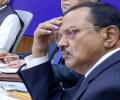
National Security Advisor Ajit Doval arrived in Beijing on Tuesday to take part in the India-China Special Representatives' talks to be held on Wednesday aimed at restoring the bilateral ties stalled for over four years' due to the military standoff in eastern Ladakh.
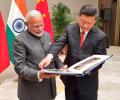
China's foreign ministry on Monday parried questions on a possible meeting between Prime Minister Narendra Modi and President Xi Jinping on the sidelines of the BRICS summit in Russia this week.
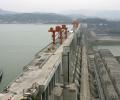
China has defended its plan to build the world's largest dam on the Brahmaputra River in Tibet, assuring that the project will not affect riparian states and safety issues have been addressed through decades of studies. The dam, estimated to cost USD 137 billion, has raised concerns in India and Bangladesh, but Chinese authorities maintain that the project has been thoroughly studied and safeguards are in place. The dam is part of China's efforts to develop clean energy and respond to climate change.
China has said that the disengagement of troops in eastern Ladakh by the Chinese and Indian armies is going on "smoothly" following a recent agreement between the two nations.

The banned Baloch Liberation Army (BLA) claimed responsibility for the attack, saying the blast was a suicide attack targeting a convoy of Chinese engineers and investors leaving the Jinnah International Airport.

China on Thursday conveyed its 'heartfelt appreciation' to the Indian Navy for rescuing a critically injured Chinese mariner from a cargo ship off the Mumbai coast and providing him with timely medical treatment.
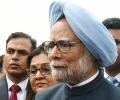
Condolences have poured in from across the globe, including from the United States, Canada and Sri Lanka following the demise of former Prime Minister Manmohan Singh.
If China is accommodating regarding Depsang and Demchok, a resolution of the Sino-India territorial dispute in Eastern Ladakh could be possible.

Chinese President Xi Jinping on Thursday congratulated President-elect Donald Trump on his election victory and called for China and the United States to find the right way to manage the differences by strengthening dialogue and communication.

China on Tuesday confirmed that it has reached an agreement with India to end the standoff between the two armies in eastern Ladakh.

China on Monday conducted day-long large-scale military drills aimed at surrounding Taiwan by deploying an aircraft carrier group, besides army, navy, air force and missile forces, in an apparent response to Taiwanese President Lai Ching-te's remarks that Beijing has no authority to represent Taipei.

China on Thursday said the meeting between Prime Minister Narendra Modi and Chinese President Xi Jinping in Russia's Kazan on Wednesday carries a "great significance" as they reached an "important common understandings" to improve the bilateral ties.

India will look at disengagement and de-escalation of the situation along the Line of Actual Control (LAC) in eastern Ladakh after restoration of the status quo of April 2020, Army Chief General Upendra Dwivedi said on Tuesday, a day after New Delhi announced striking an agreement with Beijing to end the over four-year border row in the region.
During the meeting, it was reiterated that "restoration of peace and tranquillity, and respect for the LAC are the essential basis for restoration of normalcy in bilateral relations", it said.

Ever since the Quad started taking shape in 2007, China has been saying that the four-member grouping will be bound to fail. But much to the chagrin of Beijing, it picked up pace in the recent years emerging as a premier strategic group especially challenging China's assertiveness in the disputed South China Sea.
 © 2026 Rediff.com - Investor Information - Advertise with us - Disclaimer - Privacy Policy - Sitemap - Feedback - About us - Terms of use - Grievances