
Researchers have successfully recreated in a laboratory setting how high-energy cosmic rays interact with Earth's atmospheric gases. Using CERN's Large Hadron Collider, an international team simulated collisions between cosmic particles, similar to those from supernovae, and oxygen beams. This unprecedented experiment provides a clearer understanding of interstellar particles and phenomena like the Northern Lights, improving upon previous computer simulations.

Indian stock markets closed lower, with the Sensex falling 429 points, after the Reserve Bank of India raised its benchmark interest rate for the first time in nearly four years, coupled with rising crude oil prices and persistent foreign fund outflows.

Airtel Business CEO Sharat Sinha stated that evolving architecture and methodologies for safely deploying Artificial Intelligence, coupled with adequate guardrails, are essential to unlock productivity gains. He welcomed the government's upcoming consultation paper on AI regulation, focusing on safety, deepfakes, and a human-first approach. Sinha also highlighted AI's role in driving demand for digital infrastructure and Airtel's growth in cybersecurity and fraud prevention.

India is deeply concerned by the growing consolidation of Pakistan-backed jihadi and radical Islamist groups in Bangladesh, particularly in the strategically vital Chittagong Hill Tracts, which experts warn is transforming the country into a new safe haven for these networks and posing a direct threat to India's security.
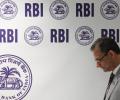
The Reserve Bank of India on Wednesday raised its policy repo rate by 25 basis points to 5.50 per cent, beginning a rate-hike cycle as rising inflation risks, elevated global yields and resilient domestic growth strengthened the case for tighter monetary policy. The decision by the Monetary Policy Committee marks a shift from its August policy, when it kept the repo rate unchanged at 5.25 per cent and retained a neutral stance while seeking greater clarity on the inflation outlook and growth-inflation balance.

Indian equities, particularly the Nifty 50, have significantly underperformed their Asian and global counterparts over the past year, with the index down 10.6 per cent. This lag is attributed to factors like rising global oil prices, rupee depreciation, and a lack of participation in the global chipmaker rally that boosted markets like South Korea and Taiwan.

India's milk supply is struggling to keep pace with rising demand as heat, fodder shortages and low animal productivity threaten dairy production.
A new study published in Nature reveals that lab-grown human brain tissues, or organoids, successfully survived, grew, and formed complex structures when transplanted into mouse brains. This breakthrough offers a novel platform for studying human brain development and neurological disorders.

Industry experts advocate for India to develop its own artificial intelligence (AI) safety framework, distinct from US or EU models, to address unique challenges like deepfakes and cyberattacks. They call for a comprehensive commitment involving all stakeholders and a hybrid regulatory approach combining voluntary and binding measures, as the Indian government also considers new AI regulations.

'Nearly two-thirds of Maharashtra has been drought-prone on and off, and climate change is making it worse.'

Zoho cofounder Sridhar Vembu dismisses exaggerated fears about AI's catastrophic potential and global development pauses. He advocates for India to adopt an independent AI strategy, fostering partnerships while avoiding entanglement in US-China tech rivalry. Vembu stresses extensive investment in foundational R&D across sectors, distinguishing it from costly frontier AI model development. He also highlights concerns about AI's impact on human judgment, skill erosion, and job disruption, particularly in software engineering, while remaining optimistic about new economic opportunities.

Economic think tank GTRI has urged the Indian government to withdraw the proposed UPI charges, set to begin on October 15, arguing that the digital payment system should remain free for merchants and consumers. GTRI warns that these charges could lead to higher prices, reduced earnings for small businesses, and weakened household demand, while also benefiting international card networks by eroding UPI's price advantage. The think tank also called for an independent audit of UPI's running costs.
Industry leaders at MRAM Expo 2026 highlighted that India's maintenance economy has the potential to unlock a 1 per cent GDP opportunity. This growth can be achieved by addressing productivity losses from equipment breakdowns, unplanned downtime, and inefficient assets through smarter asset management practices. The NITI Aayog also supports AI-based predictive maintenance for resilient infrastructure, while the Indian Asset Performance Management market is projected for substantial growth by 2033.

Rising bond yields in the US and other advanced economies are making it increasingly difficult for Indian equities to attract foreign portfolio investors (FPIs), leading to pressure on valuations and potentially lower returns for domestic investors.

'It is to observe the Sun continuously that you have the Aditya L1 mission.' 'It is in a position from where it can observe the Sun continuously.'

'Without that one critical irrigation, the entire crop can be lost.'

A new study published in AGU Advances reveals that extreme heat events are becoming more frequent and expanding beyond traditional summer months globally. This expansion is asymmetric, occurring earlier in spring in regions like western Europe and northwestern India, and later into autumn in areas such as the western US and eastern China. Researchers highlight the challenges this poses for human acclimatisation and community preparedness, as existing infrastructure like cooling centres are built around historical summer calendars.

'In India, an MBA from a top college would have better opportunities as compared to an MTech from top colleges,' says rediffGURU Patrick D'souza.

'Nobody can say a quake will strike on a particular day or month. It remains a natural event, governed by factors that are only partly understood, even by researchers working on this across the world.'

The World Health Organisation (WHO) has confirmed that Russian authorities reported no recent plague cases in Irkutsk oblast following the death of a laboratory worker from severe pneumonia. Initial media reports had suggested pneumonic plague, but investigations found no high-threat pathogens among contacts, and the cause of death is still being clarified by WHO.
A study by the Wildlife Institute of India in the Asola-Bhatti Wildlife Sanctuary reveals that abandoned mining areas have become the most bird-rich habitat, supporting 46 species. These former quarries, now featuring diverse scrub, grassland, rocky patches, and water pools, demonstrate nature's recovery after human disturbance ceased, highlighting the importance of habitat diversity for conservation.

A global research report by HCLTech indicates that integration has surpassed supply chain constraints as the primary challenge for the semiconductor industry. The study, which surveyed 300 senior leaders, highlights increasing dependency on semiconductors across industries, with 98% of enterprises more reliant now than three years ago and 99% expecting further increases. AI is also driving the strategic importance of semiconductor architecture.

Researchers at the Indian Institute of Technology Madras (IIT,M) have developed a novel "morphing skin" concept for aircraft wings, inspired by bird flight. This adaptive external skin dynamically reshapes in real time to prevent aerodynamic stalls, enhance lift, reduce drag, and significantly improve aircraft safety and fuel efficiency. The technology holds promise for commercial aviation, unmanned aerial vehicles, and defence applications.

IIT Guwahati researchers have developed SH²RFSSM, a model inspired by how biological neurons communicate.
West Bengal has launched an Emerging Quantum and Semiconductor Technologies (EQST) section at CSIR-CGCRI to attract investments and position the state as a hub for next-generation technology. Minister Kalyan Chakraborti highlighted India's need to invest in these crucial sectors and outlined the state's plans to collaborate with institutions and leverage budget initiatives to foster research and start-ups.
Zoho co-founder Sridhar Vembu argues that predictions of AI's catastrophic outcomes are overstated and a global pause in AI development is improbable. He urges India to adopt an independent AI strategy, focusing on extensive foundational R&D across sectors, while remaining wary of market monopolisation attempts by major tech players. Vembu also highlights concerns about AI's impact on human judgment, skill development, and job markets, particularly for junior professionals.

India's Agriculture Secretary Atish Chandra has warned that the upcoming rabi (winter) crop season is likely to be challenging for rainfed areas due to the strengthening El Nio weather pattern, potentially affecting foodgrain production. This comes as Maharashtra declares drought in nearly 74 per cent of its talukas, highlighting the immediate impact of climate change.

Indian benchmark stock indices, Sensex and Nifty, rebounded on Friday, driven by value buying in banking, oil & gas, and auto shares following recent sharp losses. The Sensex climbed 315.20 points to settle at 73,895.74, while the Nifty rose 77.40 points to 23,140.50.

New research published in the European Heart Journal indicates that even low levels of night-time light exposure, as little as 3 lux, are associated with detrimental changes in heart structure and function. A study involving over 11,000 participants found that increased light at night led to thickening of the left ventricular walls and reduced myocardial contraction, suggesting early heart dysfunction and increased risk of heart failure. Researchers highlight night-time light as a modifiable risk factor for cardiovascular disease.

The Indian stock market experienced a significant downturn, with the Sensex crashing over 1,000 points and the Nifty hitting a fresh 52-week low, driven by sustained selling from foreign institutional investors, the RBI's monetary policy tightening, and elevated Brent crude prices.

India has strongly criticised the US decision to suspend the Permanent Labor Certification (PERM) program for eight major IT firms, including Indian giants like TCS and Wipro. New Delhi also condemned US Vice President JD Vance's description of foreign professionals as "indentured servants," calling it "unwarranted and deeply offensive." The move is expected to impact thousands of Indian tech professionals seeking permanent residency in the US and further strains bilateral ties.

An Indian-origin engineer couple, Anuradha and Vikas Sinha, have donated $20 million to the University of North Texas (UNT) to establish the Anuradha and Vikas Sinha College of Artificial Intelligence and Advanced Analytics. This significant gift aims to create new opportunities for students and faculty, focusing on building and deploying intelligent systems and understanding their operation within human contexts. The donation underscores the couple's belief in education and immigrant contributions to the American dream, supporting leadership, scholarships, professorships, research, and entrepreneurship.

Tata Consultancy Services (TCS) has stated that the recent suspension of eight IT firms, including itself, from a US green card programme will not impact its workforce strategy or customer engagements, citing its low number of applications and focus on local hiring.

Wadhwa Group Holdings Ltd, the holding company of real estate developer The Wadhwa Group, has filed preliminary papers with markets regulator Sebi for an Initial Public Offering (IPO) using the confidential route, keeping offer details private for now.
Prof Rajeev Ahuja, Director of IIT Ropar, has been awarded the National Systems Gold Medal by the Systems Society of India. This prestigious award has previously been conferred upon eminent scientists like Dr A P J Abdul Kalam and Dr K Sivan, recognising significant contributions to Systems Science and Engineering.

'We see a lot of cases of bank deposits getting lost, especially when people die, so this will help address that because you have one consolidated view.'

Arunachal Pradesh Chief Minister Pema Khandu lauded the state's first 10-day artificial intelligence boot camp and hackathon at IIT-Guwahati. The programme aims to build AI skills, promote innovation, and create a future-ready digital workforce, offering hands-on training in AI/ML, Python, and NLP to 40 young participants.

The Reserve Bank of India's 25-basis point increase in the repo rate to 5.5 per cent is expected to exert pressure on housing affordability and buyer sentiment, particularly affecting interest rate-sensitive segments and potentially moderating sales during the crucial festival season.
Researchers have for the first time directly visualised how two DNA molecules, despite their identical negative charges, zip together. This breakthrough, achieved using high-powered atomic force microscopy and advanced simulations, confirms the 'DNA zipper' model, revealing that positively charged metal ions act as molecular bridges to facilitate this crucial biological process. The discovery has significant implications for understanding genetic recombination, gene silencing, chromosome packaging, cancer development, and future biotechnology.

An IPO can create excitement, particularly when you see a new issue attracting strong interest from investors. But popularity alone does not make an IPO suitable for every investor. Before you apply, it's crucial to scrutinise the financial performance, risk profile, and valuation of the company. Ultimately, your objective should be choosing a company that aligns with your financial goals.
