
India successfully test-fired the 'Agni 5' intermediate range ballistic missile, capable of reaching targets up to 5,000 km, validating its operational and technical parameters.

India successfully test-fired nuclear-capable short range ballistic missiles Prithvi-II and Agni-I from an integrated test range off the Odisha coast, demonstrating its strategic deterrence capability. The test-firing of the missiles, conducted by the elite Strategic Forces Command, validated all operational and technical parameters.

India successfully test-fired the newly-developed tactical missile Pralay, capable of carrying conventional warheads, from APJ Abdul Kalam island off the coast of Odisha. The missile, developed by DRDO, has a range of 150 to 500 km and a payload capacity of 500-1,000 kg.

DRDO conducted the maiden flight test of the Long Range Land Attack Cruise Missile from a mobile articulated launcher.

The missile showcased its precision and capability to neutralise targets, the statement said.

After being launched, the glide bomb steer towards the target using a highly accurate hybrid navigation scheme, the ministry said.

The flight test fully met all the trial objectives validating complete network centric warfare weapon system, the defence ministry said.

It said the tests were carried out against high-speed unmanned aerial targets under different interception scenarios.

The system performance was also validated through the data captured by a number of radars, telemetry and electro-optical tracking system deployed by ITR, Chandipur.

The National Security Strategy document should flag all major issues concerning security strategy and provide guidelines to concerned departments to work out suitable action plans. Since the global and regional geopolitical canvas is dynamic, the NSS document should be deliberated at length before formulation and should be reviewed periodically, recommends Commodore Venugopal Menon (retd).

The Defence Research and Development Organisation successfully tested a new version of the Akash Missile --Akash Prime' -- from the Integrated Test Range in Chandipur, Odisha.

By the time the enemy aircraft is 50 km away, the Akash-NG's computers have calculated the launch trajectory and impact point and launched the missile.

The VSHORADS missile is meant for neutralising low altitude aerial threats at short ranges.
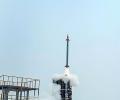
The Medium Range Surface to Air Missile is successfully test fired from Balasore, Odisha.

The MRSAMs were test-fired from the Integrated Test Range launch pad-III at Chandipur near here before noon
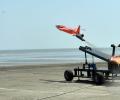
Developed by the Defence Research and Development Organisation, the High-speed Expendable Aerial Target (HEAT), ABHYAS, successfully flighttested from the Integrated Test Range in Chandipur, Odisha, October 22, 2021.

Although the credit for acquiring the technological skill must be given to India's outstanding nuclear scientists, the decision to go nuclear was a political one that entailed clarity of vision, courage and resolve, points out Rup Narayan Das.

This firing is a significant step towards achieving self-reliance in niche missile technology. Navy said.

This MRSAM version is a surface-to-air missile developed jointly by DRDO and Israel Aerospace Industries for use by the Indian Army.

The new variant of the Akash missile (Akash-NG) can strike targets at a distance of around 60 km and fly at a speed of up to Mach 2.5.
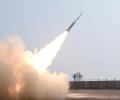
The Defence Research and Development Organisation on Friday successfully conducted a flight test of Solid Fuel Ducted Ramjet (SFDR) technology in Odisha, official sources said.

The test was carried out by DRDO against a high-speed unmanned aerial target which was successfully intercepted by the missile.
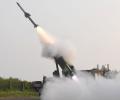
The successful test-firing of the QRSAM, having a range of around 30 km, paves the way for its commercial production

The Defence Research and Development Organisation on Friday successfully flight-tested a propulsion system that enables a missile to intercept aerial threats at very long range at supersonic speeds.
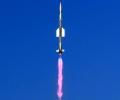
The quick reaction surface-to-air-missile missile developed by DRDO was test launched from the Integrated Test Range at Chandipur near here at about 3.08 pm from a vertical launcher against an electronic target at a very low altitude.

With new added technologies, including the control system, the missile was test-fired from the Integrated Test Range (ITR) launch pad-III at Chandipur around 10.45 am, said a source at the Defence Research and Development Organisation.
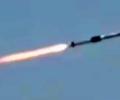
The trails were conducted without a helicopter in direct and top attack mode.

Describing the mission as a "major milestone" in the development of BrahMos, the sources said that the air version of the missile was test-fired from supersonic fighter aircraft Sukhoi 30 MK-I at 10.30 am.

The Pinaka rockets have a range of around 37 km.
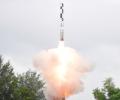
India has already deployed a sizeable number of the original BrahMos missiles and other key assets in several strategic locations along the de-facto border with China in Ladakh and Arunachal Pradesh.

The vehicle can be used as an aerial target for evaluation of various missile systems.

The missile was fired from a ground mobile launcher at launch pad number-1 of the Integrated Test Range (ITR) near here at 3.55 pm, and it hit the target with accuracy, the sources said.
The Integrated Test Range of Defence Research and Development Organisation (DRDO) has taken various measures to protect its facilities at Chandipur and Abdul Kalam Island in Odisha, which are likely to be affected by cyclone 'Yaas', an official said.

The QRSAM system is unique in its ability to operate on the move, searching for and tracking enemy targets; and then fire on a short halt.

The VL-SRSAM, which DRDO developed for the Indian Navy, was fired from a warship at a high-speed aerial target mimicking incoming enemy aircraft.

The missile is India's first indigenously developed anti-radiation missile that has speed of Mach two or twice the speed of sound.

The missile was launched from a mobile autonomous launcher at 11.45 am and it successfully flew in its pre-set trajectory 'fulfilling its mission objectives', the ministry said.

"Two flight trials were conducted at Integrated Test Range, Chandipur, to test the effectiveness of the guidance and control systems of the LGBs," a Defence Ministry release said in New Delhi.
A land-attack version of the missile was test-launched from Launch Pad-3 of the Integrated Test Range (ITR). An air force variant was fired from an IAF fighter jet over Bay of Bengal.

On both the occasions, the missiles intercepted the simulated targets with pinpoint accuracy. The missiles were tested for minimum and maximum range.
 © 2026 Rediff.com - Advertise with us - Disclaimer - Privacy Policy - Sitemap - Feedback - About us - Terms of use - Grievances